![PortStrategy[GreenPort]](https://www.portstrategy.com/wp-content/uploads/2026/09/PortStrategyGreenPort.svg)




Port operations common language within reach
Port operators and manufacturers are moving closer towards adopting a common language for port operations with increased operational efficiency, safety, improved cyber security improvement, costs reduction and a carbon footprint decrease.
This is the takeaway from a webinar co-organized by TOC Digital and TIC 4.0, regarding TIC 4.0’s work on common standards to be used by the cargo handling industry. The dialogue between FEPORT and PEMA members, which has materialized into the establishment of TIC 4.0, will enable the adoption of this common language, said FEPORT.
“The adoption of concepts like Internet of Things, Big Data, Artificial Intelligence, Cloud Computing, Robotics and Automation is transforming the industry and society and they have been adopted in strategic sectors such as automotive, heavy industries, energy, health, etc. However, the port industry is not yet taking full advantage from the digital transformation due to the low degree of implementation of such technologies and digital solutions,” said PEMA.
iTerminals 4.0 project
TIC 4.0’s importance has been established the iTerminals 4.0 project, said PEMA. The project was awarded funding in mid-2018 by the EU Connecting Europe Facility Programme.
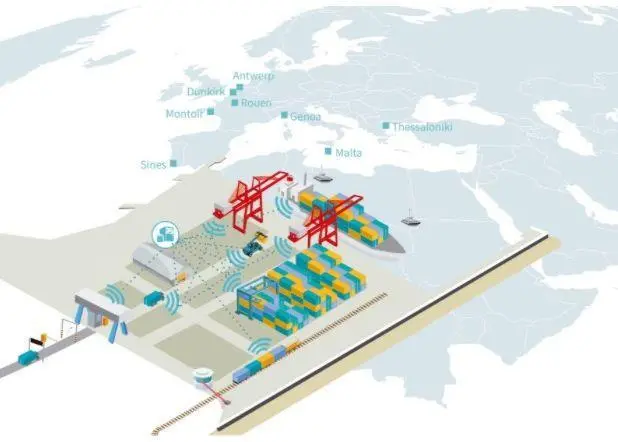
The iTerminals 4.0 project comprises the study and pilot deployment in real operations of Industry 4.0 technologies within the container-handling sector. The coordination of iTerminals is being carried out by the Valenciaport Foundation.
New IoT solutions and operational pilots will be developed and deployed in eight container terminals situated in eight Core ports of the Trans-European Transport Network: Antwerp, Dunkirk, Montoir, Rouen, Malta, Sines, Thessaloniki, and Genoa.
Moving into the 4th industrial revolution broadens the horizon of terminal operators who are expanding their scope activities into the hinterland, said PEMA. Efforts to streamline processes, standardise and have systems that exchange data with other parties of the logistics chain will improve cargo velocity and transparency within the maritime logistics chain.
The efforts of TIC 4.0 members will be documented in a White Paper to be released in March 2021.
Related Articles
 TERMINAL OPERATIONS
 DIGITAL
 DIGITAL