Electric powertrains will solve global CO2 emissions challenges but terminals need to account for charging requirements, according to an electromobility expert.
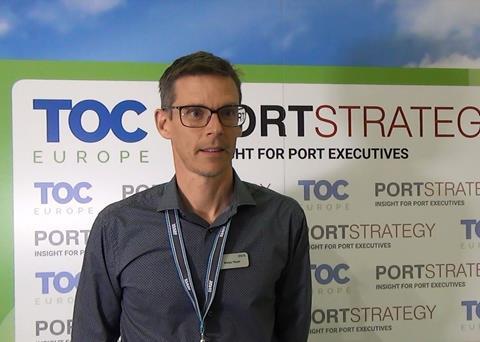
Speaking exclusively to Port Strategy at TOC Europe, Niklas Thulin, director of electromobility at Volvo Penta, said it was “inevitable” that electric powertrains would effectively tackle CO2 emissions, as well as meet city emissions requirements for ports, however, ports and terminals in the process of electrification need to look at their operations and work out how and where charging can be incorporated as this will help make the transition much quicker.
He advised: “One of the challenges we see in electrifying mobile equipment is that it requires charging and charging will of course in some way disturb current processes.
“You need to accommodate charging into your operation. Ports that are more open to planning their processes and ports – either retrofits or new ports – to accommodate this charging, will benefit the most from electrification.”
Major disruptors
He added: “I think electric power trains really have an opportunity to change and disrupt how port machines are operated short term. There’s quite a lot of experience from electric trucks and buses that we can apply to material handling machines already.”
Mr Thulin emphasised that electromobility, alongside connectivity and automation, would significantly increase productivity while reducing operational costs in terms of energy and maintenance costs, but those investing in electric machines need to be clear that they will be an expensive investment and so need “a rebalancing of Capex and Opex.”
“Maybe we as an industry can find different business models to make that step a bit smaller and make it easier to get these new machines,” he suggested.