In order to help improve greater adoption of digital trade documents in the shipping industry, BIMCO has published its latest electronic bill of lading (eBL).
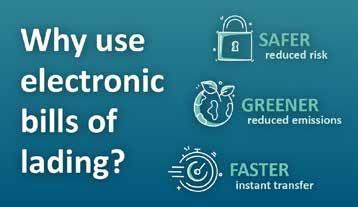
At present, it is estimated that less than two per cent of world trade moves via an eBL and part of the reason, according to BIMCO, is a lack of consistent open standards and interoperability. Hence the desire to generate standards for the use of an eBL.
To achieve this aim, the BIMCO standard represents a structured dataset that consists of 20 predefined data fields, all of which are common to bulk shipping bills of lading. The organisation has also confirmed that the standard is freely available to any provider of electronic bills of lading solution provider.
BIMCO also confirms that its eBL Standard is fully aligned with the UN/CEFACT Multimodal Transport Reference Data Model as well as the standards produced by Future International Trade (FIT) Alliance membership. FIT is an industry-wide coalition grouping of various organisation all retaining a common goal of producing open standards for use of eBLs.
The members of the FIT Alliance are: BIMCO, Digital Container Shipping Association (DCSA), FIATA International Federation of Freight Forwarders Associations (FIATA), the International Chamber of Commerce (ICC) and SWIFT.