

Electric deficit
Assume weak UK Government support and direction’, delegates were told at Arup’s LISW event focusing on the role of ports in shipping decarbonisation. Felicity Landon explains
The lack of UK Government funding for decarbonisation in ports – and particular concern about the need to prioritise grid connections for electrification – were key themes at Arup’s special event organised during London International Shipping Week.
Dr Tristan Smith, co-founder of UMAS, was blunt – investment in electrification is a ‘no brainer’ but the UK Government is not investing enough. Outlining the opportunities and risks around decarbonisation, he said: “Expectation of support paralyses action. Assume weak UK Government support and direction pre-2025 – don’t be paralysed.”
Ports should not bank on UK production or a UK supply chain of hydrogen-derived fuel, he added: “It only happens if there is much greater intervention by Government.”
The International Maritime Organization (IMO) is the much greater driver when it comes to decarbonisation, said Smith, advising ports to factor in the impacts of IMO regulations now: “Please don’t ignore the IMO.”
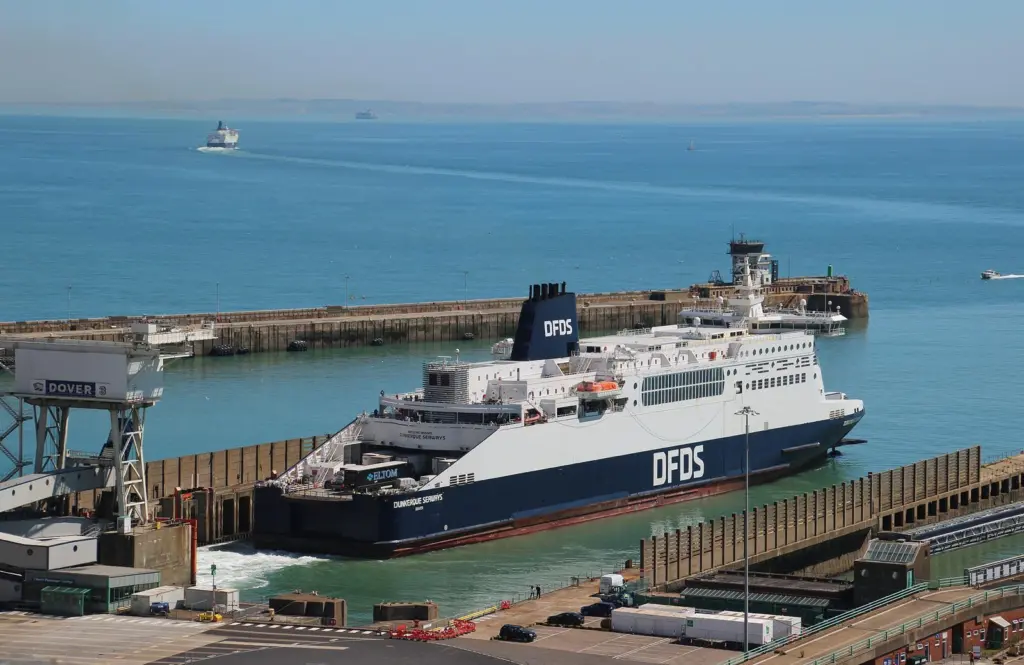
Doug Bannister, Chief Executive of the Port of Dover, described how Dover, Calais, Dunkirk and DFDS are seeking to create a high-volume green corridor, having signed an MoU in March 2023 – and the obstacles faced by the Port of Dover.
“There is an option here that all the ferries are electric. The problem is, we don’t have much power,” he said. “Predicted demand would be 160MW. Right now, we have access to 8MW. They are not going to invest in electric ferries unless there is power in the port, and we are not going to invest in electricity in the port unless there are electric ferries.”
While Calais has a ‘massive electricity infrastructure behind the port’, and Dunkirk has a nuclear power station, the UK’s National Grid infrastructure requires a tremendous amount of investment, he said. “But from the port perspective, we go on the list behind the garage, the supermarket, the shopping mall and the hotel operator.”
To help Dover take a leading role in decarbonisation of the supply chain, he urged the UK Government to take three key actions: “First, prioritise grid connections into the ports. We don’t need to be more important than hospitals, but you have to see us a bit higher up the list.”
Second, he said: “Make it easier for us to invest. Planning regimes are quite cumbersome and clunky. Open the doors, guys, is the message. Help us, because we are ready to go with this stuff.” Third: “We might need a bit of funding or guarantees. There is insufficient capital being deployed by the UK Government in these things.”
NET ZERO: NOT FREE
David Browne, Director Corporate and Social Affairs at Maersk, described the entry into service of the shipping line’s first green methanol vessel, and its arrival in the UK to discharge containers at DP World London Gateway.
“The containers will go through DP World’s green terminal, to get on a train to the Freeport in the East Midlands, where they will be moved by electric truck and into our warehouse.”
This was a great example of what could be done, he said, but more was required. “This state-of-the-art ship cannot plug into shore power at London Gateway because they don’t have the infrastructure or the electricity. So, it is a sunk cost.”
Maersk has set a target to decarbonise its business completely by 2040, including ships, terminals, air, land and warehousing. “As a business with a very large GHG emissions footprint, we see it as absolutely an obligation to make these changes and make them as soon as possible,” said Browne.
“We want to do the right thing, but we need the industry to step up and join us. If not, we risk making the country uncompetitive and our customers uncompetitive and ultimately asking the question, why are we making this investment, from a commercial perspective?”
The route to Net Zero is not free, he said. “Investment in infrastructure, fuels, technology and vessels all add costs to the bottom line and that could make us less competitive in the marketplace. Unless others step up or are forced to step up, we could become less competitive. The UK is not a good place unless we are all on a level playing field.”
The presentations were followed by a ‘café style’ discussion bringing in all delegates to consider three questions based on ‘What is the art of the possible?’
Related Articles
 OPERATIONS
 OPERATIONS
 OPERATIONS