


‘Loaded dice’ in Dar Es Salaam
A question was asked from the floor in the Africa focus session of the recent Terminal Operations Conference, held in Rotterdam, as to what are the root causes and the cure for the poor vessel turnround times and other performance related problems experienced over an extended period in the port of Dar es Salaam?
The answer given, by a panellist from Drewry Shipping Consultants, centred on the relevant issue of capacity keeping pace with demand and generally the need to build a more productive operation.
There is truth in this latter point but in seeking an effective solution this is not the whole story and in this respect the Tanzania Port Authority (TPA) may have ‘shot itself in the foot.’
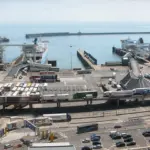
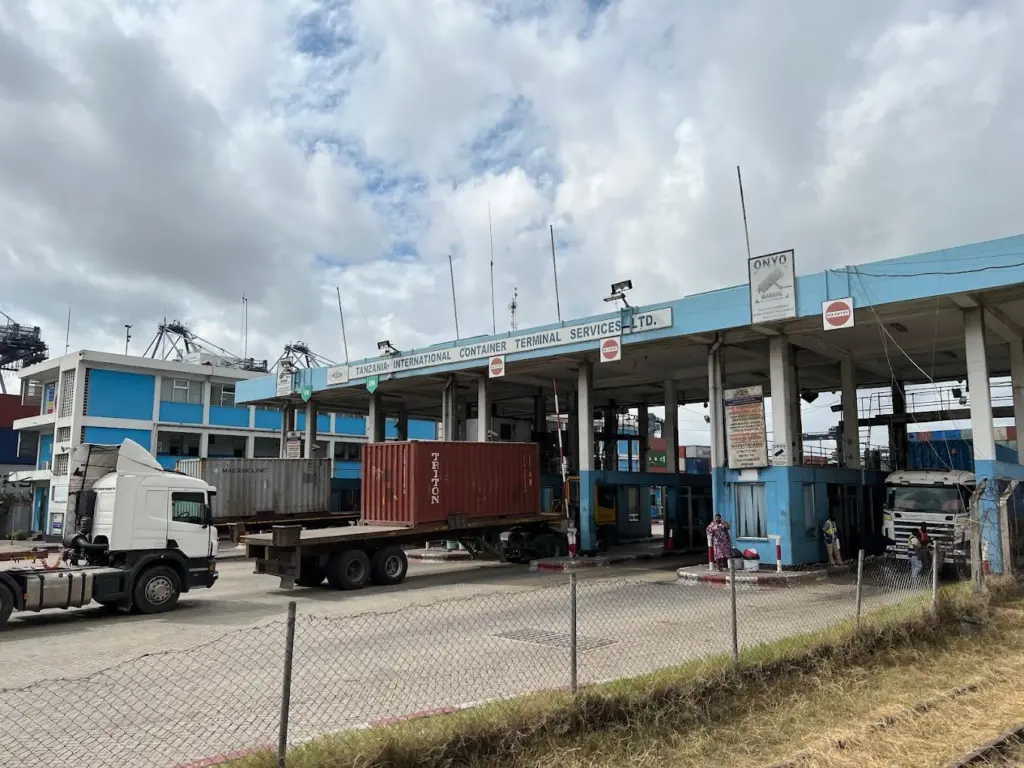
Hutchison Port Holdings, through its subsidiary Tanzania International Container Terminal Services Limited (TICTSL), was formerly the operator of what is now known as Container Terminal No 2 in Dar es Salaam, the port’s main container handling facility. The four-berth terminal has an annual handling capacity of one million TEU and in 2023 handled 820,000TEU, a figure said to represent 83% of Tanzania’s annual container volume.
TICTS was in residence from September 2000 until September 2022 at which point its’ concession was terminated by the TPA against a background of alleged poor performance highlighted by extended vessel times in port.
Adani Ports & Special Economic Zone Ltd (APSEZ) was subsequently appointed to operate the terminal on a management contract basis. The TPA billed this as an interim appointment with the message given out that a process would follow for a full international tender for the concession of the terminal. The process did happen but, in reality, it was a very poor relation to a properly assembled and managed concession process.
Take a step back in time – in August 2022, the month before TICTSL was effectively ousted at Container Terminal No2 – AD Ports Group signed an MOU with APSEZ for strategic joint investments in ports and other logistics activities in Tanzania.
Fast forward – at end May 2024 it was announced that Adani International Ports Holdings (AIPH) had signed a 30-year concession agreement with the TPA to operate and manage Container Terminal No 2. Further, East Africa Gateway Limited (EAGL) was incorporated as a joint venture of AIPH, AD Ports (30%) and East Harbour Terminals Limited. APSEZ is the controlling shareholder and will consolidate EAGL in its books.
EAGL signed a Share Purchase Agreement for the acquisition of a 95% stake in TICTS with the purchase price of US$39.5 million covering handling equipment, manpower acquisition and other essentials. Adani will operate Container Terminal No 2 through TICTS.
MAJOR DEFICIENCIES
On the surface this looks like a simple progression from one terminal operator to another in Dar but if you look below the surface all is not well. The concession award process can be seen to have major deficiencies – a fact underlined by the complaints of various participating bidders. The deficiencies, in turn, exhibit the tell-tale signs of a concession award result that had already been decided prior to the process beginning.
What are the signs? There are several but here are three examples:
i/ Marketing of the Request for Proposal (RFP) for concession of TICTS was only advertised in a local newspaper – no international coverage as is the norm and no mention of a road show which is also commonplace in conjunction with such opportunities.
ii/ The Expression of Interest (EOI)/RFP process was slated by bidders as unclear – in particular the submission criteria was vague promoting the potential for expulsion from the process due to not adhering to the rules (whatever they were?).
iii/ The process was also criticised from a timing point of view – it was rushed – and there was strong criticism of queries being handled in a haphazard manner.
As stated at the outset this process may yet prove not to be the TPA’s finest hour. A fully-fledged concession process, conducted objectively and immune to external influences, is the proven path to a very successful operation. A process that falls short in this respect, which is subject to undue influence and irregularities, is prone to containing structural flaws which history shows throw up obstacles that impede efficient and economic operations, i.e. achieving the full potential of the operating unit. It is also grossly unfair to all bidders who ‘entered the arena’ expecting to be taken seriously and who committed time and not insignificant funds to participate in the process.
Certainly, Container Terminal No 2 in Dar es Salaam will be interesting to monitor in this respect.
Related Articles
 OPERATIONS
 OPERATIONS
 OPERATIONS