






Tidal Lagoon raises environmental concerns
In the UK, the energy and climate secretary has granted planning permission for the Swansea Bay Tidal Lagoon project in South Wales, but the decision is not without its environmental concerns.
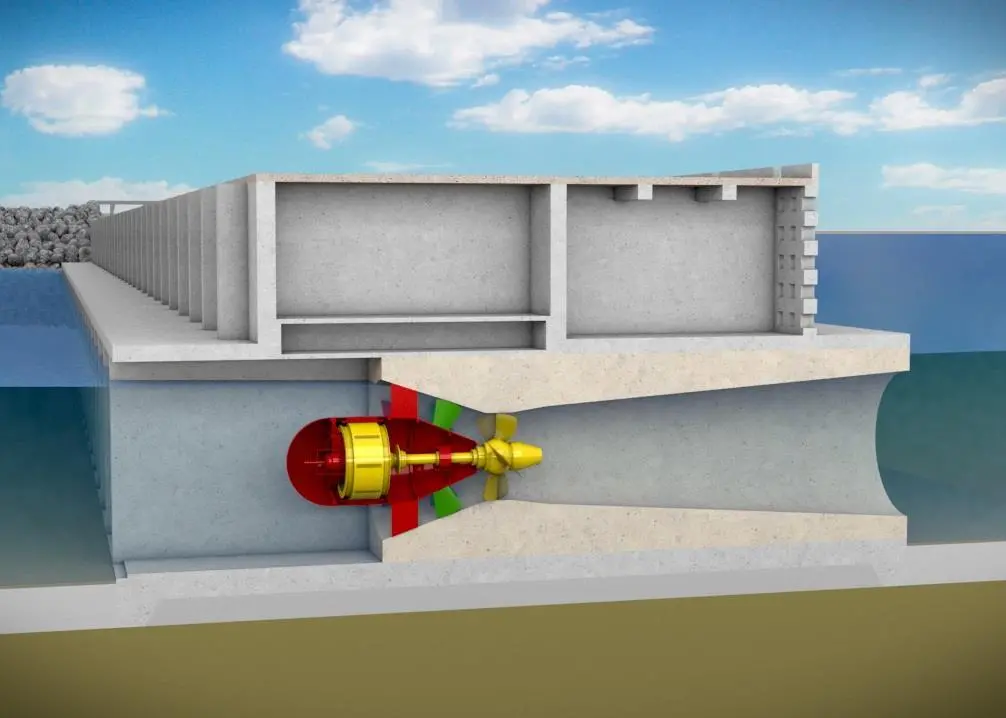
The project, which has been called the world’s first tidal lagoon, is the brain child of Tidal Lagoon Power and is one of a series of tidal range schemes the developer is considering around the UK’s shores.
Six potential lagoon locations have been identified around the UK which combined could provide up to 8% of the UK’s electricity and add up to £27bn cumulatively to the UK GDP by 2027.
But not everyone is happy about the potential that these tidal lagoon projects can offer and warn that they could be more detrimental to the environment, rather than favourable.
Sue Turner, from The Bristol Port Company said: “As one of the most active guardians of the Severn Estuary, and the biggest business dependent on these waters, The Bristol Port Company is pleased to see progress on marine energy in the Bristol Channel. However there are risks if too many lagoons are built around the Estuary before the impacts are understood.”
“The Swansea Bay scheme is relatively small and provides a test bed for investigating the reliability and cost-effectiveness of energy generation as well as the impacts on birds, fish and sediment. Tidal Lagoon Power’s plans for three much bigger lagoons at Cardiff, Newport and Bridgwater Bay could have an enormous cumulative impact on the Estuary. Our concern is that together they could reduce the depth of high tides so much that they would severely constrain large ships wanting to use Bristol Port and could damage our business and the 10,000 jobs that depend on it as badly as the Cardiff-Weston barrage would have done.”
Mark Robins, Senior Policy Officer for RSPB, echoed these concerns and said that that the green light for this scheme should not be seen as opening the floodgates to multiple similar schemes on the estuary that, cumulatively, could be hugely damaging.
He said: “The Swansea Lagoon may be a useful test-case for this technology but we expect that approval is conditioned, at the very least, with high quality monitoring. The scheme will have to work hard to prove its environmental credentials and demonstrate clearly how it is managing its environmental impact. There remains uncertainty about its effects on fish and sedimentation, the latter potentially effecting the value of the estuary for birds and other wildlife.”
When fully constructed the tidal lagoon will have an installed capacity of 320 megawatts, enough to generate renewable electricity to power 155,000 homes.
Using the daily motion of the tides, the lagoon should provide clean, home-grown electricity 14 hours a day for 120 years. It has been touted as being able to save over 236,000 tonnes of carbon emissions each year and the critical step needed to kick-start a tidal lagoon industry.
Related Articles
 ALTERNATIVE FUELS GREENPORT