

Time to end illegal international shipments of waste
Major international container seaports and inland ports are crucial hubs for the transportation of waste streams, much of which is illegal. B.H. Ruessink and G.J.R. Wolters1 present the facts and threats – and make a call for action
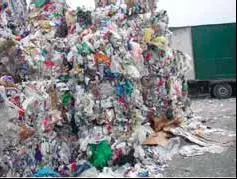
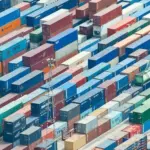
It is estimated that one out of every seven containers exported from the EU contains waste. Of these, one out of ten has probably a load of waste that is transported in conflict with environmental regulation. In view of the large volume of containers, this implies that the number of containers loaded with illegally exported waste is substantial. Official sources state that at least 8.5 million tonnes of hazardous waste is transported internationally each year. The global illegal waste market is estimated to represent a value of some US$12 billion. Waste has increasingly become an international commodity, traded worldwide. Driving economic forces behind this phenomenon are twofold:
• On the one hand, the high costs associated with environmentally sound and socially responsible treatment and disposal of waste in developed and industrialized nations give owners of waste an incentive to look for solutions outside their own countries, often in the developing world or emerging economies.
• On the other hand, there is a growing demand for recycled raw materials in the growing production economies, particularly in Asia. Also there is a market for used and discarded products, such as abandoned cars and electronic equipment, for example in countries in Africa. The big international container seaports and inland ports are crucial hubs for the transportation of waste streams.
International policy and regulation
International waste shipments are regulated under the so-called Basel Convention2. This multilateral environmental agreement, which came into force in 1992, has currently 172 parties, 65 of which ratified the convention.
The goal of the Basel Convention is to protect human health and the environment against the adverse effects resulting from the generation, management, transboundary movements and disposal of hazardous and other wastes.
The facts and circumstances that triggered the international community to start negotiations that led to the Basel Convention, are, to a large extent, still valid today. In the late 1980s, stricter environmental regulations in industrialized countries introduced a strong rise in the cost of environmentally sound hazardous waste disposal. In a search for cheaper alternatives “entrepreneurs” and “toxic traders” began shipping hazardous waste to developing countries and to Eastern Europe, mainly for the purpose of dumping it there. When this activity was revealed and the dramatic consequences for environment and human health became apparent, an international outrage led to the drafting and adoption of the Basel Convention. One of the important mechanisms in the Basel Convention is the control of transboundary movements (transportations between countries/regions, over land (road/rail) or shipments over water) of hazardous wastes. To this end, a control system based on prior written notification and consent was put into place. By this, transboundary movements of hazardous wastes or other wastes can occur only after such prior written notification by the State of export to the competent authorities of the States of import and transit, and agreement of those states. As a consequence, each shipment of hazardous or other waste must be accompanied by a movement document from the point at which a transboundary movement begins to the point of disposal. Apart from the Basel Convention, there are several regional agreements with similar objectives3.
The Basel Convention has been transposed into national or regional legislation in several cases; for example, in Europe the Waste Shipment Regulation4, which is applicable in all EU-member states, sets out clear conditions and procedures under which the import, export and transit of waste is allowed. Important parameters are the country of origin and destination of the waste, the route of transportation, the treatment of the waste (disposal or recycling) and the character of the waste.
Nature and damage of illegal waste shipments
Basically, waste shipments that do not comply with the conditions of the Basel Convention or the (inter)national legislation transposing the convention, are illegal. Some examples of the modus operandi involved with such shipments are the following:
• false information/documentation with regard to the nature of the waste; eg declaring that the waste is of recyclable nature while it is contaminated with potentially hazardous non-recyclable waste;
• concealing or hiding other – generally more hazardous – waste than indicated in the shipment documents;
• shipping waste to other destinations and for other purposes than officially permitted;
• circumventing waste shipment regulation, eg by transporting material allegedly called ‘second hand goods’, or even pretending that it is shipped as a gift out of charity incentives. Today, numerous reports, investigations and appalling press-releases make clear that international waste trafficking is definitely still at stake and causes serious hazards in the receiving countries on a large scale5. The environment, especially around dump sites, is suffering from the pollution of (ground)water, soil and air, people’s livelihoods and natural habitats are destroyed. Poor working conditions during treatment of the waste and deteriorated environmental quality puts the safety and health of people involved with such activities and that of future generations at risk. Even sadder, in many cases children or other vulnerable groups are the victims. In addition, economic effects of illicit waste shipments are substantial. This pertains not only to the costs of remediation of environmental damage, but also to the unfair competition that compliant stakeholders experience from those who do not adhere to regulation. At the same time, the substantial international differences in the level of control and enforcement by competent authorities, as well as the severity of sanctions for regulatees upon detected non-compliance, frustrates fair and equal economic competition.
Implementation, compliance and control…
Any piece of multilateral environmental agreement, like the Basel Convention, or formal domestic or international law transposing such agreement, can only be effective if it is implemented and complied with; and if, additionally, effective control and enforcement mechanisms and instruments are in place. Distinct parties have their specific roles, tasks, challenges and responsibilities.
Authorities have an obligation to develop effective policies and regulation in order to address and solve environmental problems, so as to safeguard health, well-being and sustainable development opportunities for their citizens. Also, they should create the necessary conditions and circumstances under which regulatees, which are addressed in the regulation, can comply with the conditions and requirements set. For example, through timely and clear information and communication the awareness of the legal obligations that apply to (international) waste shipment operations can be raised. If there is appropriate information exchange between those regulated and the regulators, hurdles for compliance can be identified and approaches to stimulate compliant behaviour can be put in place. With respect to regulatory control, inspection and enforcement, the competent authorities (such as customs, port authorities, environmental agencies and the judiciary) have to build capacity and acquire expertise in order to be able to fulfill their duties and obligations. Where necessary, international cooperation (bilateral and multilateral) can help countries and individual authorities to build the required infrastructure – in terms of organisation, staff, skills and expertise. But also stakeholders outside the government have a role to play. Non-governmental and similar organizations are in a position to raise awareness of the general public. Where appropriate, they are to act as watchdogs and whistleblowers in situations where (illegal) international shipments of waste put the environment and people’s health at risk.
…also responsibility for shipment sector
Last, but by no means least, for a successful implementation it is essential that the regulated community faces up to the challenge of accepting its responsibility to comply with regulation – and to do what is in their ability and power to act against unregulated and unlawful transnational shipment of waste. The international shipping sector at large, with all its distinct and specialised participants, could – both individually and jointly – make effective action against illegal waste shipments an integral part of its initiatives to contribute to sustainable development. Greening of the business and the social responsible care programs – which are now fashionable and being pursued vigorously in the sector – could gain further credibility if relevant stakeholders of the shipping industry would also recognize and address the issue of illegal waste shipments and contribute their part to help counteract such illicit activities. From a more holistic and integrated approach, it would not be sufficient for the shipping industry to have ships, harbour facilities, port operations and supply-chains that adhere to the constituting principles of sustainable development . It is also essential to consider and assess the nature of the cargo that is transported, and its potential negative impact to significant values for people, planet and economy. In much the same way that this sector would be not at all proud or happy to facilitate – or be associated with – the trafficking and illegal shipment of weapons, narcotics, drugs and humans, it should also clearly be reluctant to be instrumental in the illegal transnational shipment of hazardous waste. By not following the rule of law, or by indifference or by inactivity, the sector would – to a certain extent and probably unintentionally – be helping directly or indirectly other players undertake unlawful waste shipments. As a consequence, the international shipping sector could be held at least partly co-responsible for the alarming adverse effects of illicit waste shipments. This would be very detrimental to the ambition of the international shipping industry to be respected as a sustainable and socially responsible actor. The big international issue and threat of illicit waste shipments – and the frequently appalling environmental, social and economical consequences associated with them – can only be tackled if authorities, non-governmental organizations and the industry sector unite forces, both domestically and internationally, and do all that is in their power, given the distinct roles, functions and responsibilities.
Who in the international shipping industry is taking up the gauntlet and triggers a process of joint action with governmental and nongovernmental stakeholders to combat illegal waste shipments and the social, environmental and economical damage such shipments cause?
1. Programme International Environmental Enforcement Cooperation, Ministry of Environment, The Netherlands 2. The official name of the convention is: Basel Convention on the Control of Transboundary Movements of Hazardous Wastes and their Disposal. It was adopted on 21 March 1989 and went into force on 5 May 1992. More information and full text can be found at www.basel.int 3. Bakamo, etc PMPM 4. Regulation (EC) No 1013/2006 of the European Parliament and of the Council of 14 June 2006 on shipments of waste, applicable since 12 July 2007. 5. Ref. EIA, BAN, Green Peace PMPM
Related Articles
 REGULATION & POLICY GREENPORT
 REGULATION & POLICY GREENPORT
 REGULATION & POLICY GREENPORT