






The GreenPort Logistics conference in Stockholm earlier this year focused on the challenges of carbon reduction in the transport chain
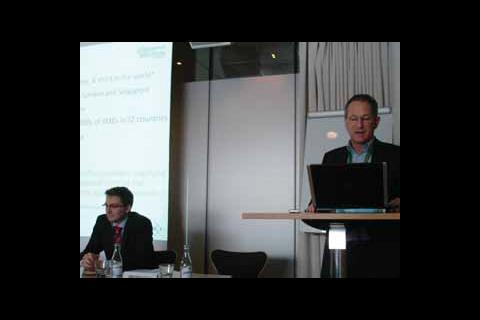
The first GreenPort Logistics event took place in Stockholm on 23 February 2010, attended by 40 participants from all over Europe. A wide range of interests were represented including shippers, cargo owners, rail operators, policy makers and NGOs. Moderated by Kate Royston*, the day was lively, interactive and enjoyable. The focus was on opportunities to reduce the carbon intensity of the logistics chain and enhance its sustainability. A short review follows.
Drivers for developing a Carbon Neutral Logistics Programme
Kate Royston kicked off with an overview of the terms and issues around de-carbonising and moving towards carbon neutrality. There was general agreement that carbon management is now an imperative and doing nothing is not an option! In a carbon-constrained world, Robin Martens from Archicom Consultants proposed that new thinking and new models were needed. As energy and environmental costs are factored into logistical services ‘slower’ options are likely to be cheaper and ‘convenience’ charged as a premium service. This has implications for business operations and service design. Jan Prahm from Tutech Innovation GmbH introduced Emissions Trading Systems (ETS). Transport is a major emitter and, so far, indirectly impacted by ETS. By remaining outside ETS schemes Jan argued that Transport was jeopardising its ability to influence the shape of future developments. Improving operational efficiency and coordination is fundamental and can make an important contribution to emissions reduction. This was vividly illustrated by Capt Ben van Scherpenzeel from the Port of Rotterdam with a showing of a video from the ‘The Chain’. This has been created by Harbour Masters and others concerned with inefficiencies from poor practice within the Nautical Chain (GPJ Mar’10).
Green supply chain management developments
As the drive to decarbonise intensifies, business wants to understand ‘how green’ its logistics suppliers are; and work to manage the impact of their overall supply chain. Merijn Hougée from the North Sea Federation (NSF) shared evidence of cargo owners drive to integrate these concerns into their decision making processes for selecting transport providers and routes. In Sweden a group of 23 major businesses are supporting the Clean Shipping Index (www.cleanshipping.org). A consortium of Dutch businesses also favours this approach and is considering its use. Another example is Green Tender presented by Nicolette van der Jagt from the European Shippers Council. Developed by a Mars led consortium the scheme adds environmental performance criteria to their tender and supplier assessment procedures. Richard Kirchner from Sweden’s Green Cargo stressed the importance of working with customers to embed sustainability in service offers. Industries demand for environmental considerations has continued despite the recession. Karolina Boholm from the Swedish Forest Industries Federation shared the concern of businesses impacted by the North Sea and Baltic SECA. The unintended consequences of the SECA regulations may cause a modal backshift and loss of trade. Great care should be taken when introducing regional changes into a global system.
Green Corridors: Update and Progress in Sweden and Europe
An important enabler of more sustainable logistics chains is the availability of appropriate infrastructure. Stefan Back from the Swedish International Freight Association provided an overview of the EU Green Corridors initiative. Supported by the SuperGreen consortium (http:// www.supergreenproject.eu/) the vision is to develop geographic transport corridors that can be tested, measured and evaluated. Stefan explained that progress can best be made with a bottom up approach working with companies who can see the potential gains. Peter Wolters from the European Intermodal Association (www.eia-ngo. com) outlined the complementary Green Lanes and Smart CM (Smart Container Chain Management (www.smart-cm.eu)) projects. The “global logistics industry and customs organisations are working to forge a strong commitment for inter-modal door to door container transport.”
Hinterland Logistics
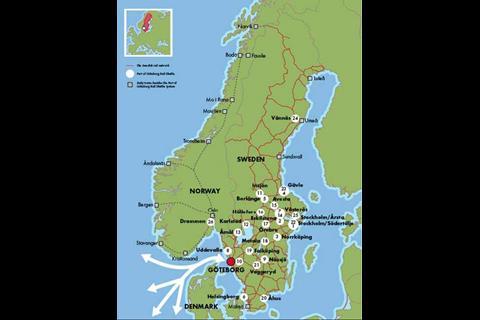
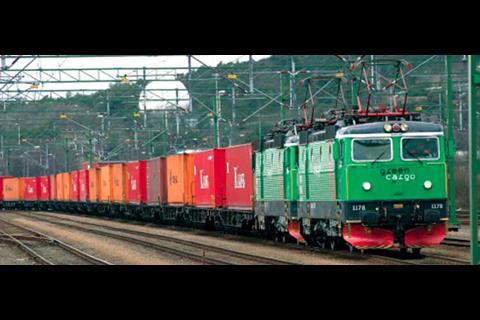
Connecting sustainably to its hinterland is a major driver for today’s ports. Combating increasing costs of congestion, air pollution and fuel require new approaches at European, National and Port levels. Jan Bergstrand from the Swedish Rail Administration explained how rail has been used to create effective connections to and from important ports and gateways based on the needs of industry. A simple and open system has been developed which takes the railways direct to the port without additional handling. The Port of Gothenburg has been a key player in driving this concept. Arvid Guthed explained how the market has driven the success of Railport Scandinavia from its proof of service 10 years ago. The system, including regular shuttles, inland centres and extended gateways, is providing benefits for all stakeholders. In the Netherlands there is a need for a similar approach focused on waterways. Herman Journée from EcoPorts Foundation introduced the ‘Optimising Accessibility’ project (www.bereikbaaroverwater. nl). Supported by Public and Private Stakeholders it is working to integrate ‘pockets’ of successful initiatives (e.g. the AMS cranebarge) into a national system. To help inform stakeholders of the merits of such modal shift an interactive scenario planning tool for the Transport sector has been developed by Quintel Consultants with the Port of Amsterdam. The tool was demonstrated by Quintel’s Leon Smulders. Seeing the results of the collaboration around this tool and how differing strategies could combine to deliver lower carbon and cost approaches was a fitting end to the day.
The Benefits of an Offset Inclusive Carbon Management Strategy for Ports and Associated Logistics Companies
Jonathan Shopley from The Carbon Neutral Company and Jamie Devlin from Greenstone Carbon Management ran an interesting and informative workshop on developing an offset inclusive carbon management strategy for business. Carbon Neutrality is achieved when a business measures its carbon emissions, works internally to reduce them as far as possible and outsources reduction of the rest through purchasing offsets from the ‘carbon market’ to bring overall emissions to zero. A key message was the importance of businesses measuring their emissions, capturing the data in a robust data repository and data reporting engine to meet information requests effectively. Taking action beyond regulation can capture value for business and an offset inclusive strategy may make sense for some. If you would like to know more contact jonathan. shopley@carbonneutral.com
Conclusion
Many common points emerged throughout the day seen as key to delivering lower carbon sustainable logistics chains for the future. These include the importance of co-operation and collaboration of all stakeholders, developing simple and open systems and the establishment of trust. Combining these with innovative thinking and courage to do things differently are critical. Importantly growing pressure for low carbon approaches and information provision to customers and suppliers necessitates measurement, monitoring and improvement as part of a carbon management strategy. This may include an aim to be Carbon Neutral.
Going Forward
Participants concluded that the day had been beneficial but not long enough to get to grips with all the issues. It was agreed to look into ways in which discussions could be progressed. Next year’s GreenPort Logistics will take place in Venice on 24/25 February 2011.
Carbon tops FTA’s ITF agenda
Industry must lead the climate change debate to deliver meaningful and sustainable results. That’s according to the Freight Transport Association’s (FTA) president Stewart Oades who was speaking on the International Transport Forum’s (ITF) Expert Panel in Leipzig recently. FTA launched its Logistics Carbon Reduction Scheme (LCRS) in January this year in a bid to benchmark the sector’s collective carbon footprint. The LCRS is an innovative industry-led initiative in response to the climate change agenda. Oades, who was representing FTA and the Global Shippers’ Forum, said: “To meet our carbon commitment industry cannot afford to sit passively by, simply reacting to environmental policy. Logistics is an innovative sector, but it needs to be leading the climate change debate. This is why the Logistics Carbon Reduction Scheme is so exciting, as it will allow industry to measure its own carbon footprint and, from there, become the foundation on which all future environmental policies are based.” Freight and logistics movements are responsible for around 30 per cent of transport emissions in the UK. The LCRS provides the framework for the logistics sector to contribute to the UK target to reduce CO2 by 80 per cent by 2050, on 1990 levels. Oades concluded: “The need for industry collaboration is matched by the need for policy makers to shift their focus from punitive taxes and onto rewarding innovation and investment in greener technology and working practices. The LCRS will paint an accurate picture of where the logistics sector is in terms of its carbon output, thereby helping policy makers to make the best decisions in the interests of the environment and business.”

