


Three parties have joined forces to establish the first ship-to-ship LNG bunkering service on the west coast of North America.
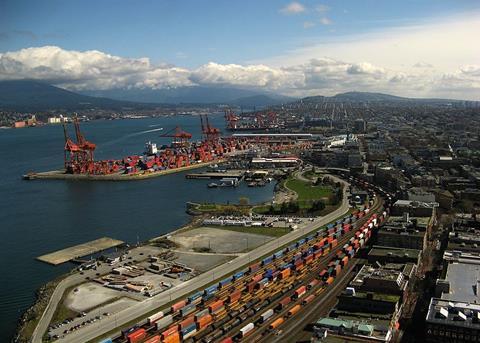
Vancouver Fraser Port Authority, natural gas company FortisBC and Canada’s British Columbia (B.C.) government are working together to meet demand for LNG and hope to see the Port of Vancouver become a major player in LNG services. Because FortisBC’s Tilbury Island facility runs on clean B.C. electricity, LNG produced there could reduce GHG emissions in marine shipping by up to 26%.
Duncan Wilson, vice-president environment, community and government affairs at Vancouver Fraser Port Authority, said: “With the number of LNG-capable vessels visiting the Port of Vancouver expected to increase following upcoming International Maritime Organization regulations on sulphur oxide and greenhouse gas emissions, we are working with government and industry to promote a transition to cleaner marine fuels and look forward to working with the Province to help make this possible.”
CAD930m benefit
Initial findings from a study done by PricewaterhouseCoopers (PwC) for FortisBC show that a five-year construction period for LNG bunkering infrastructure could facilitate the creation of a cumulative 14,000 full-time equivalent person years of employment over the duration of the build and contribute a cumulative CAD1.8bn to provincial gross domestic product. Once fully operational, a bunkering industry could have an annual economic impact of CAD930m.
B.C. is making a $25,000 contribution to the PwC study to fund environmental and social impacts analyses and a competitiveness assessment. The study is also building on work already done on risk, safety and demand.
“We are encouraged by the initial projections,” said Bruce Ralston, Minister of Jobs, Trade and Technology. “It is expected that LNG-powered ships — specifically container, car carrier and cruise vessels — could begin calling in Vancouver as early as 2020, and global demand is expected to exceed nine million tonnes (23 million cubic metres) of LNG annually by 2025. B.C. should be ready to get some of that business.”
B.C. has been in the LNG bunkering business since 2017. Five BC Ferries vessels and two Seaspan cargo ferries are fuelled with LNG from FortisBC, via truck. This proposal would expand to develop ship-to-ship bunkering so that large vessels can be fuelled from a fuelling vessel that fills up at an on-shore jetty at Tilbury Island on the Fraser River.

