



Unfinished business in the US
Things are slowly picking up at US west coast ports since the ending of recent disruptive labour disputes, but Neil Davidson, senior analyst at Drewry, told Port Strategy they could “face real challenges going forwards”.
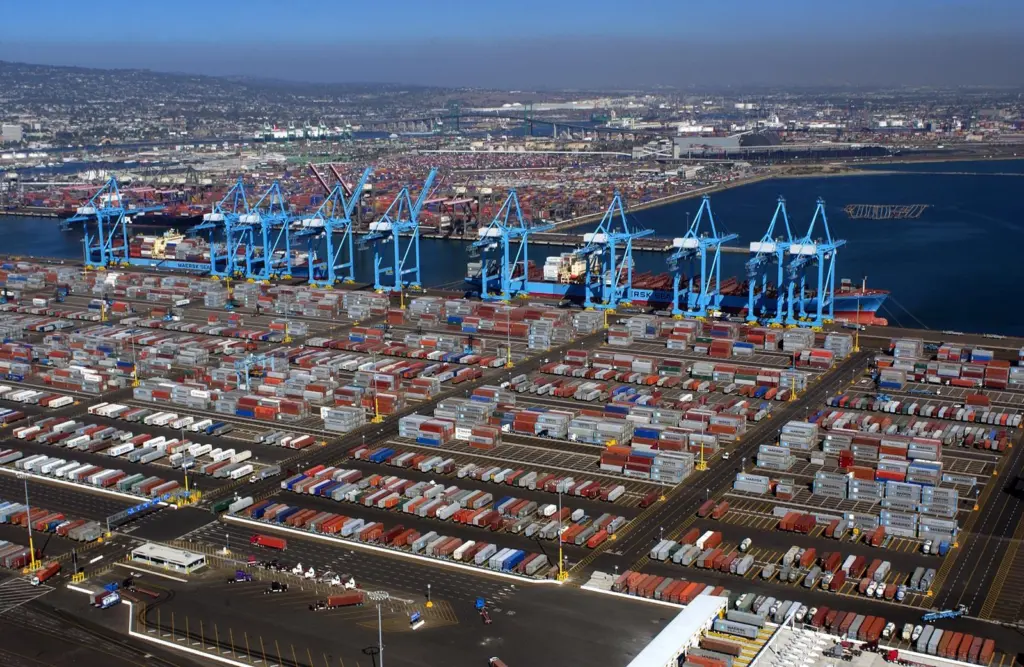
The Pacific Maritime Association (PMA) and International Longshore and Warehouse Union (ILWU) recently reached a new five-year contract covering workers at all 29 west coast ports, putting a much-needed end to slowdowns that crippled operations at some of the country’s largest ports.
Broken terminal operations caused significant congestion and reduced hours, with delays said to have reached their worst in two years.
Mr Davidson told PS clearing the backlog in the US west coast ports will take months, not weeks, but getting back to ‘normal’ may not be as easy as it seems.
“A lot of shippers have switched to the Asia-USEC route via Suez, despite it being around twice the price for them.” While it’s likely many shippers will return to the west coast route once the dust has settled, “for the container lines, the USEC route can absorb additional capacity and this, along with the increased demand from shippers, may entice them to increase services on this route,” Mr Davidson added.
“Of course though the more capacity that is added, the lower freight rates may be, so they need to be careful. If this happens though, and freight rates on the Asia-USEC drop, it reduces the differential vis-a-vis the Asia-USWC route and will make it harder for USWC ports to win back lost volume.”
The expanded Panama Canal, due to open soon, could also hinder operations, said Mr Davidson. “Shipping lines will be able to deploy bigger ships on Asia-USEC services via Panama. This should reduce the cost of this routing for shippers, and again reduce the differential versus Asia-USWC.”
Going forwards, US west coast ports could find it difficult to regain confidence and compete with the low prices of alternative routes, Mr Davidson concluded.
Despite this, west coast ports, and Californian ports in particular, local demand is huge. “This will always pull in shipping services serving local cargo needs, and longer distance intermodal traffic can be handled on the same vessel calls.”
“It must also be remembered though that a number of the factors which were already causing problems before the ILWU-PMA dispute will still be issues afterwards, like provision of chassis, lack of truckers, intermodal capacity issues and of course the volume peaks caused by bigger ships.”
Related Articles
 PORT & TERMINAL NEWS
 PORT & TERMINAL NEWS
 OPERATIONS