

VICT strikes are attacking automation
A series of planned strikes at ICTSI’s Victoria International Container Terminal (VICT) at the Port of Melbourne is an attack on its automated status, VICT’s CEO has said.
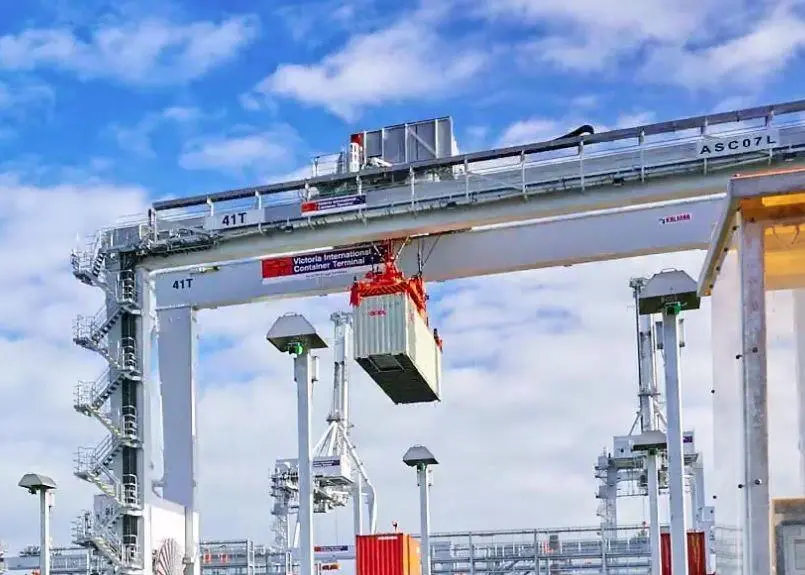
The Maritime Union of Australia (MUA) has planned a four-hour strike on Tuesday 16 February, a 12 hour strike from 6pm on Friday 19 February, and a 36 hour strike from 6am on Sunday 21 February. Industrial action also includes a series of work bans, including on working overtime.
Tim Vancampen, CEO of VICT, said: “VICT accounts for a third of Victoria’s container freight. The union is directly attacking VICT’s unique way of working as a modern, automated terminal. They want to take us back to the past, no matter the cost or the ill-considered timing in the context of the lockdown. This campaign won’t produce the extra jobs, massive pay rises and fewer hours the Union has promised our employees. All it will do is undermine VICT’s competitiveness and threaten the benefits of port automation for Victoria and for the Port of Melbourne. If the MUA was serious about representing VICT employees’ interests it would seek to protect their modern jobs, not jeopardise them.”
Ocean shipping impact
The Port of Melbourne handles about three million TEU a year. The strikes will severely affect the ocean shipping industry, said Shipping Australia. Current estimates, derived from publicly-available sources, by Shipping Australia for the cost of a day of delay to ships travelling at 21 knots are AUS$67,042 for a 2,500 TEU ship, US$79,788 for a 4,000 TEU ship and AUS$124,279 for a 8,500 TEU ship.
MUA demands
The MUA want Australia’s first fully automated container terminal to comply with “industry standards” by adopting the hours, manning and overtime conditions that govern the manually operated terminals around Australia, explained Shipping Australia. However, VICT has warned adoption of such conditions would see the terminal saddled with inappropriate working arrangements, its efficiencies seriously compromised, and its potential to achieve profitability put at risk.
Related Articles
 WORLD
WORLD
 PORT & TERMINAL NEWS
 PORT & TERMINAL NEWS