

East Java logistics links gain momentum
Growing commercial activity between East Java and Eastern Indonesia is prompting logistics industry groups to explore ways to improve cargo flows across the archipelago.
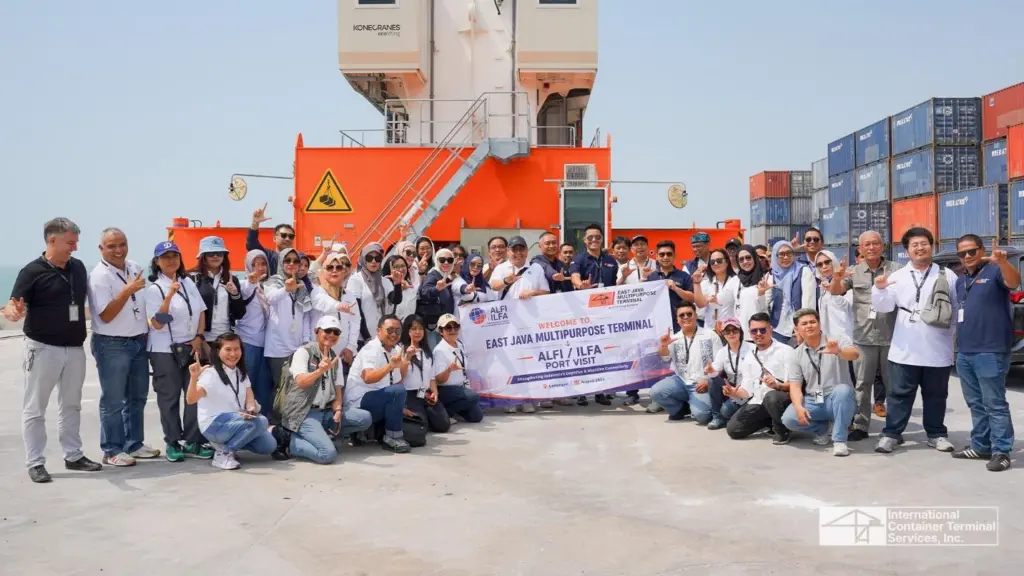
East Java Multipurpose Terminal (EJMT), the Lamongan operation of International Container Terminal Services, Inc. (ICTSI), recently hosted representatives of the Indonesian Logistics and Forwarders Association (ALFI/ILFA) East Java to discuss trade opportunities, market access and transport connections through Lamongan.
“We are seeing growing interest in shipping routes linking East Java and Eastern Indonesia,” said EJMT chief executive John Largo. “These conversations help us understand where demand is growing and how Lamongan can facilitate the movement of goods.”
The meeting on 5 August focused on cargo movements between production centres and consumer markets, access to domestic and international shipping services, and the role of ports, warehousing and bonded facilities in supporting companies across industries.
ALFI/ILFA East Java chairman Sebastian Wibisono said connectivity, competitive costs and reliable transport options remain important for businesses moving freight across Indonesia. He said Lamongan could provide additional routing options between East Java and the country’s eastern markets.
Largo said East Java’s position as a major production and consumption centre made dependable transport infrastructure critical to domestic and regional trade.
Located within the Lamongan Shorebase complex, EJMT provides port, warehousing and bonded logistics facilities and is connected to nearby industrial developments, including the Jakamitra Industrial Park i-sentra project.
The terminal began operations in October 2024, handling containerised, bulk, project and heavy-lift cargo. It serves customers in Lamongan, Tuban and surrounding areas, providing an additional gateway for businesses operating in East Java.
EJMT and ALFI/ILFA agreed to continue engaging manufacturers, freight operators and cargo owners to identify business requirements and potential cargo flows.
Related Articles
 WORLD
WORLD
 PRODUCTS & SERVICES
 PRODUCTS & SERVICES