

Intelligent port vessels
A partnership has been formed in Asia to develop smart port vessels equipped to increase efficiency and reduce congestion.
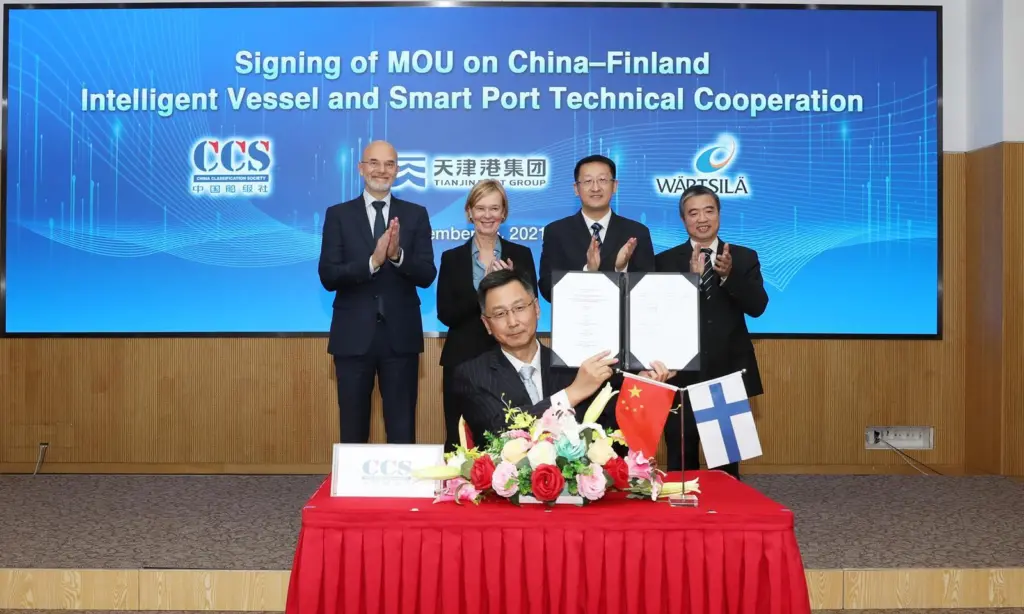
Tianjin Port Group is partnering with Wärtsilä Voyage and China Classification Society (CSS) to research, develop and adopt intelligent vessel technologies that enhance safety and efficacy at busy ports in the region including Tianjin, one of the busiest ports in the world.
But it also aims to develop intelligent ship standards for domestic vessels to drive adoption and scale-up deployment of smart technology.
”This project complements our larger vision of safer and more sustainable port operations, as well as gives us the opportunity to explore further collaborations to enhance our smart port services in the future,” said Yang Jiemin, vice president, Tianjin Port Group.
Bigger picture
The project’s scope includes delivering advanced situational awareness technology and providing highly advanced digital simulators, including intelligent and autonomous algorithm testing, training and safety.
It will begin with the development of a next-generation intelligent tugboat that is expected to begin operation in the fourth quarter of 2023.
The vessel will be equipped with an advanced situational awareness system to detect small objects in low visibility conditions and provide decision-making support to the crew.
But the tug’s cutting edge technology will not be limited to port operations alone. It can be applied and extended to domestic vessels in the future.
That, combined with new safety and quality standards, it’s hoped will help drive the adoption and scale-up deployment of smart technology in the non-seagoing segment as well — a key factor to enhance China’s shipping competitiveness.
Asia has nine out of ten busiest ports in the world and seven of those are in China.
Increasing traffic, congestion, the unpredictability of weather conditions and emissions have become major challenges for ports worldwide. During the pandemic, vessels in Asia had a waiting time of five to seven days. All this has acted as catalysts for ports to adopt innovative technologies that help mitigate delays and disruptions.
Tianjin Port has stayed at the forefront of such technological innovations. It became the world’s first port to get approval for an autonomous driving demonstration zone with 25 unmanned electric trucks and more recently, unveiled its smart zero-carbon terminal of the future.
Related Articles
 LEGAL, RISK & INSURANCE
 NEWS
NEWS
 PORT & TERMINAL NEWS