![PortStrategy[GreenPort]](https://www.portstrategy.com/wp-content/uploads/2026/09/PortStrategyGreenPort.svg)


Crisis aversion strategy
Iván Jimenez, President, Port of Bilbao puts the case for building long-term resilience to minimise the impact of future crises

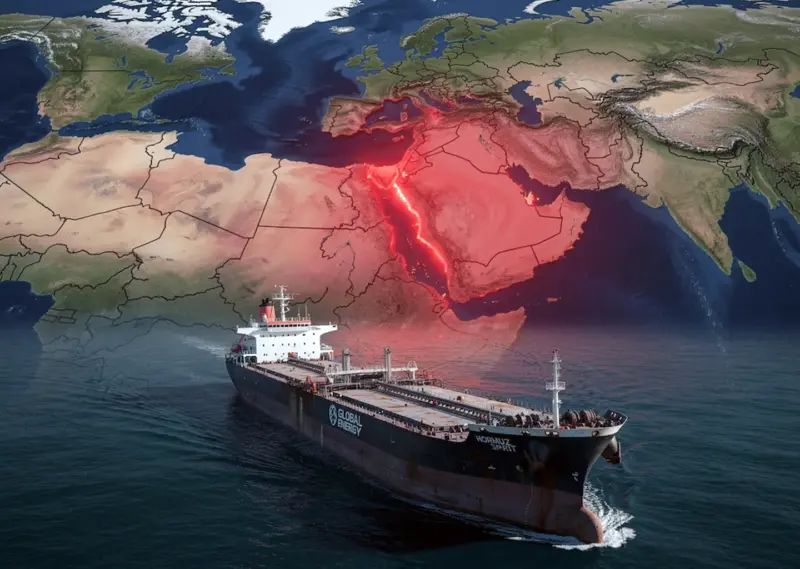
A third of the world’s busiest logistics hubs face high risk from acute threats. The Hormuz crisis, the largest oil market disruption in history, is just the latest proof.
From the 1973 oil embargo to the Red Sea disruptions of 2023-24, the industry has experienced a recurring theme: crisis hits, reactive measures follow, and once the pressure eases, significant structural reform gets shelved. The sector is forced to adapt each time, but these measures are often a band-aid approach, leaving the deeper issue neglected.
As UN Trade and Development puts it, the question is not of adaptation, but whether adaptation is actually sustainable. After the 1973 embargo, for instance, the sector set up the International Energy Agency (IEA) to coordinate responses to global oil disruption. But long-term dependence on traditional routes and fossil fuels largely remained, meaning the same weaknesses persisted.
Remove the specific trigger, and the Hormuz closure is a reminder of a long-standing vulnerability. Approximately 90% of world trade by volume is transported by sea, and most of it flows through the same few places, yet it remains concentrated through a handful of chokepoints. For example, 20% of global oil flows through Hormuz, around a third of global trade passes through the Strait of Malacca, and 12% through the Suez Canal.
Some of that is unavoidable geography, but there is also the issue that port infrastructure and routing decisions have been optimised for efficiency over resilience. Although research estimates that disruptions at the 24 major maritime chokepoints affect around $192 billion worth of maritime trade each year, investment has continued to concentrate on these routes despite calls for route diversification.
The most important argument to make is for decarbonisation. A recent survey of shipping executives shows declining confidence in alternative fuels. That doubt is a mistake: dependence on fossil fuel supply chains routed through geopolitically unstable corridors is itself the vulnerability. Over 90% of the global fleet currently operates on conventional fuels and, yet, more than half of all new ship orders can run on alternatives.
The sector has the potential but needs to operationalise it. Broader net zero commitments, like the IMO Net Zero Framework and FuelEU Maritime, are key investments in global energy security and shipping’s long-term stability.
RETHINK REQUIRED
The industry must also rethink how it invests in port infrastructure. The World Bank estimates that port congestion and operational inefficiencies can magnify the impact of external shocks. Building greater resilience will require moving beyond traditional approaches by diversifying shipping routes and trade corridors, expanding handling capacity at smaller ports, and building greater flexibility into logistics networks so they can better absorb and respond to disruption.
Port leadership has a critical role to play in strengthening long-term resilience through a combination of measures. On-site renewable energy, including wind and solar, can power microgrids, support port electrification, and diversify energy sources. Investment in infrastructure such as green hydrogen and energy storage can further improve energy resilience, while collaboration with local energy providers and other partners helps strengthen regional capacity.
Equally important is identifying site-specific vulnerabilities before external shocks occur and ensuring close coordination with neighbouring ports and the wider logistics network to minimise disruption when crises arise.
EMBEDDED RESILIENCE
At the Port of Bilbao, we have embedded resilience into our strategy through regional partnerships with grid operators and energy giant Petronor, alongside investment in renewables and port electrification. Petronor is currently building a renewable hydrogen electrolyser at the port, capable of producing 2,000mt of e-fuels annually to be used in shipping from 2027. We have also diversified beyond the Europe-Asia route, through new transatlantic lines to Canada and Latin America. This strategy has ensured competitiveness, despite geopolitical disruptions, with traffic increasing by 12% this year.
Bilbao’s experience shows that resilience is achievable, but it requires sustained investment long before a crisis hits, not scrambling once one does.
The decisions taken, or deferred, over the next two to three years on port capacity, logistics connectivity, and intermodal infrastructure will determine how exposed the sector is when the next crisis arrives. The sector has the knowledge, the technology, and the policy frameworks it needs. What it hasn’t had, historically, is the discipline to keep building resilience once the headlines move on.
Related Articles
 CONTAINER & CARGO HANDLING
 INSIGHT & OPINION
 INSIGHT & OPINION