




Terminal crane cracks
Ever increasing volumes of cargo and operators putting off purchases of new cranes are leading to a rise in cracks and other fatigue-related issues, endangering safety.
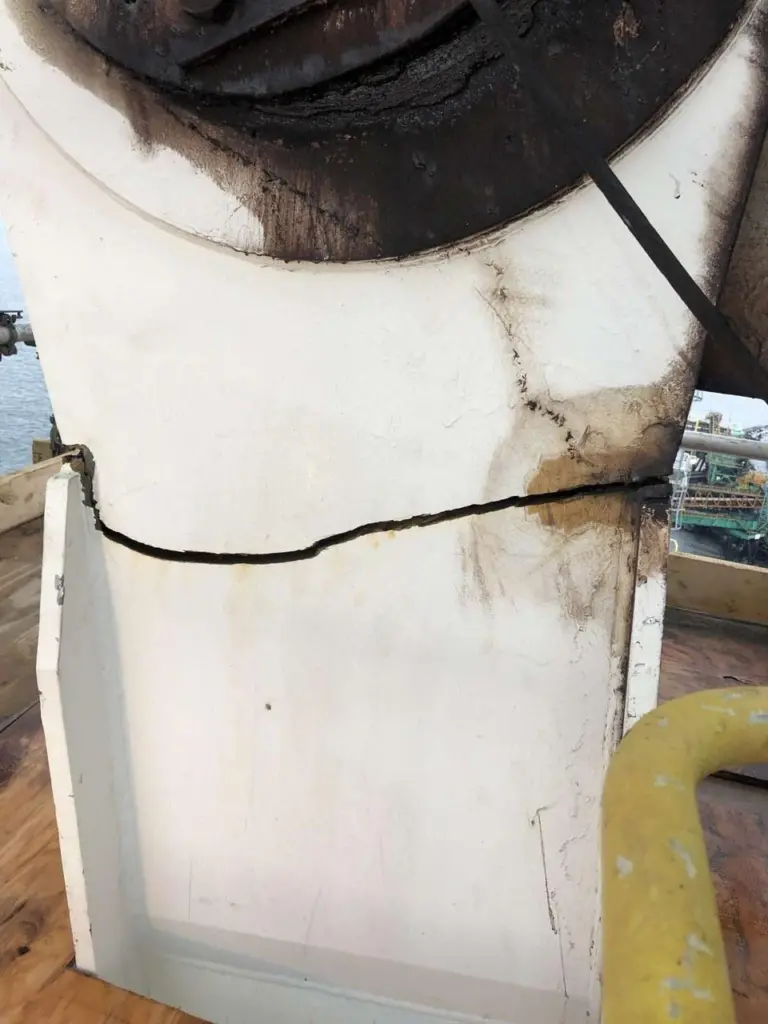
Failures of container cranes as a result of corrosion are rare, but there has been at least once incidence of total collapse and several close calls where serious cracks have been discovered just in time.
“It is very unlikely that someone without training would be able to detect the first signs of cracking or fatigue,” said Richard Phillips, mechanical engineer at Caper, Phillips & Associates.
Another problem is a lack of transparency. Unlike other industries, the container crane industry has no formal regulatory body. “Failures are often a source of embarrassment, liability or litigation and therefore remain confidential,” said Richard Phillips.
“This is unfortunate because the entire industry would benefit from sharing information,” he said.
Uncertainty in the steel industry – prices, component availability, labour shortages and cost of wages – has meant that some operators are tempted to extend a crane’s life from its, say, recommended two million cycles to three or even four million. Upgrading cranes and strengthening key areas are critical if a crane’s life is to be extended safely.
Overcoming the problem
Repairing cracks promptly is important but preventing them in the first place is even better. Accurate modelling of fatigue-related issues when designing cranes is paramount as are targeted inspections at regular, specified intervals.
“Inspection by outside technicians is expensive but can save property and lives,” said Richard Phillips. “The key to getting the best life out of these cranes is to have a good inspection manual and a responsive maintenance programme.”
Related Articles
 LEGAL, RISK & INSURANCE
 NEWS
NEWS
 PORT & TERMINAL NEWS