![PortStrategy[GreenPort]](https://www.portstrategy.com/wp-content/uploads/2026/09/PortStrategyGreenPort.svg)





Pollution – the big clean up
Port pollution control has taken on a life of its own, as Stevie Knight finds out
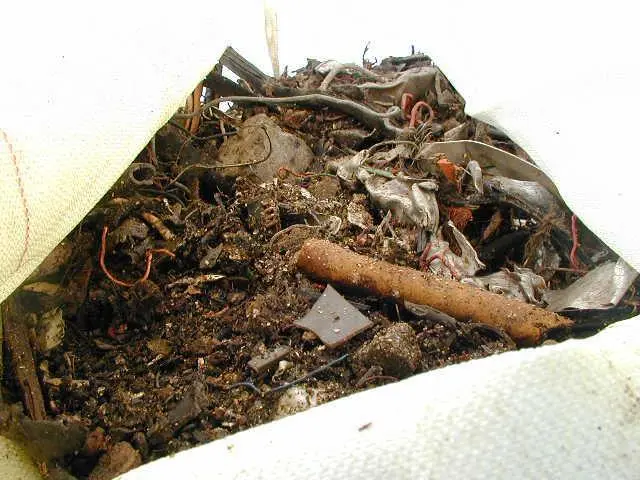
Pollution is akin to that mythical Hydra to deal with: sort out one head and another comes at you from a different angle.
And we are not just talking about the sources of pollution here – which include air, noise, waste, ballast and bilge water, as well as oil – but also the legislation that ports have to deal with to keep on top of the game.
Since the 1996 IMO Protocol put in place what is known as the “precautionary approach”, anything that might be likely to result in pollution is now prohibited. More than one port worker has said that though worthwhile, the regulations are hard to keep on top of – updates just keep coming through and the implications aren’t always obvious.
But far from being another burden, the measures, in many cases, have helped clarify an ambiguous situation. For example, ship’s captains, once forced to make a decision between saving money by dumping at sea or generating a bill for the ship’s owners, now can show the company a legitimate invoice, says David Jacobs, senior consultant for CWA.
Of course, there are the notorious cases where companies have simply shipped their waste to economies that have not yet robust antipollution measures in place – resulting in, for example, the dumping of 900 tonnes of waste and hazardous material from New Jersey at Tamil Nadu’s Tuticorin Port, the discovery of harmful substances – sent from New York – at Kochi Port and similarly, and the practice of dismantling of ‘toxic’ ships like Blue Lady and Clemencau on the beaches of India.
So there are huge discrepancies between the developed and emerging economies, who often are left playing ‘catch-up’ with regulations, facing lengthy court actions to enact basic measures which even then may prove to be ineffective – Tuticorin port’s action demanded that the waste, once discovered, was returned to New Jersey but it was still sitting there three years later.
However, in some places – such as California – environmental groups say that they have won decisive victories in the battle against pollution. For example, Candice Kim, spokeswoman for the Coalition for Clean Air, talks about how a settlement with the port of Los Angeles meant the development of the world’s first electrified container ship terminal in 2004. “Plugging in” rather running on diesel could reduce emissions by three tonnes a ship, she says. Moreover, both the port and environmental groups worked on attaining the necessary expansion with a “No Net Increase” pollution plan.
Going further, a recent paper from the University of Waterloo, Canada, suggested that new Chinese ports should, as a matter of course, be co-operating with environmental agencies and taking on board experts to carry out environmental protection research.
There’s no doubt that a few port authorities would cringe at such a set up. As David Jacobs says: “Some operators still see themselves as lord of their manor”, and are fairly inflexible when it comes to environmental negotiation. But it seems that time and tide are against this kind of view, and it may be that teaming up is, now, the only way forward.
Pushed both by noise legislation, emissions standards and fuel costs, shore-side operations have been replacing diesel motors with electric ones at a pace.
Rubber-tyred gantry cranes (RTGs), for example, can be powered directly from the mains while unloading – reverting to diesel drive only when moving between areas. ZPMC have tested their own electric newbuilds and have reported energy costs decreasing by up to 30%, with more savings if an energy feedback system is put in place. And Kalmar’s E-One electric RTG has done away with hydraulics completely, again reducing the need for constant load power. Retrofits, too, are a relatively simple matter according to Conductix-Wampfler who can modify a unit to run either from a cable or grid system. Further, the development of electric tractors and trucks have followed hard on the heels of the new, “green” RTGs.
Power reclamation from flywheels which capture energy generated in a shipyard crane’s lowering cycle to lift the next container is also catching on. Vycon’s tests at Yantian International Container Terminal on a standard RTG crane showed that fuel savings ranging from 8% – 15% with the addition of the REGEN system. Further, replace a 410kW diesel generator set with a 322kW model alongside the flywheel and savings rise to between 32%-37% – and rather than slowing operations, faster moves actually result.
Luckily, the uptake of “hybrid drive” or alternative technologies have often allowed ports to keep their options open (it is not unusual to find an order for a couple of hybrids in a clutch of standard units) so that if it works out a port can retrofit the other cranes with little extra cost.
The problem remains that though electric is quieter and, it has to be said, a bit more efficient, the power that ports rely so heavily on still usually comes from non-renewable sources – shifting the problem and the pollution to another area. However, the Port of Sacremento has decided on a 800-kilowatt solar power project that will be installed on two 90,000-square-foot warehouses, enough to meet all of the port’s energy needs.
There is also the growing concern about the transfer of micro-organisms and treatment of wastewater. Facilities like those operated by Nature in the ports of Gibraltar and Tananger in Norway, use gravity separation, chemical and aeration treatments but there are also now ultraviolet, ultrasonic and biological developments afoot as well.
Even oil spill measures now include biological agents which can digest hydrocarbons as well as rapid-deployment containment booms. “The speed of response and communication is of the essence here,” says BMT consultant Jim Chubb. Interestingly, while procedures for oil spill responses have now been well laid down, other things have to be thought about “laterally” – for example, timber from the Kodima became buried in two metres of sand at Plymouth in the UK, so the clear-up contractors (DRS) dug a channel and floated them out with the rising tide. Given this, it may be that a port has to add ‘know-how’ to the bill.
In short, it can seem expensive. But then again, as already noted, much of the green handling technology saves a sizeable percentage on fuel, while the newer electric units also have fewer mechanical or hydraulic parts, can be regulated more easily to take the strain, and so come with a generally lower maintenance bill.
And with other systems there can sometimes be a number of interesting funding options. For example, some governing bodies offer tax-cut incentives for environmental upgrades. In the case of the Port of Sacremento, the port has opted not to put in all the money itself for the solar power scheme, but rather to buy in the system on a power purchasing agreement – so that the power companies get to install the equipment and keep ownership, while letting the port have the power at 10% below the normal price.
It is the big clean up. And though it might take a while to get the world on board, many ports are putting their money where the ingenuity is – to everyone’s benefit.
Related Articles
 TERMINAL OPERATIONS
 TERMINAL OPERATIONS
 CONTAINER & CARGO HANDLING