![PortStrategy[GreenPort]](https://www.portstrategy.com/wp-content/uploads/2026/09/PortStrategyGreenPort.svg)





Can booms protect our ports?
Despite the strikes on the warship USS COLE in 2000 and the French VLCC LINDBERG in 2002, attacks from the sea remain a much neglected area of security to which ports are particularly susceptible. Stopping small craft such as speedboats from entering port areas is becoming a higher priority due to their potential for carrying explosive or radioactive payloads.
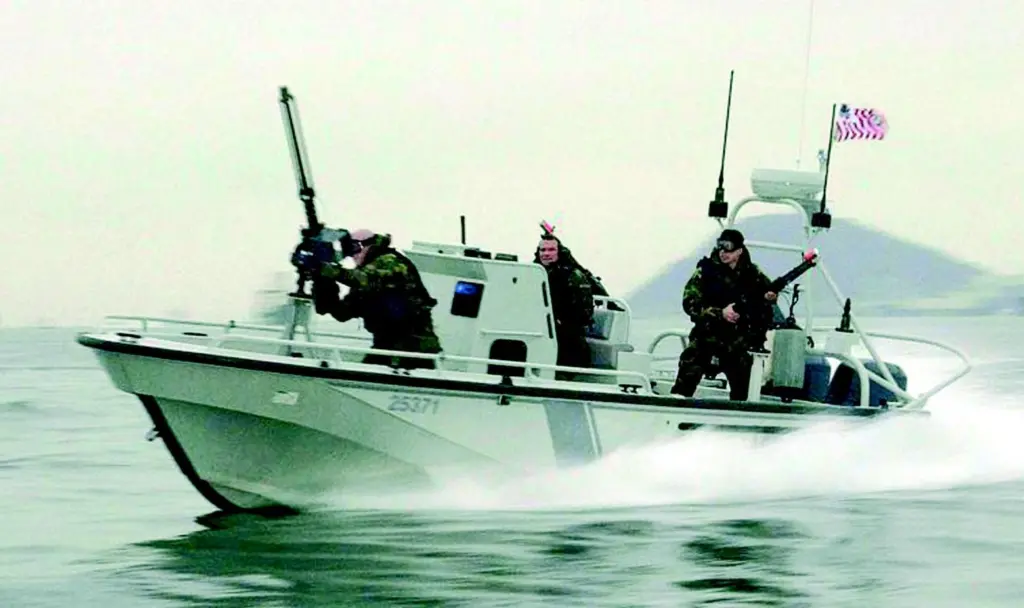
The UK Home Office has set up a research project to investigate various technologies for stopping vessels. “After talking to manufacturers of small boats, it was decided to build a boom which mimics kelp,” says Chris Northy-Baker, the Home Office Scientific Development Branch project manager, ‘vessel stopping’. “We’re very pleased with the results and we have achieved impressive stopping distances. Further work is required to determine the optimum kelp net and we are working with some US agencies.” The Home Office is also investigating booms with built-in explosive protection.
There is much scepticism about the effectiveness of protecting vessels in ports using boom barriers. For one thing, can they be installed quickly enough to stop a threat when a vessel docks and removed quickly enough when the vessel is due to depart? A security boom was installed to protect QUEEN MARY II when she was used as accommodation for the Athens Olympics but it took some time to erect and was only viable because the ship was docked for a month.
Furthermore, boom technology cannot protect vessels at sea or when they are actually entering or leaving port.
Related Articles
 TERMINAL OPERATIONS
 TERMINAL OPERATIONS
 CONTAINER & CARGO HANDLING