![PortStrategy[GreenPort]](https://www.portstrategy.com/wp-content/uploads/2026/09/PortStrategyGreenPort.svg)




Oil spill update from US
The Gulf of Mexico oil spill might well disrupt a number of ports operations. US press secretary Robert Gibbs and other officials briefed the media with an update, saying that “the area of the spill could soon be in a very large shipping channel.”
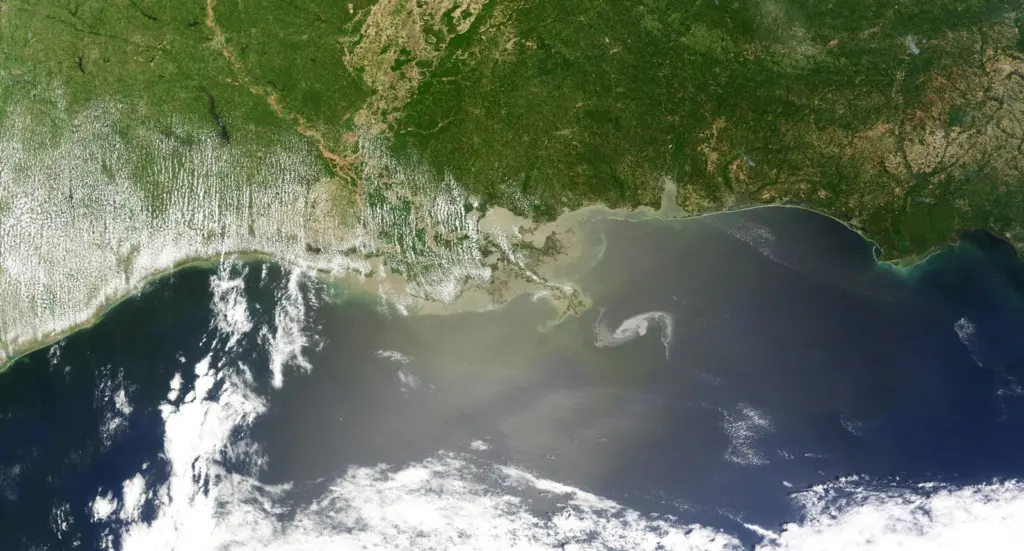
Rather than making the expected landfall, the slick has been rotating like a giant roulette wheel just off the coast of Louisiana. But concerns are growing that a ‘loop current’ will take part of it up to the coast of Florida.
Although it is difficult to calculate were the slick will be washed up due to the inconsistent nature of the weather and winds this time of year, it seems that the port of Mobile is keeping on alert, although at present the port is open. “We continue to monitor the oil spill situation offshore and the weather,” said Jimmy Lyons, state docks director, in a press statement.
The port has asked for written letters from entering vessels to certify the vessel has not passed through an oiled area, an initiative that other ports could follow. This may well impact fruit, coffee, grain, rubber, steel and other shipments that move through the gulf.
Depending on the slick’s movements, deliveries could be interrupted to the Shell Chemicals refinery near Mobile, and the Chevron Corp’s 330,000-barrel-a-day Pascagoula refinery.
Other nearby ports include Pensacola, New Orleans and Houston, and traffic could be rerouted or curtailed at any of these locations.
At present, it seems that the world is holding its breath to see if a giant funnel engineered by BP to place over the oil gushing from the seabed will be able to stop the spill growing – but although the theory is simple, the environment is difficult to say the least. Booms and dispersants are already deployed, and breaks in the weather, plus the fact the spill hasn’t yet landed, have allowed more defences to be placed. However, one industry source points out that the weather has tied some of the booms in knots.
There may well be several other consequences – that could last as long as the effect of the oil itself. The most obvious is the impact on Louisiana’s $2.4 billion seafood industry, which provides about a third of the edible crustaceans for US tables. Officials have already announced a ban on fishing for at least 10 days in waters off Louisiana. However, wherever the oil spill ends up, there will be ecosystems affected – some fish are in the middle of their yearly spawning event. Worst case scenario for the fish industry is that it will affect both Pelagic and coastal fish – although the devastation to the environment goes far beyond this.
Further, the press briefing didn’t discount a temporary halt to oil and gas operations in the area while safety checks took place, and US Interior secretary Ken Salazar has ordered inspections on all wells in Gulf of Mexico.
It is also possible that tanker traffic might be interrupted or other wells temporarily abandoned because of the oil’s fumes or the slick catching fire. It seems that so far a couple of other rigs have been either shut in or evacuated. Since refineries along the Gulf of Mexico produce around a fifth of the country’s gasoline, could affect prices.
The agencies concerned with Florida’s coastline also “have contingency plans” said the US government press briefing.
Related Articles
 EXPANSION & DEVELOPMENT
 EXPANSION & DEVELOPMENT
 PORT & TERMINAL NEWS