


Red-Med railway pipe dream
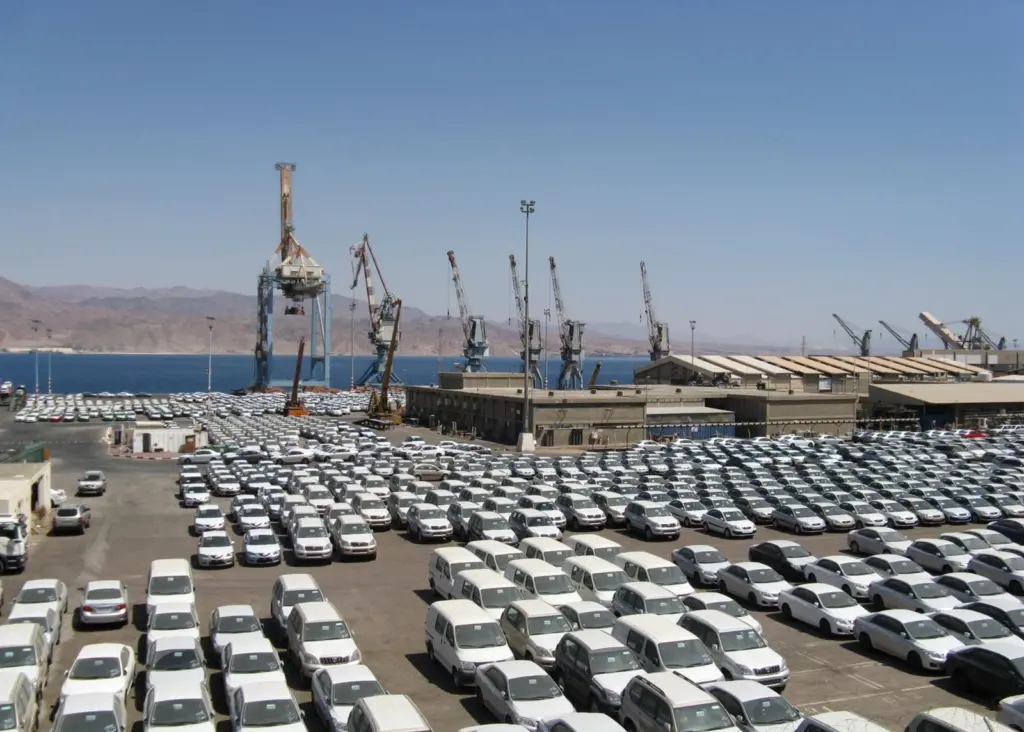
The Israeli government has approved the construction of a railway line from the Port of Eilat to the national railway grid, linking it to the Mediterranean ports of Ashdod and Haifa.
In the words of the Prime Minister, Mr Netanyahu: “In the coming decade, new powers will arise and the State of Israel must create vital interests from a national strategy point-of-view. We have the ability to create an alternative transportation route that bypasses the Suez Canal – this is an insurance policy. Israel must become a continental land crossing route and create great power interests.”
The Government estimates that it will take five years from start of construction to finish. The much shorter link to construct a new line connecting Tel Aviv to Jerusalem is taking twice as long by comparison. Are we looking at a fantasy? Consider the details.
The idea is to have China build the line, but national interests are objecting to this and want it to be a home grown construction. Add to this that the Government decision makers seem to be out of touch with reality as far as regards the size of vessels on the Asia-Europe loops, all too large to enter the Port of Eilat.
The Government is also considering commissioning a study into the feasibility of an inland port north of Eilat, big enough to accommodate the largest vessels. Is someone smoking something, one might ask.
Even if one ignores the fact that the ships are too large to come to Eilat, how do the authorities imagine handling in excess of 8,000 teu and more per vessel? Do they imagine that the cost of discharge in Eilat, transportation to Ashdod and loading to vessels is going to be cost effective? Have they forgotten that the last time the Suez Canal was closed ships went around Africa? Worked pretty well and even at today’s fuel prices would be substantially cheaper than going via Eilat.
The economics of a landbridge to bypass Suez cannot be used to justify such a rail line. It ignores the fundamental principles of the container shipping industry. At best this is a pipe dream, and an unrealistic one at that.
Related Articles
 INSIGHT & OPINION
 INSIGHT & OPINION
 INSIGHT & OPINION