![PortStrategy[GreenPort]](https://www.portstrategy.com/wp-content/uploads/2026/09/PortStrategyGreenPort.svg)






Share and share alike
Felicity Landon asks whether sharing equipment is a realistic option for port operations
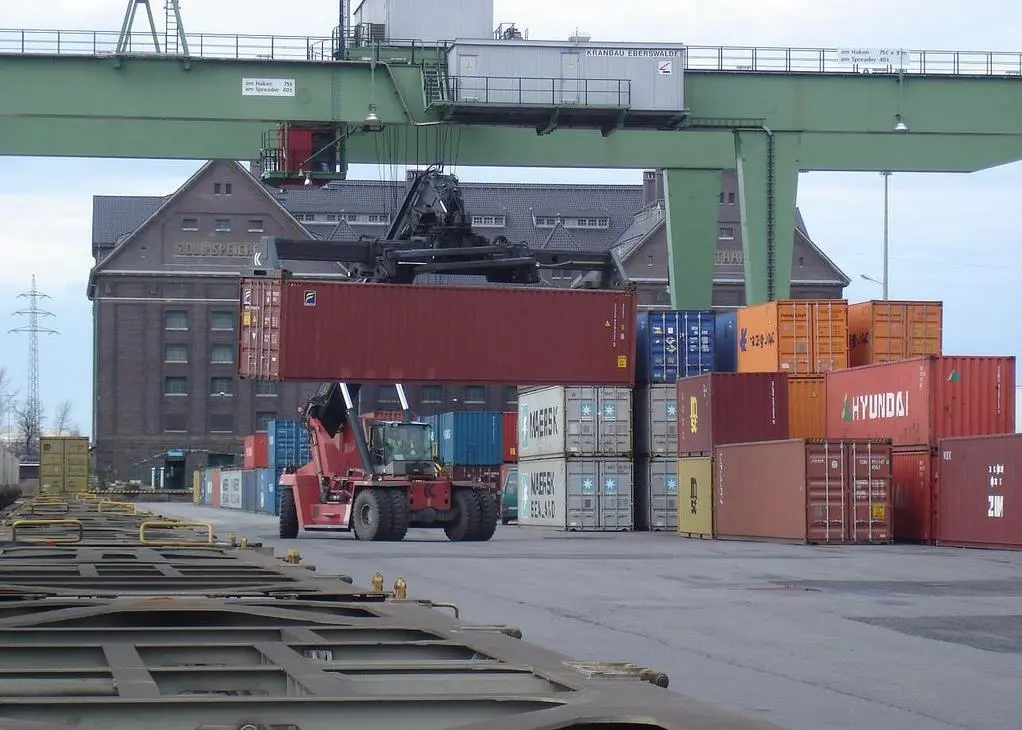
It’s a day of peak demand, your equipment is running flat out and you would give anything for another crane or a few more reachstackers. Next door, your competitor is having a quiet day and has equipment to spare. Could it possibly work out?
Tampa Port Authority recently announced an agreement that will allow four of its major oil and gas customers to share operation, maintenance and repair of the new petroleum unloading facilities at its main petroleum terminal complex, now being expanded and modernised. The 25-year agreement, it said, was ‘the culmination of a high level of vision and collaboration’ by the customers and the port authority, and brings together customers that in the past have each operated independently.
Sharing of the central manifold would allow higher efficiency, larger capacity and greater cost-effectiveness; the four operators wanted to make the complex ‘a model of teamwork and progress’, said Tampa.
It would be a mistake to assume that was all straightforward – behind the scenes there must have been some pretty intense discussions on berthing rights and priorities.
Tough sell
So how can this sort of arrangement translate into day-to-day cargo handling?
Equipment pooling in ports is not prevalent and there are several reasons for this, says Jason Chiang, senior manager for Drewry, based in Singapore.
“In most port concessions, the landlord model is used where the port authority is responsible for the channel, berth and land area. The terminal operator is responsible for supplying the equipment, paving the terminal and building installations. There are few, if any, arrangements where the concession has an equipment sharing arrangement amongst terminal operators,” he says.
In addition: “Most of the ports are using some form of terminal operating system (TOS). This requires some form of signalling/radio equipment to be installed on the quay, yard and terminal vehicles, so that the TOS can send real-time information. Pooling of equipment may not be feasible as competing terminal operators may not be using the same TOS.”
Competing terminal operators are generally not in favour of sharing equipment, as the issues of maintenance and handing over after completion of operations could become sources of conflict if the guidelines for pooling are not defined clearly, says Mr Chiang.
Crane care
However, there are some cases of terminal operators sharing quay cranes. “For example, in Laem Chabang, the terminals are built in phases where each phase is concessioned out to multiple operators. In order to make use of the linear berth, the operators have an informal arrangement to allow the gantrying of their cranes from one terminal to another. This allows the operators to earn additional revenue, and provide more capacity than their equipment fleet can support. Of course, this would require some form of formal collaboration on the part of the operators, which is not common.”
Tze Ping Wong, a Singapore-based consultant with Drewry who has an engineering background, says: “One major challenge I foresee in the pooling of equipment will lie in the management of control and allocation of liabilities associated with the equipment. Control issues will lie with prioritisation in the event of competing demands, and decision-making with regards to specifications and also on the extent of upgrading or repair works for the equipment.
“Liability issues will arise when maintenance, damage and claims associated with the operation of the equipment come into play.”
Mr Wong says pooled equipment would likely either be owned by individual terminals or by a third party which then manages the allocation to terminals for operations.
In the first case, the owner terminal would make decisions with regards to specifications of equipment and upgrading or repair works – specifications which might not meet the requirements for other terminals involved.
Responsible rules
In terms of liabilities, the owner terminal would then be responsible for maintenance, repairs and claims. Checks would be performed before handing/taking over between owner and sharing parties, before and after operations – based on trust for the handing-over party to highlight any issues and the onus on the taking-over party to spot any discrepancies, he says. “That is likely to require good handing over/taking over checklists and lengthy checking processes.”
Equipment condition monitoring systems, logging systems for fault tracing, etc., would likely need to be installed on the equipment to provide objective proof in the event of damage or faults – and that would add to the costs of the equipment in the first place.
Finally, such a system would require carefully crafted terms transferring liabilities during the ‘lending’ period to the operating terminal. “The wrangling over clauses in contracts often cripples the cooperation initiatives, as it is usually difficult for both parties to settle on terms that they are both comfortable with,” says Mr Wong. “Working on this model will require a high degree of trust between the sharing terminal operators, as there are many potential causes for disputes and conflicts.”
And what of the second model, that of a third party owning the equipment and providing it to terminals?
Look outside
In this situation, he says, the third party decides on the specifications of the cranes or equipment based on the demands of the target users; it also takes care of maintenance, upgrading and repair works. The specifications would probably be based on the needs of the most demanding user – that could translate into higher fees to be paid by the others for equipment above the spec that they need.
Allocation of equipment would be based on the operations performance commitment of the third party to the terminal operators, usually in the form of a contract. “Again, everything comes at a cost; higher performance demands will translate to higher fees in the contract.”
In terms of liabilities, the third party will usually commit to a certain level of operational performance and equipment reliability to terminal operators. Terminal operators will take on responsibility for any damage of equipment or claims during the course of operation under their care, usually in the contract terms. “However, disputes might still arise regarding determination of responsibility,” says Mr Wong. And lengthy checks for handing/taking over would be a likely issue here, too.
“To meet the demands of all this, the third party will likely need long-term contracts with the terminal operators to justify their investment in the equipment, and they will also need to manage the redundancy required for operations performance and equipment reliability to meet the terminal’s needs, yet deal with the peak and lull situations.”
Smaller equipment such as trucks, reachstackers and empty stackers would be better suited for such arrangements, Mr Wong believes. One possible arrangement would be for the port authority, which has control over the port concessions, to weave in requirements to engage its subsidiary companies providing equipment and operator services. “An example would be in Dalian port, where the port authority provides drivers and trucks to a cluster of Dalian terminals.”
Independent port equipment consultant Mustafa El Nahass believes equipment pooling could help in cost savings for low-volume terminals, “but with big terminals it will not be effective, as it could waste time and money”.
Even in a low-volume terminal a critical issue would be implementing a ‘fair turn’ schedule, he says.
“Pooling equipment could be an advantage for a low-volume terminal, but with high volume it would be a disadvantage, and create problems with maintenance operations too.”
Related Articles
 CONTAINER & CARGO HANDLING
 CONTAINER & CARGO HANDLING
 BULK HANDLING