![PortStrategy[GreenPort]](https://www.portstrategy.com/wp-content/uploads/2026/09/PortStrategyGreenPort.svg)






Hammering out a future
Ports looking to diversfy can be in charge of their own cargo destiny, finds Stevie Knight
While ports usually fight to win existing cargo flows, David Wignall of Wignall Associates explains that it’s sometimes possible to use the port as an anvil to forge a whole new market. But there are risks attached, no matter which sector a port chooses to develop.
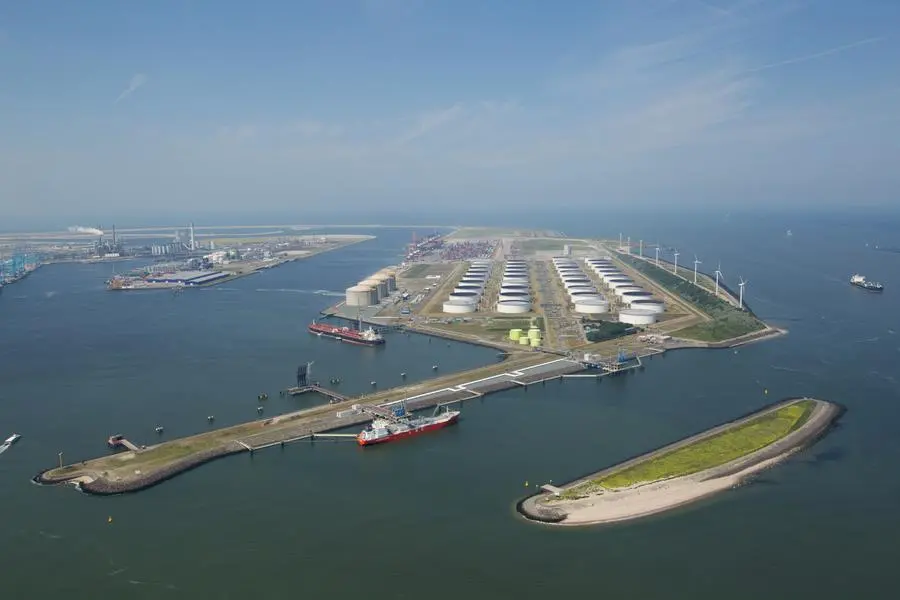
Certainly, the opportunity not just to respond but to hammer out a market from its inception has got a number of players interested in liquefied natural gas storage.
It’s not for everyone: European Seaports Organisation chief executive Isabelle Ryckbost has been talking down a watertight commitment from the TEN-t core ports to put in LNG bunkering, with a proposal that rests on a “sufficient” number of LNG refuelling points, and “market realities”. However, a few North European ports like Antwerp, Rotterdam and Zeebrugge have already gone some way to LNG bunkering and are looking at harmonised standards, along with Singapore.
The argument is anything but proven. David Bull of Ocean Shipping Consultants points out “there are only around 40 or so vessels sailing on LNG at present in the area” and none of them are that big, so you have to conclude that Rotterdam’s LNG import Gate terminal is definitely not being driven by present demand.
Getting ahead
So, the question is, what is spurring people to invest in such an untested commodity? “The effect of stealing a march on your competitors can’t be underestimated,” says Mr Bull. “Being ‘first’ potentially gains you a whole market with a lot of allegiances and the pick of the deals.” Singapore, after all, became Singapore because it was early into containers. “Any later entrant has to prove it can do better, offer more, than the original leader who will also probably have a four or five year start with its investment,” he says.
Inside knowledge helps. The Gate terminal, for example, is backed by a small number of special interest players who are bearing a substantial proportion of the risk, explains Mr Bull, providing a route into untried waters while still allowing Rotterdam to pick up a large slice of any success
Mr Wignall agrees, pointing out that canny investors such as those behind the Gate project are getting into proactive port development “because they think they know, and can adjust the market to suit themselves”.
He explains: “If you can store, say, an energy commodity you can start thinking about playing the market.” While the Gate terminal has put a lot into LNG storage, in some places it’s simply space that’s needed. For example the Indonesian-owned Miang Besar coal facility seems to be taking a leaf from the Dalrymple Bay Coal Terminal operation. “Miang Besar will have 100 mtpa of capacity which means it doesn’t have to wait for deliveries to turn up, users can hold coal and sell straight from the stockpile. They will be able to hold back, adjust the quality of coal by blending and wait for the right conditions to sell,” he says, “In other words, act like a wholesale market.”
Igniting the potential
Meanwhile, in the still-developing economies there is possibly as much inherent, untapped potential in the container market as the more obvious energy-related cargoes. “While you may not easily see an existing, identifiable commodity stream, it doesn’t mean there isn’t an amount of traffic ready and waiting to be ignited by a bit of proactive port development,” says Gagan Seksaria of International Container Terminal Services Inc.
“Africa has a lot of latent trade potential, but the lack of attractive logistics kills the opportunities, there’s simply no way to get items to market. However, if you can bring the prices down below a certain margin by supplying cost-effective logistics, this latent cargo, which has not previously shown up on the radar, suddenly surfaces.” Mr Seksaria points out that development in many countries has been around the one, chosen gateway with inevitable consequences: higher costs of logistics outside a narrow band, lower efficiency – and competition being as choked as the roads. So now many places are ripe for the emergence of a second port.
He points to Kribi in Cameroon as a good example of an alternative port development: it shall relieve the main, restricted Douala seaport and fire up activity in what is currently a sleepy region. Further, Lekki in Nigeria looks like following the same pattern along with Tanga and Mtwara in Tanzania.
However, it’s a balance. Close enough to the original area to be an obvious successor, a facility could be up against some of the same, historical issues whether this is lack of room to develop or the logistics outside the gate. Mr Seksaria points out: “Chennai in India has tended to build or aim for more container terminals even though the road side is completely jam packed – instead of moving activity out to nearby greenfield ports like Ennore and Katupalli which are much better placed from a connectivity point of view.
But further off the beaten track and you are looking to create a whole new pathway, appealing to emerging cargo streams.
Dig deep
So, how do you know that this groundwater cargo is there, waiting to well up given a little digging? “Look beyond the shipping companies,” advises Mr Wignall. “Sometimes the flows are simply difficult to detect because they are trickling across other routes.” Mr Seksaria adds: “GDP itself isn’t a particularly relevant indicator. However, one interesting calculation you can do is ratio up a country’s export import cargo throughput with its population. It’s not a watertight predictor, but it does give you some interesting comparisons: if you do this for Nigeria and compare it with, say, Kenya, the teu per capita shows that there’s clearly some room for Nigerian development.”
“Of course, some facilities need cultivation,” says Mr Wignall. “One of the classic cases was Laem Chabang. A port in the middle of nowhere, no one using it, until the Thai government decided to back it with incentives and the port authority pulled out all the stops to welcome the first few concessions, even going as far as buying the cranes.” That started the ball rolling and it picked up volumes, so a very different scenario faced Hutchison Port Holdings when it won a recent concession at the port. “They had to do everything themselves and pay through the nose for it too.
“While it’s possible to use a port to forge the market, it is doubtless easier if it can be tied in with a government infrastructure plan,” says Mr Wignall. Although government support can itself be a double-edged sword, with grants or approvals hanging on what seems the expediency of party politics: while there have been plans on the table for a new port at Zarubino in the Russian territory of Primoriye for some years, the project has been faltering as it needs the federal government to pay for berth infrastructure, power and rail as well as the usual dredging.
So, despite all this it’s worth remembering that while 20:20 hindsight seems simple, it has inevitable bias toward success.
Related Articles
 CONTAINER & CARGO HANDLING
 CONTAINER & CARGO HANDLING
 BULK HANDLING