![PortStrategy[GreenPort]](https://www.portstrategy.com/wp-content/uploads/2026/09/PortStrategyGreenPort.svg)





The Europe versus Asia debate continues
Cargotec container equipment specialist Kalmar received orders for around 100 rubber-tyred gantry cranes in both 2012 and 2013, Raimo Ukkonen, vice president rubber-tyred gantry cranes, tells Port Strategy.
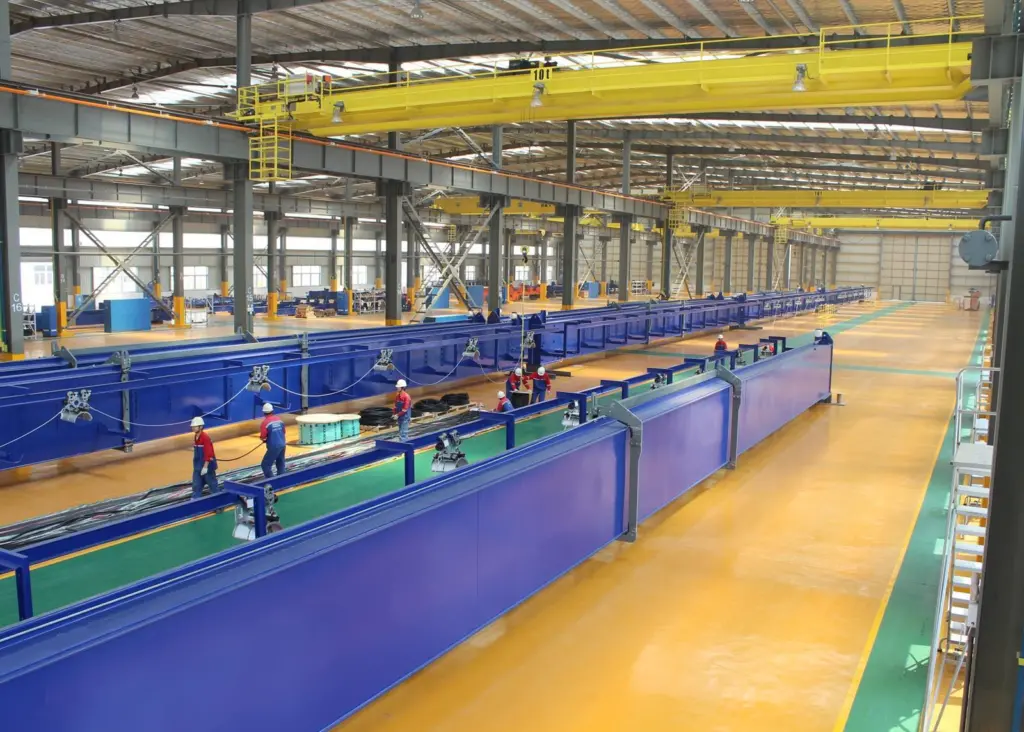
While many of the large stevedoring groups have sourced bulk production of cranes from Asia, Kalmar continues to attract orders from the very biggest global operators.
“One thing influencing the purchasing decision is that Kalmar has a certain design platform, which includes many optional modules and features. We don’t create dedicated designs for each operator to coincide with their general specifications and project specific requirements,” he says.
Significantly, around 80% of RTGs that Kalmar produces are now built in China.
“We are growing our global market and having manufacturing facilities in China has been one of the most important factors behind this, as it has helped create capacity and economies, among other advantages, too,” he says.
As to whether the Chinese will ever undertake RTG manufacturing in Europe, he says, “We do not envisage this kind of development taking place in the foreseeable future. The majority of the container handling equipment market is expected to remain in Asia, whereas growth in Europe is low, so setting up additional production facilities in Europe by Asian suppliers does not sound very attractive.”
However, on the R&D side only a certain proportion that ends up in Kalmar’s RTGs takes place in China, with the majority of the work still taking place in Europe. Mr Ukkonen says that there might well be an all-Chinese built and designed Kalmar RTG sometime in the future, although he believes that such a concept would probably only be successful in the domestic Chinese market.
“This is because increasing globalisation has usually resulted in things being developed in the opposite direction: products being made globally, instead of the whole value chain and the whole supply chain coming from one single country,” says Mr Ukkonen.
Related Articles
 CONTAINER & CARGO HANDLING
 CONTAINER & CARGO HANDLING
 BULK HANDLING