![PortStrategy[GreenPort]](https://www.portstrategy.com/wp-content/uploads/2026/09/PortStrategyGreenPort.svg)





Time for a touch of humanity
COMMENT: A life at sea is not the glamorous posting that it used to be. Long stretches away from family and friends, limited social cohesion because of a lack of common language and risk of attack or even hijack in some parts of the world, writes Carly Fields.
Shore leave is fast becoming the only highlight of this ‘glamorous’ career. And now that perk is also becoming severely restricted as a result of the global Ebola pandemic.
Up to the end of August, 23,020 vessel departures took place in the five countries affected by Ebola and around 6,930 vessels called at the five countries in the same period, according to figures from IHS Maritime.
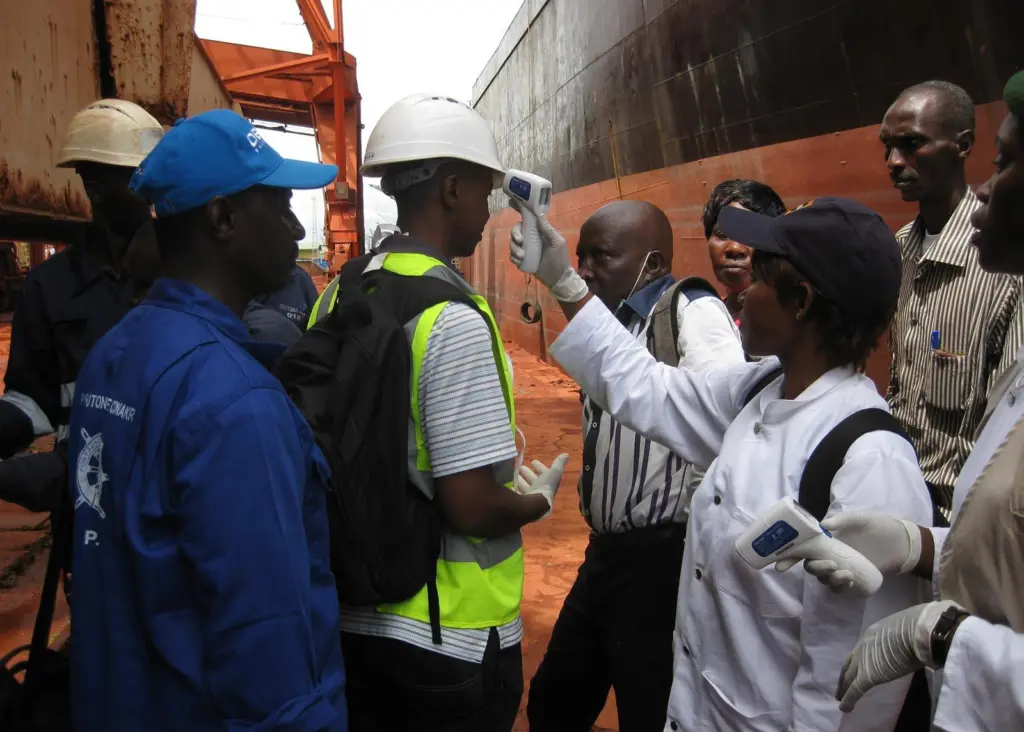
Ships that call in any affected West African country face a wide array of precautions at their next ports of call. They could simply be required to check-in confirming no illness on board, or they could be subject to complete quarantine, such are the range of measures in place at different ports around the world.
While ports must of course follow protocol to stop the spread of Ebola, the crews on these ships are just doing their job. As gateways to that ever elusive shore leave, ports would do well to remember that.
After months at sea, these ships dock and their crews are increasingly being treated like lepers. Confined to a ship, facing only visits from biohazard-suited health control officials can’t do much for the state of mind.
Sometimes it’s easy to de-humanise the human part of shipping while in port: ship calls, all the formalities are done, ship loads or unloads, ship leaves. All without much contact with or interest in the people onboard – unless they are stowaways and then ports become very interested in the human element.
I’m not suggesting that we start a ‘hug a seafarer’ campaign, but as an industry so intrinsically linked with ships and consequently their crews we could do more to make seafarers feel less isolated, especially in these times of virus-related restrictions.
Don’t leave it to port chaplains to be the only people that really communicate with crews; prove that port staff can be compassionate too.
Related Articles
 OPERATIONS
 INSIGHT & OPINION