![PortStrategy[GreenPort]](https://www.portstrategy.com/wp-content/uploads/2026/09/PortStrategyGreenPort.svg)




EXCLUSIVE: Port-centric warehousing drives competitiveness
Port-centric warehousing is emerging as a decisive factor in strengthening the competitiveness of Europe’s cocoa and coffee supply chains, particularly around major logistics hubs such as Amsterdam and Antwerp.

We spoke to Alec Gunn, founder and chief executive of Commodity Centre to see how the model is delivering measurable efficiencies while improving resilience in an increasingly volatile global trading environment.
“Port-centric warehousing in major European hubs like Amsterdam and Antwerp has become a genuine competitive differentiator in cocoa and coffee logistics,” said Alec Gunn.
“For commodities such as cocoa and coffee, where global trade routes, port efficiency and supply chain timing are critical, the positioning of warehousing infrastructure is key to influence operational resilience and commercial success.
“When you reduce handling and shorten the distance between port and storage, you protect both quality and commercial value. That’s critical for sensitive commodities such as coffee and cocoa.
“In volatile markets, proximity to port gives greater flexibility. Stock held in the right location allows traders and manufacturers to respond faster, manage working capital more efficiently and operate with greater certainty. Port-centric infrastructure isn’t just operational efficiency for us – it’s strategic advantage.”
Operational gains
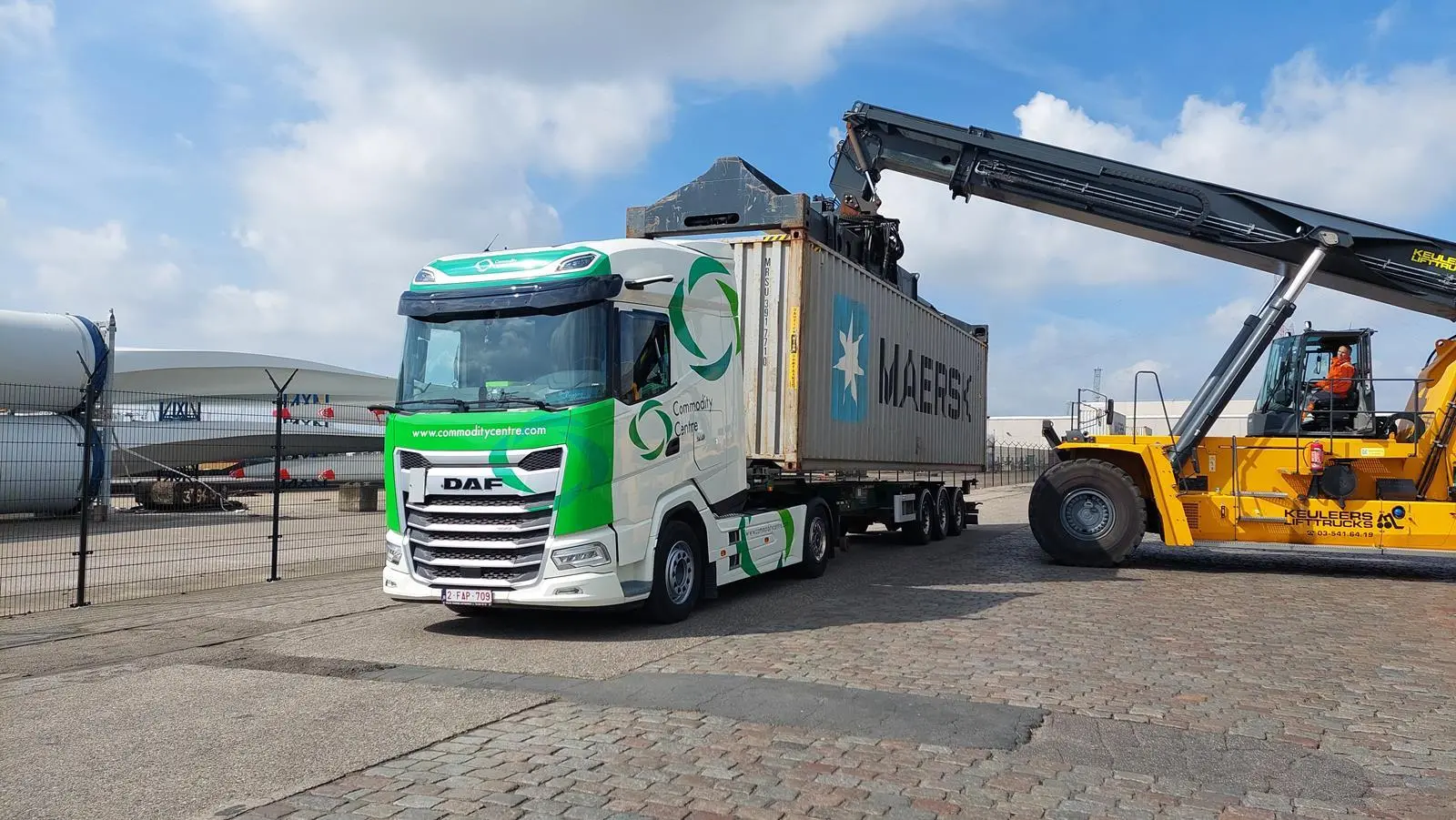
The operational gains are tangible. Managing more than half a million tonnes of soft commodities annually through port-based facilities has reduced lead times and lowered costs by avoiding inland transport and repeated cargo handling.
“By managing commodities through European port-based facilities, days are saved from the supply chain lead times and costs are saved by not having to transport goods inland and double handle them,” continued Gunn.
“In many cases, cost efficiencies in the region of 10-15 per cent can be made as well as significantly reducing product quality risk. At scale, those gains translate into more efficient use of working capital, enable us to respond faster to market demands and gives a clear competitive advantage for our clients.”
Beyond storage, integrating services such as pre-blending, fumigation, customs documentation and port health within port boundaries is further strengthening responsiveness.
“By integrating our value-added services at our warehouse facilities, we eliminate unnecessary cargo movements, reduce clearance delays and shorten decision-making cycles,” he said.
“This allows traders to respond faster to quality requirements, customer specifications and market movements, while maintaining full compliance and traceability. Having technical, regulatory and handling expertise embedded within the port environment enables operational agility and a critical layer of risk control.”
Proximity is key to reducing disruption
In the UK, proximity to major ports is also proving critical as supply chains face disruption.
“Our UK facility is situated equi-distant between the key south-eastern London ports (London Gateway & Tilbury) and Felixstowe. This location enables us to minimise the dependency on inland transport and shorten clearance times,” said Gunn.
“This is particularly pertinent during periods of congestion or shipping disruption. For importers of coffee and cocoa, that proximity protects product integrity and enables faster reallocation of stock when market conditions shift. Ultimately, being located in close proximity to key UK ports strengthens our resilience, safeguards working capital and provides a more secure platform for long-term supply continuity.”
The model is also being extended beyond soft commodities.
“Our expansion into metals some years ago was a strategic evolution of our port-centric model rather than simply a diversification of services. By aligning soft commodities and metals within the same port infrastructure, we have built a business that maximises asset utilisation and strengthens operational expertise across two sectors. In a world of increasing volatility, scale and cross-commodity expertise are not advantages – they are necessities,” he concluded.
Related Articles
 CONTAINER & CARGO HANDLING
 INSIGHT & OPINION
 INSIGHT & OPINION