


Limits of economies of scale
COMMENT: We have long believed that economies of scale are the saviour of the maritime industry, for all sectors ranging from terminals and bulk, to tankers and containerships. But in the last few months we have begun to hear opinions suggesting that containerships have reached their maximum size. So, wherein lies the future, asks Ben Hackett.
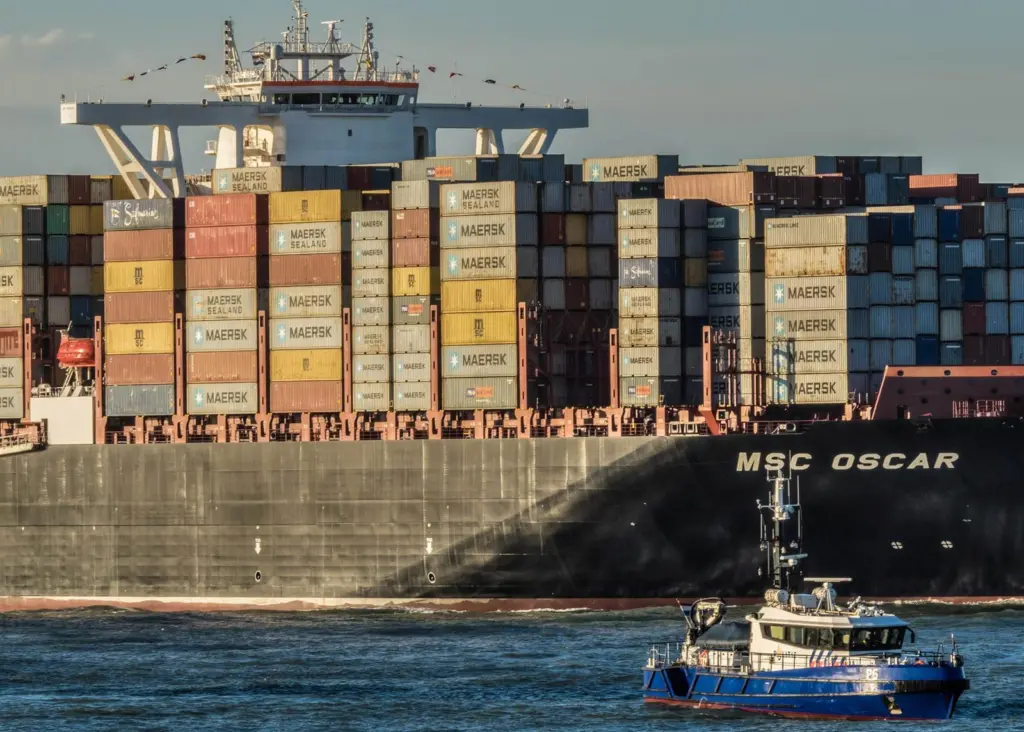
The effect of economies of scale is to achieve a reduction in the average costs over a range of output, be it in tonne miles or terminal handling productivity. Economies of scale should lead to lower prices and higher profits – this is called a positive sum game for carriers, terminals and consumers, but only if high capacity utilisation can be achieved. Otherwise it becomes a zero sum game. On the flip side, diseconomies of scale are the result of decreasing returns to scale which can lead to a rise in the average cost of transportation.
The largest ship ever built was an oil tanker; the Knock Nevis built in 1979 (christened as the Seawise Giant) with 565,000 dwt, a length 458 meters, a beam of 69 meters and a draught of 25 meters. The ship was so large that no port could accommodate it fully laden, so it was loaded and unloaded while anchored offshore, suggesting that diseconomies were rapidly reached.
In 2004 the Knock Nevis was converted to a floating storage and mooring unit off the coast of Qatar until 2009 when it was scrapped. Today there very few of these large crude carriers left. Dry bulk carriers suffer the same problems: what is efficient on water creates diseconomies when looking for ports able to handle them.
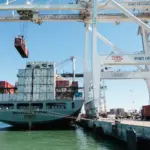
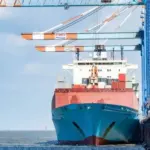
The same is potentially true of containerships. There is no barrier to building vessels over 20,000 teu, or even up to 24,000 teu, but the hurdles to efficiency appear quickly. Firstly, there is only one trade route – the East-West trade – available that is long enough and has enough demand. Secondly, there are few terminals equipped to handle them and they must rely on transhipment and high terminal productivity.
Thirdly, and most importantly, if they do not achieve high capacity utilisation, they have no economy of scale; yet if they do, full terminals cannot yet handle them effectively leaving them caught between a rock and a hard place.
Related Articles
 INSIGHT & OPINION
 INSIGHT & OPINION
 INSIGHT & OPINION