![PortStrategy[GreenPort]](https://www.portstrategy.com/wp-content/uploads/2026/09/PortStrategyGreenPort.svg)



Sound the trumpet
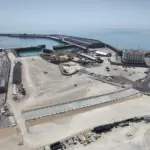
COMMENT: There’s nothing like a bit of pressure to really push boundaries. In the case of APM Terminals, most of that pressure is of its own making when it comes to its Maasvlakte II terminal, writes Carly Fields.
APM Terminals chief executive Kim Fejfer has modestly described it as a “game-changer port”; productivity improvements of 40% have been promised; and it’s the self-proclaimed greenest container terminal in the world.
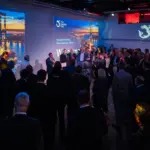
So hyped is this terminal that the Netherlands’ monarch, King Willem-Alexander attended the official opening. Nothing like a bit of blue blood to lend gravitas to an occasion.
The facility brings together eight remotely-controlled ‘super’ ship-to-shore gantry cranes, a landside fleet of 62 battery-powered lift-automated guided vehicles – the world’s first that can actually lift and stack a container – and 54 automated rail mounted gantry cranes. But it’s not just the hardware that has had to smarten up for this job; the software needed to rise to the occasion as well to ensure that productivity gains through physical handling translate to overall improvements.
Containers here are automatically sorted and stacked by the TOS according to their onward mode of transportation, be that road, rail or barge. And the green agenda is given a big tick through the use of wind-generated electricity, which means no CO2, emissions or pollutants.
High-tech foundations
This is a terminal founded on automation, pulling in technology from every direction to allow it to become a trail-blazer in cutting-edge container handling.
It’s fair to say the eyes of the port world are on this innovative terminal. Will the pressure to perform ultimately be too much too bear? Unlikely. This is a showcase terminal for APMT, the Port of Rotterdam and the throng of vendors involved in the automation processes. That said, the idea that this terminal will run without a hitch from the off is simply naive. Pioneering on this level is never going to be easy: five long months passed from the first call by a commercial ship to the official opening.
There does, however, needs to be some acceptance in some corners that this is ground-breaking technology and if things aren’t as seamless as designed – and let’s face it snagging issues are a fact of life – the industry should cut APMT some slack.
We needed an operator with deep pockets, the determination and the foresight to move forward with such an ambitious project. APMT fitted the bill. And at $500m this terminal did not come cheap – and if meeting that return on investment isn’t a massive incentive to make it work, I don’t know what is.
Related Articles
 OPERATIONS
 INSIGHT & OPINION