


Co-operation and cargo
The ports of North Americas heartland present a united front, as Barry Parker explains
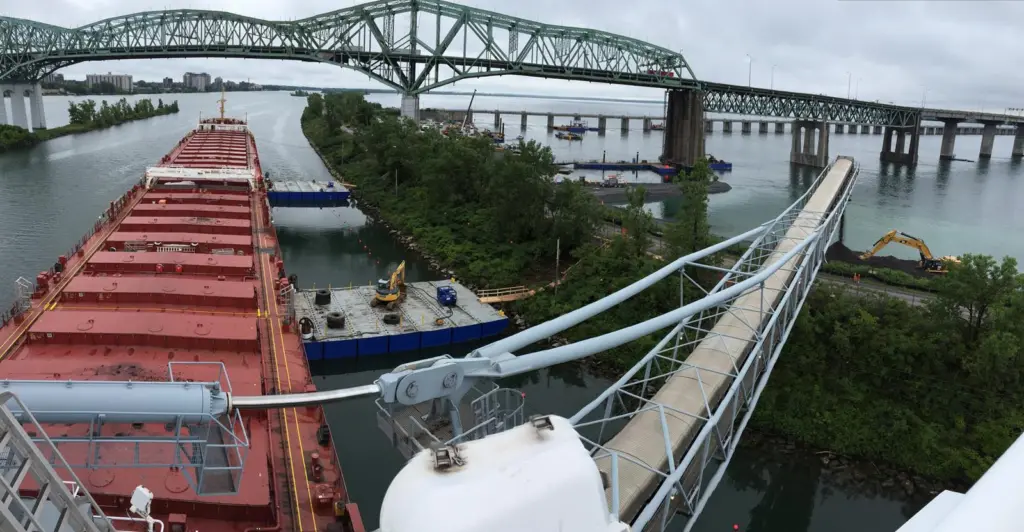
The Great Lakes is sometimes referred to as North America’s “fourth coast” – a handful of inland water bodies deep within the continent’s heartland, tied via the St Lawrence Seaway to the Atlantic Ocean, and encompassing eight US states and two Canadian provinces.
Traditionally, lower value bulk movements tied to the steel industry have comprised the lion’s share of cargo moves. However, in recent years, changing trade patterns have seen a growth in higher valued project cargo – including windmill components moving inbound. In 2013-2014, with North Dakota oil production growth, there was talk of crude oil shipping (to refineries in eastern Canada), but this never materialised. Efforts are now underway to create new waterborne supply chains for non-bulk cargo that might otherwise get stuck in motorway gridlock.
Even though the Lakes’ stakeholders are incredibly diverse, business interests in the region, including the ports, have stood out through their cohesiveness and their alignment on the big issues, with US and Canadian voices often on the same side. The region’s ports and shipping businesses have also distinguished themselves when it comes to their public image and outreach, providing an example of a concerted and highly effective regional effort.
Evidence of this spirit, where fragmented voices consolidate, can be seen by the end September 2016 merger of the Chamber of Marine Commerce (CMC), an organisation with 150 members including ports, shippers and service providers, with the Canadian Shipowners Association (CSA). The new organisation, to be based in Ottawa but representing US interests as well as Canadian, will keep the CMC mantle, and the website marinedelivers.com. Its interim leader will be Raymond Johnston, a veteran of Canada Steamship Lines.
In discussing this merger, Wayne Smith, chair of the CMC, said: “Both associations recognise that we have many shared goals and issues…” His colleague, Allister Paterson, CSA chair, added: “One of our common objectives is to foster a harmonised and efficient regulatory climate throughout the bi-national Great Lakes and St Lawrence region and along the eastern seaboard and northern coasts.”
Co-operation among ports
There are more than 100 ports serving the Lakes, ranging from private terminals (typically serving a mine, power plant or a steel mill) to public facilities. One of the most active advocacy groups, the American Great Lakes Ports Association (AGLPA), explains: “On the US side of the Great Lakes, most port agencies were created by state statute and are governed by a board appointed by local and state officials.” Where Canada is concerned, “smaller ports are under local government control, while larger ports are designated “Canada Port Authorities” by the federal government”. Canada’s 18 major ports comprise the National Ports System, created in 1998 under the Canada Marine Act.
Importantly, and central to the ability of the ports’ ability to co-operate, is the non-“discretionary” nature of its cargoes. Co-operation, while not completely unique to the Lakes, is in sharp contrast to the ports in North America that compete intensely for intermodal cargo. The Lakes business is seasonal; therefore, container trades are not significant because ocean access through the St Lawrence Seaway is unavailable during January, February and March. For the most part, each port in the Lakes is tied to a discrete hinterland (often extending well beyond the port area), hence a co-operative spirit prevails among the ports, appropriate for readily coming together to handle the big regional issues.
The ongoing efforts to be heard in the legislative dins have fuelled the regional voices. The AGLPA, comprised of 18 ports spanning the map from Superior, Wisconsin (in the west) through Ogdensburg, New York (on the St Lawrence River), has identified four key issues facing its members. The first, State Aid for Ports, highlights the multiple layers of stakeholders for any particular port. AGLPA points out that ports are largely ignored by the eight states (traditionally in the background behind federal agencies tasked with maintaining infrastructure) and local interests. The exceptions are Wisconsin, which has invested more than $110m into ports since the late 1970s, and Minnesota.
The AGLPA’s list of critical concerns also includes marine infrastructure at the federal level, with a focus on lock renewals along the St Lawrence Seaway, the gateway to the Lakes, and at the Soo Locks, at Sault Ste Marie, Michigan, a fulcrum for industrial bulk traffic. These concerns are intertwined with issues also seen in other coasts of the US: the Harbor Maintenance Trust Fund, a levy on shippers that has built up a substantial balance because the US Congress has failed to allocate spending for maintenance dredging of harbours and channels. A unique slant in the Lakes is the extreme congestion on motorways near major cities which ought to generate interest in short sea shipping but has not so far.
Forward funding
The States in the US may have a greater role to play in funding of ports. A 2011 study of port commerce by Martin Associates hinted at the intertwining of ports with their hinterlands. The study showed that indirect benefits (outside of a local port) were more than double the local direct benefits, measured in both money flows and jobs. With local oversight but with economic benefits extending hundreds of miles inland, the AGLPA has urged that the Wisconsin model, where the States provide economic support, be pushed outward, stating that: “The Wisconsin programme should be replicated, and Great Lakes Governors have called for just that. In early, 2016, a regional maritime strategy released by the Conference of Great Lakes Governors and Premiers called for port investment by states.” The coalition referred to has bundled the support of eight Governors – a group that includes Mike Pence, from Indiana, the Republican candidate for vice president – and provincial Premiers from Ontario and Quebec.
In a release announcing the plan, the coalition, chaired by the Governor of Michigan, Rick Snyder, stated: “The strategy’s objectives are to double maritime trade, shrink the environmental footprint of the region’s transportation network, and support the region’s industrial core.” The Lakes’ traditional steel raw materials role is front and centre in the recommendations which are estimated to cost nearly $4bn over a 10 year period). The lead strategic thrust is the construction of a second large lock in the Soo, which would supplement the existing but aging Poe Lock, a critical waypoint for many of the large Lakers that transport raw materials like iron ore and coal. Harmonisation of rules throughout the region is also a big concern, with one item in the strategic blueprint being: “Developing recommendations for a treaty or other binding agreement between the US and Canada to co-operatively manage the regional maritime system.”
REALISING THE BENEFITS OF JOINED UP THINKING
Infrastructure is not a sexy topic. Ironically, the seeds of the Great Lakes collaborative outreach efforts in recent years were spurred by regulatory fervour on ballast water, including efforts to mandate standards viewed as draconian by the shipping community which would threaten to wreak havoc on commerce.
Since 2009 and 2010, when the dangers of uninformed regulatory efforts became apparent, a whole series of economic studies to inform the general public and policy makers have been commissioned. While the initial stimulus for the co-operative efforts may have been the promotion of uniform and reasonable practices on “incidental discharges” and ballast water management, the efforts have had the unintended and very positive effect of providing informed background material, and focusing attention on infrastructure – with its existing shortcomings, and possible solutions going forward.
State of the art branding, and marketing aimed at supply chains, has also come to the Lakes. Since its launch in 2003, HWY H2O, a joint effort of the St Lawrence Seaway Management Corporation on the Canadian side, and its US counterpart, Saint Lawrence Seaway Development Corporation, and a bevy of ports, has evolved from a pure promotional campaign to an active portal for new business development.
With the objective of eliminating the complexities inherent in creating new supply chains, the new maritime “highway” features a single point of contact, and discounts on Seaway tolls, for shippers who want to explore movements of cargo by water, and ultimately move their cargo through ports in the Lakes.
One success story, Duluth Cargo Connect, is the result of a pairing of the Duluth Seaway Port Authority with a local business, Lake Superior Warehousing. Targeting heavy- lift and project cargo (including components for wind power), Duluth Cargo Connect provides one stop cargo handling.
Related Articles
 PORT & TERMINAL NEWS
 OPERATIONS
 PORT & TERMINAL NEWS