![PortStrategy[GreenPort]](https://www.portstrategy.com/wp-content/uploads/2026/09/PortStrategyGreenPort.svg)






PMA claims California CAAP not cost-effective
Pacific Merchant Shipping Association (PMA) has claimed the USD$14bn Clean AirAction Plan (CAAP) is relying on “speculative technology”.
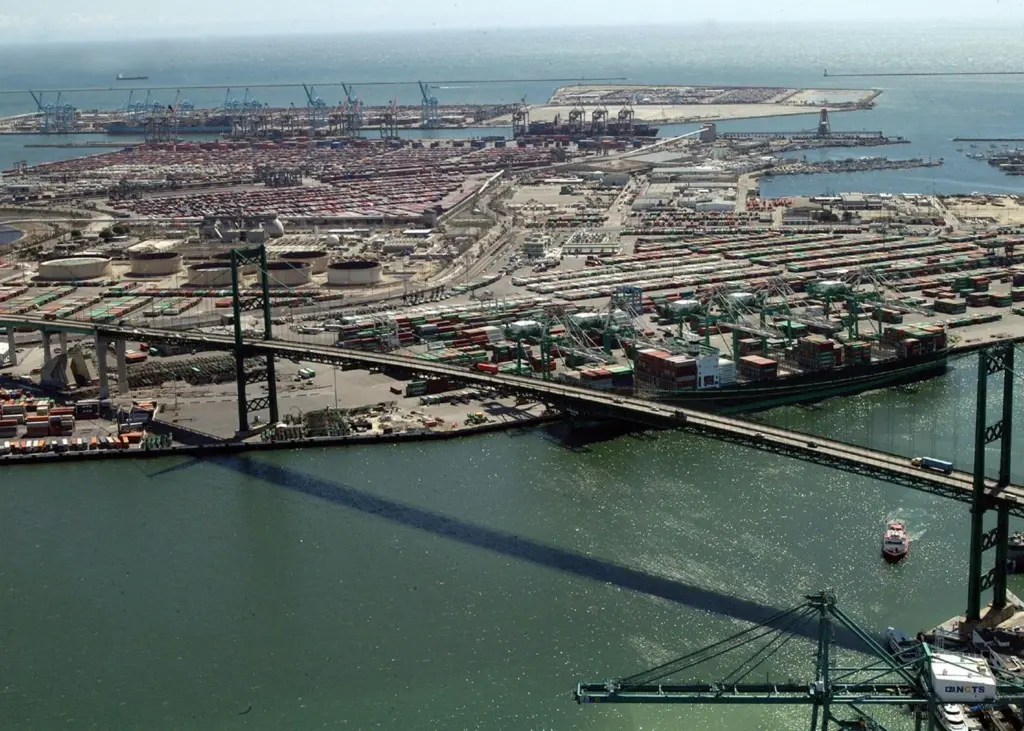
The organisation has called for the ports of Los Angeles and Long Beach’s CAAP to “include a pathway for both ultra-low emission technologies and electrification options for achieving significant emissions reductions in a cost-effective manner.”
Referencing the cost of the project, it said the update should focus on commercially available technology supported by national or state emissions standards, coupled with clearly defined mechanisms of implementation that are financially feasible and economically competitive.
“The CAAP, as drafted, seeks to transform the technology on the waterfront while ensuring basic operations do not evolve to meet changing demands,” said John McLaurin, president of the Pacific Merchant Shipping Association. “It claims to be both fuel and technology neutral but clearly favours one technology and one fuel to the exclusion of others.”
The CAAP should be analysed for its impact on competitiveness, develop a competitiveness goal and integrate the goal within the CAAP to boost the competitiveness of the two ports, PMA said.
It stressed the San Pedro Bay complex has experienced no growth (in total volumes) and negative growth (in market share) during the past decade.
PMSA has also asked that “port officials align the CAAP’s measures with the ports’ stated goals and not place undue and unnecessary burdens on the maritime industry that only delay and significantly increase the costs of the needed emission reductions.”
The Harbor Commissions for Los Angeles and Long Beach are expected to vote on the CAAP in November.
The Port of Los Angeles told Port Strategy: “Our responses to the comments received during the CAAP public comment period will be addressed in the final document. We are not able to do so prior.”
Related Articles
 EXPANSION & DEVELOPMENT
 EXPANSION & DEVELOPMENT
 PORT & TERMINAL NEWS