

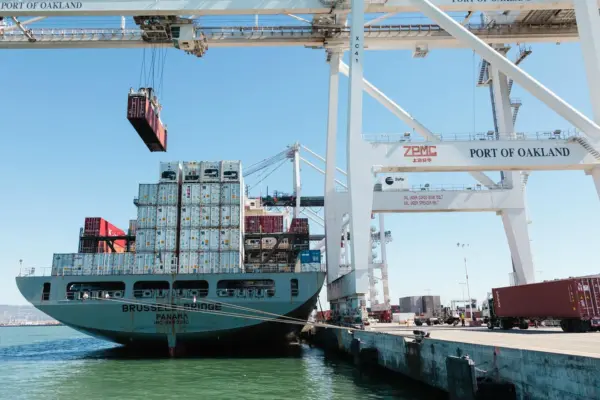
On the lash
Automated container lashing to secure boxes can replace dangerous manual labour requirements on ship decks through mechanical, hydraulic, or structural systems. Dean Davison looks at the benefits and current developments
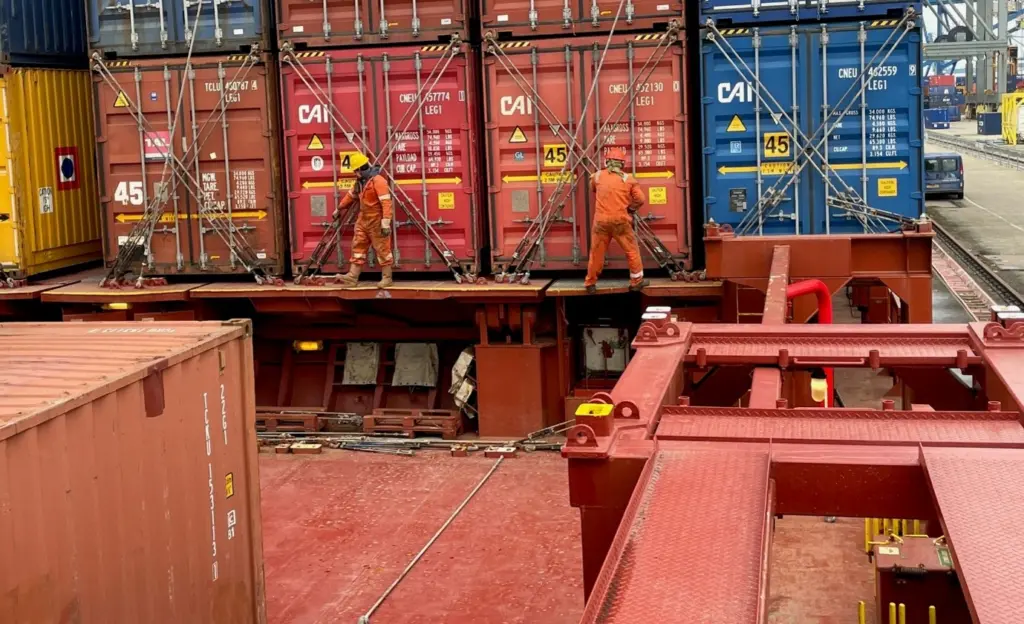
“Even in the most modern container terminals, twistlocks and stackers are still inserted into and removed from container corner castings manually. This persists even though manual lashing has long been recognised as one of the last majors, unresolved occupational safety risks in container handling,” states the TT Club.
The TT Club is certainly worth listening to here. Established in 1968 and with more than 1300 current members, including owners and operators, ports and terminals, and logistics companies, working across maritime, road, rail, and air, this organisation is an established independent provider of mutual insurance and related risk management services to the international transport and logistics industry, with a clear mission to “make the global transport and logistics industry safer, more secure and more sustainable.”
So, the view it offers on container lashing is important, especially relating to safety and the risks involved, as the following commentary proves: “Stevedores carrying out these tasks are required to work in the travel area of horizontal transport beneath gantry cranes and directly under suspended loads. These conditions repeatedly lead to serious injuries and, in some cases, fatalities. The combination of moving equipment, restricted visibility and heavy components creates an environment where the margin for error is extremely small.”
IMPORTANCE, SAFETY AND ENVIRONMENTAL IMPACTS
With production and management based in Ningbo, China, General Lashing System CO., LTD. (GLS) is a global supplier of lashing materials and is well-positioned to confirm the basic important benefits of lashing containers on container ships. The company confirms:
- Prevents containers shifting during sailing, thereby avoiding potential damage and/or losses
- Maintains vessel stability by stopping containers from moving and keeps the ship better balanced
- Reduces the risk of maritime accidents, such as containers shifting and compromising the safety of the ships’ crew
- Compliance with international regulations, such as those from the IMO, with non-compliance running the risk of fines and company reputational damage
GLS also highlights incidents in the past where lashing failures have led to serious consequences. These include in 2013 when the mv MOL Comfort broke in two in the Indian Ocean, with subsequent investigations concluding that the lashing system was unable to handle the forces of the high waves, resulting in the ship’s hull failure.
Another example in 2018 saw the mv YM Efficiency lose 81 containers overboard off the coast of Australia, with subsequent conclusions deducing that the lashing arrangements onboard were not adequate for the heavy weather conditions encountered by the ship.
Yet it is not just safety that is of importance here, because inadequate lashing can also have significant economic and environmental impacts.
“The loss of cargo can result in substantial financial losses for shipping companies and their customers. Moreover, cleaning up the debris from lost containers can be costly and time-consuming. From an environmental perspective, containers that fall overboard can damage marine ecosystems. This is particularly concerning if the containers carry hazardous materials. Therefore, proper lashing is not just a matter of safety, but also of environmental responsibility,” GLS states.
TECHNOLOGICAL SHIFT
Headquartered in India, market research and business consultants, 360iResearchTM, agree regarding the importance of container lashing, specifying: “The forces exerted by ocean waves, wind, and the ship’s movements can cause containers to shift, leading to potentially catastrophic consequences including cargo loss, ship instability, and even accidents that threaten crew safety.”
However, the company thinks there are continued pressures relating to existing manual practices. In its mid-2025 reference paper entitled “Collaboration Between Shipping Lines and Lashing Manufacturers to Standardise Automated Securing Protocols” it states: “Traditionally, container lashing has been a manual process, relying heavily on the skill and experience of dock workers. However, manual lashing is time-intensive, inconsistent, and prone to human error. As container ships increase in size and the volume of cargo grows, the industry faces greater pressure to enhance the speed, reliability, and security of container securing methods,”
There is undoubtedly a shift towards greater automation in relation to securing of containers on vessels, as the TT Club confirms: “Over the years, numerous technological approaches have attempted to remove personnel from this hazardous zone. However, most solutions have achieved only partial automation or have proven impractical for real‑world terminal operations. As a result, manual lashing has remained a critical safety exposure in container terminals worldwide.”
The TT Club does reference the KALP GmbH Automatic Lashing Platform (ALP) as an innovative system that is currently the only option that can “fully automate the insertion and removal of twistlocks and stackers without requiring personnel to work near or beneath suspended loads.” As a result, the ALP approach does directly address one of the most dangerous parts of the operating process of eliminating any manual and human intervention.
The ALP system operates independently of any external power supply, with an internal hydraulic system using the weight of the container and crane spreader to power the lashing and delashing process. It comprises integrated magazines that can store over 1000 twistlocks or up to 2000 stackers, depending on configuration, which is equivalent to the lashing requirements of one bay on an ultra‑large container vessel.
Moreover, the system can also be monitored and controlled remotely, either through integration with the terminal’s existing network and software or via a handheld device, thereby allowing port staff to manage lashing operations from a safe distance while maintaining full overall operational control.
ALP was first integrated into operating terminals in Germany in 2021, with a further introduction in 2024, with KALP GmbH providing targeted training for relevant terminal personnel, including gantry crane operators and horizontal transport drivers.
This ensured that the system could be safely adopted without disrupting established workflows, while port operatives were no longer required to work beneath gantry cranes or suspended loads. This process thereby eliminated a major safety exposure and significantly reduced the risk of serious injury.
OTHER ADVANCES & DEVELOPMENT
In addition to the ALP system, other notable technologies are becoming more widespread across the port industry. Recent examples include:
- Extended Cell Guide & Twistlock Rooting Systems – The lashing-free design uses specialised twistlock rooting systems to fasten containers outside the primary cell guide area directly to the ship structure
- Fully Automatic Twistlocks (FAT) – Devices like the Hippo from MacGregor, Cargo Care Solutions FAT, or Dawson Group designs engage and disengage automatically during loading and discharging without requiring deck crews to manually twist or unlock them
- Balanced Lashing Systems – MacGregor’s balanced lashing hardware equalises peak forces between upper and lower lashing bars to optimize load distribution
According to 360iResearchTM automated securing protocols for container lashing represent a “significant” step forward for the maritime industry. “These systems utilise advanced technologies such as sensors, robotics, and AI algorithms to secure containers efficiently and safely. Automation reduces the risk of improper lashing, accelerates loading and unloading times, and enhances overall operational productivity,” the company states in its 2025 paper.
Yet despite the obvious progress that continues to be made, fully automated lashing systems are still very much in developmental stages across the shipping industry. As 360iResearchTM says, a “major roadblock” remains a lack of standardised procedures and components and as a result it leads to compatibility issues among different shipping lines and ports worldwide. The company explains that collaboration can be the catalyst for greater standardisation across the maritime industry, with shipping lines and lashing manufacturers seeking unified standards for automated protocols through the following:
- Harmonising Technologies and Components – Manufacturers working closely with shipping lines to develop lashing systems means universally compatible equipment. This includes creating modular components, standardised interfaces, and interoperable control systems that can be integrated across various container ships regardless of make or origin
- Defining Operational Protocols – Beyond hardware, defining clear operational protocols is critical. Together, industry stakeholders crafting comprehensive guidelines on how automated systems should function in different maritime conditions, emergency scenarios, and maintenance schedules is possible. This ensures predictability and safety across the board
- Enhancing Training and Knowledge Sharing – Collaboration also extends to workforce development to create training programmes that equip crew members and port operators with the skills needed to operate and troubleshoot automated lashing systems, thereby minimising operational disruptions.
- Regulatory Engagement and Compliance – Standardisation efforts must align with international maritime safety regulations, including those set by the International Maritime Organization (IMO). Collaborative initiatives can positively influence and incorporate regulatory frameworks to best support the adoption of automated lashing technologies worldwide.
BENEFITS AND ADVANTAGES
Any move towards standardised automated container lashing protocols offers numerous advantages across several key areas. For example, increased safety reduces human error and consistent lashing strength enhances a ships stability and cargo security, while operational efficiency means faster and more predictable securing processes that will reduce port turnaround times and operational costs.
The TT Club confirms that terminals using the ALG platform observed increased productivity during operations, while lashing-free and balanced systems can allow ships to carry over 10% additional cargo weight or extra tiers on deck.
The other highly notable benefit covers enhanced safety. The ALG system, for example, removes dockworkers and crew members from high-risk environments on exposed ship decks during rough weather or active crane operations, and the terminals using it report high acceptance of the system, with “crane drivers and transport operators recognising both the safety and efficiency benefits of the automated process.”
360iResearchTM further notes: automated systems that are equipped with sensors are capable of generating highly valuable data which can be used to help support better predictive maintenance and target continuous improvement, especially where standardisation of activities can deliver seamless integration across different ships and ports.
THE ROAD AHEAD
The TT Club has a clear view on the future of automated container lashing. “To fully automate modern container terminals while meeting the highest safety standards, personnel must be removed from hazardous areas beneath gantry cranes. The ALP has demonstrated that this is not only possible but operationally viable. By fully automating lashing and delashing, the ALP delivers a step change in terminal safety, eliminates a long‑standing high‑risk task, and supports the future development of truly automated, safe container terminals,” the organisation concludes.
There is a similarly positive summary from 360iResearchTM, with the company admitting that although the journey towards fully standardised automated container lashing is “complex,” the collaborative approach between shipping lines and lashing manufacturers heralds what it believes is a “promising future.”
The research organisation adds: “As more stakeholders contribute to refining these protocols, the industry can expect safer seas, streamlined operations, and a robust framework ready to support the next generation of maritime logistics. The integration of collaborative innovation and standardisation in automated container lashing systems is set to revolutionise shipping operations globally. This synergy not only mitigates risks but also unlocks untapped efficiencies, setting the stage for a smarter, safer, and more connected maritime industry.”

Related Articles
 TERMINAL OPERATIONS
 TERMINAL OPERATIONS
 TERMINAL OPERATIONS