COMMENT: The environmental media has been awash with news that shipping giant Maersk is aiming to launch its first ‘carbon neutral’ cargo liner vessel, writes Charles Haine.
The good news is that this is going to be in 2023! That’s a surprise, being seven years ahead of schedule! However, please note, carbon neutral is not the same as net zero. I’m not dampening the news. For years, the cargo sector has been saying this is not possible at scale, leaving the alt fuels, electrification and batteries tennis ball in the court of the ferry and offshore servicing/crew transfer court.
Maersk was never going to hide in the shadows and has forged ahead with serious investment, noticeably via the Mærsk McKinney Møller Center for Zero Carbon Shipping. It has committed to achieving net-zero emissions across the business by 2050, with an interim target to reduce the carbon intensity of its shipping function by 2030.
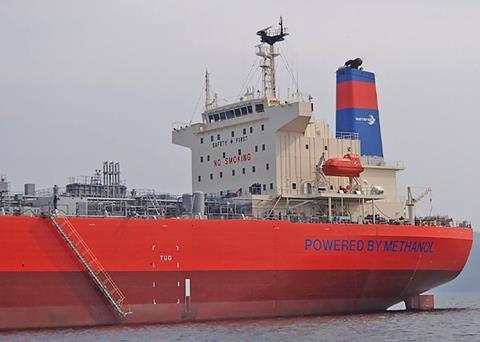
In February, it announced plans to launch a liner vessel powered by methanol, just two years from now. The new ship will be fuelled by methanol produced from bio-based sources and from e-methanol suppliers. While most methanol is produced using fossil fuels to power its production, e-methanol relies on electricity from renewable sources.
Innovators like Liquid Wind are making e-methanol in Sweden using wind power and CO2 emissions from the pulp and paper industry. Sounds like a proper circular economy model. Maersk will procure the methanol from suppliers but have it verified and certified as carbon neutral in order to confirm those sustainability credentials so many companies now crave.
Get those images of mega vessels sailing into Rotterdam and Antwerp out of your head. The first vessel will only have a capacity of 200 TEU and operate on an intra-regional route. Methanol’s energy content is around half that of traditional marine diesel, so distance is a constraint.
But you can’t build a jigsaw without putting a few marker pieces down on the table first. Maerk’s launch will be the first of its kind to be carbon neutral “in operation”. That’s not the same for ‘net zero’, which – if it is to be aligned with science-based targets – will need to eliminate GHG emissions from the value chain, including embodied carbon in energy and materials in construction, transportation and other connected and indirect activities.
The near future of alternative fuels is going to be about flexibility as vessels sail into differing jurisdictions and destinations which have plumped for investing in infrastructure and bunkering different versions of lower carbon fuels. Maersk has committed to ensuring that the new-build vessels that it owns will have dual-fuel technology. Smart tech to switch is going to be key to seamless operations.
ADEQUATE SUPPLY?
One risk that springs to mind is ensuring an adequate supply of e-methanol. Someone has to get it to the right place, using infrastructure and piping, safely and in time for berthing. If the methanol is not sourced exclusively as the ‘e’ variety, but from a fossil-fuel source, the carbon offsets purchased to ensure the carbon neutrality tag will rightly attract cries of greenwashing. I wouldn’t expect customers to be against the switch to methanol, so long as prices don’t spiral, and reliability is assured.
Chemistry fans will recall that methanol is a liquid at room temperature, allowing easier handling than LNG or hydrogen. It’s water soluble meaning leaks pose minimal problems while its emissions are relatively low levels in terms of sulphur, particulates and nitrogen oxide.
If anyone can make it work, Maersk can. The company is embracing all sorts of fuel types in the race to zero. It’s leaning on those port-city relationships that many European hubs seem to mobilise so well. Maersk is in a consortium, teaming up with other Danish companies, such as Ørsted, DSV Panalpina logistics, DFDS ferries, and the aviation sector (SAS and the Copenhagen Airports) to develop hydrogen.
They’ll produce sustainable fuels with a 10MW electrolyser, using green energy from the Bornholm offshore windfarm. There are collaboration lessons galore here on the theme of cleaner and greener futures.