



A concessionaires market
After years of dictated terms, concession seekers now have the upper hand, as Samantha Roberts explains
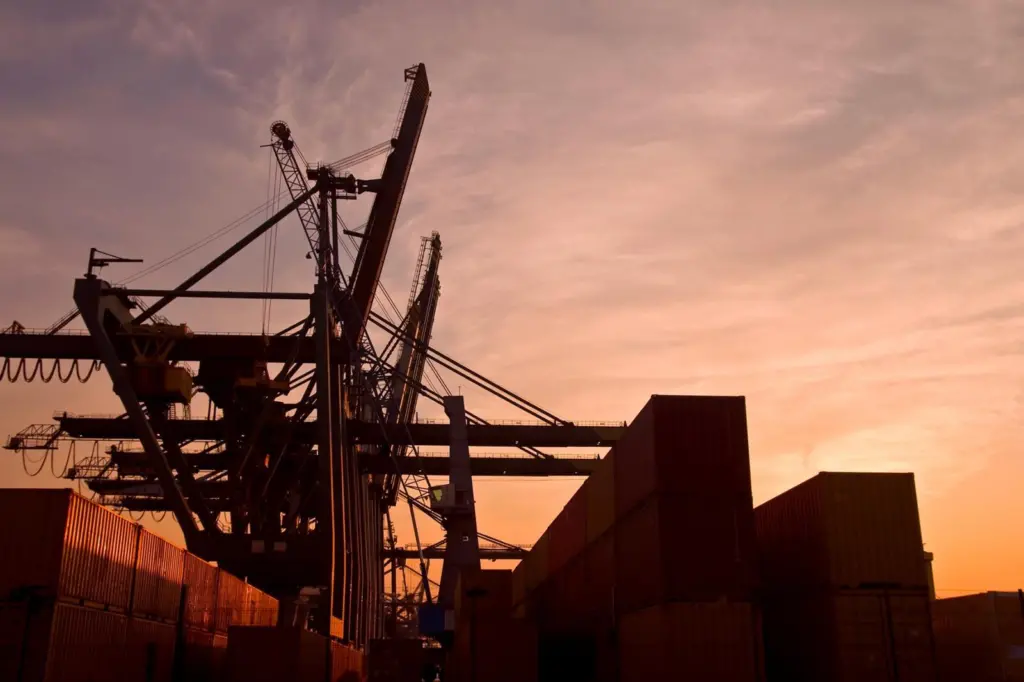
A concessionaire sitting on the opposite side of the negotiation table to a port authority or government agency today is in a much stronger position than they would have been a year or more ago.
The issue that the container terminal market faces today, however, is that it is proving very difficult to get a concessionaire to make a bid satisfactory enough to the grantor to invite a potential concessionaire to the table in the first instance.
Before the onset of the credit crunch, the appetite for taking on new container terminal projects, both greenfield and brownfield, particularly among the five leading operators (Hutchison Port Holdings, APM Terminals, DP World, COSCO and PSA), was phenomenal. The demand for suitable deep water quayside far exceeded what national port authorities and government agencies worldwide were able to make available to international terminal operators.
For nearly every project put out to tender, there was an expectation that a bid would be received from all of the leading operators, either on their own or together with a local partner or partners. Terminal operators and local partners generally establish a joint venture to bid for, and subsequently to manage and operate, a container terminal project. This is usually as a consequence of a country’s legal regime which necessitates the requirement for a concessionaire to be either majority or minority owned by a national of that state (this is the case, for example, in Malaysia).
Alternatively, a terminal operator may not have sufficient local expertise to secure a smooth transition from bidder to successful operator. It is possible to have a wholly foreign-owned terminal in the People’s Republic of China for example, but it is very rare. The power of local knowledge should never be underestimated.
The financial success of the container terminal market in recent years has also attracted the interest of investors not traditionally involved in the industry (for example Goldman Sach’s investment in Carrix Inc, the parent company of SSA Marine, the largest US owned port operator in 2007). Such interest has generally been targeted towards the mature terminal projects. It still remains unusual for a successful bid to come from a concessionaire who is a financial institution without a joint venture partner with terminal operating experience.
One of the key factors for a grantor is to award a container terminal project to an established and successful terminal operator. Indeed, it has been the case in several instances that the concessionaire or its parent company has been required to warrant in the concession agreement that the concessionaire has the requisite knowledge and expertise to undertake the development project. Particularly in the developing world, a successful container terminal will either make or break a country’s economic success and it is therefore fundamental to the national interest that a container terminal project is placed into safe hands. This means that it is not always the highest bid that is awarded a concession.
As a consequence of such high demand, bids made by potential concessionaires to manage and operate container terminals on a long term basis became incredibly high. Press speculation put Cosco’s bid for Piraeus at ¢4.9bn ($6.7bn) (although this was strenuously denied by Cosco) and HPH was reported to have bid $4.1bn for the Thessaloniki container terminal concession, which it has now walked away from in a move unprecedented among the major container terminal operators, but unlikely to be the last given the current state of the world economy.
The economic downturn has resulted in the waning of interest to invest in new projects. The award of a concession to develop a new project involves a huge investment with no return during the development stage and the early years of operation. It is also now very difficult to predict what shipping lines will want so there are no guarantees that when a development is finally completed and the terminal gates are opened for business (a time period that is likely to exceed seven years in the case of greenfield developments) that there will be customers to regularly use the terminal.
When demand for projects was high, the bargaining position of the potential concessionaire when negotiating the concession agreement was weak. Often tenders were submitted to potential bidders with the final form concession agreement attached and bidders were asked to accept the agreement without proposing amendments. In one instance, bidders were asked to agree an escrow arrangement pursuant to which the concessionaire was required to pay all income from the container terminal into an account administered and operated by the grantor who would then distribute this according to unspecified rules. Surprisingly, terminal operators were willing to do this, believing the benefits of the concession award far exceeded the onerous terms and conditions that they were asked to agree.
Even if there was room for negotiation, often a successful bidder was referred to as the “preferred” bidder, inferring that there was still potential for an unsuccessful bidder to step up to the negotiation table if there were deal breakers as between the “preferred” bidder and the grantor.
Now it seems, the party with greater flexibility to negotiate the terms and conditions in the concession agreement is the concessionaire. So what specific issues should a concessionaire consider now that their bargaining position is stronger?
There is inevitably a difficulty faced by a grantor when it awards a concession as it loses a degree of control over what is a national asset. Traditionally, grantors have sought to award concessions retaining a high level of control over how the container terminal is developed and subsequently operated. Requiring development in accordance with drawings and specifications only with consent of the grantor, including onerous reporting requirements and setting out a long list of key performance indicators was becoming the norm.
However, a terminal operator wants to manage and operate a terminal in accordance with its own, and with the industry’s, best practices in order to achieve maximum profit while facilitating national economic development. A high level of involvement by the grantor does not always allow an operator to run a terminal as it would otherwise wish to. Now, operators have the opportunity to take back a greater degree of control over their development and business.
A concessionaire will need to balance a higher degree of control against their expectations from the grantor. A grantor will typically want to commit itself to as few obligations as it is able. However, a concessionaire may want to consider requiring a grantor to take on greater responsibilities to ensure that the terminal is a success. Requiring a contribution to dredging costs if they exceed estimates, ensuring sufficient and continuous supply of utilities, extracting a commitment that no further container terminal projects will be awarded for a period of time to ensure that a concessionaire can establish its business should be considered by a concessionaire when it is setting out the obligations it wishes the grantor to commit to.
As a terminal is a national asset, a grantor usually requires a concession agreement to include an expropriation or nationalisation clause allowing the grantor to terminate a concession agreement before the completion of the full term and to thereafter take over management of the operations itself. This exposes the terminal operator to a degree of risk as a grantor may allow the concessionaire to complete the construction and commence operations but to then take back the terminal in the national interest of the relevant country before the terminal operator has been able to recoup the investment that it has made.
If a concessionaire has been fortunate enough to be able to negotiate compensation for themselves in this situation, it is highly unlikely that the compensation will include a profit element. This is something that a concessionaire should certainly now be considering.
If there is political instability as a consequence of economic hardship, expropriation may well be a greater risk to a terminal operator now. A concessionaire should seek to ensure that the concession agreement includes a compensation level that is sufficiently high to properly compensate them in the event that a grantor takes back terminal operations before the expiry of the granted term.
At the time that a concession agreement is entered into, parties expect their relationship to run for the term of the concession. Concessionaires to date have been keen to secure long concession periods to ensure that they are able to recoup their initial development and grantors have been willing to make that commitment provided that the concessionaire does not change its identity, blocking any change of control of the concessionaire.
Concessionaires now should be considering carefully what rights of termination they should include in a concession agreement, including what levels of compensation they are prepared to concede if they simply want to terminate and walk away from a project prior to expiry of the term because the project is no longer economically viable.
Concessionaires should also be considering whether they are willing to accept change of control provisions in a concession agreement. Non-industry investors willing to participate in a mature terminal project expect to take a certain level of control of a concessionaire to protect their investment. A strict change of control clause in a concession agreement may prevent such an investor from participating in a project as the clause may catch not only a change in shareholding but also a change in management control of the concessionaire. Often a non-industry investor will only invest if they have equal or majority management control of the concessionaire even if they do not wish to acquire a majority shareholding.
It is now a concessionaire’s market and it is open to them to negotiate a much better deal under concession agreements than they have been able to do before now. However, it is now proving to be a challenge to find a concessionaire willing to commit at a level that a grantor is willing to accept.
Samantha Roberts is a partner within the Ports & Terminals Group at international law firm Holman Fenwick Willan. For further information please visit www.hfw.com or contact Samantha Roberts directly at samantha.roberts@hfw.com.
Related Articles
 PORT & TERMINAL NEWS
 INSIGHT & OPINION
 PORT & TERMINAL NEWS