



A pearl where its needed
A new container port is adding to the competition for traffic in the Pearl River Delta region. James Macpherson considers what Nansha has to offer.
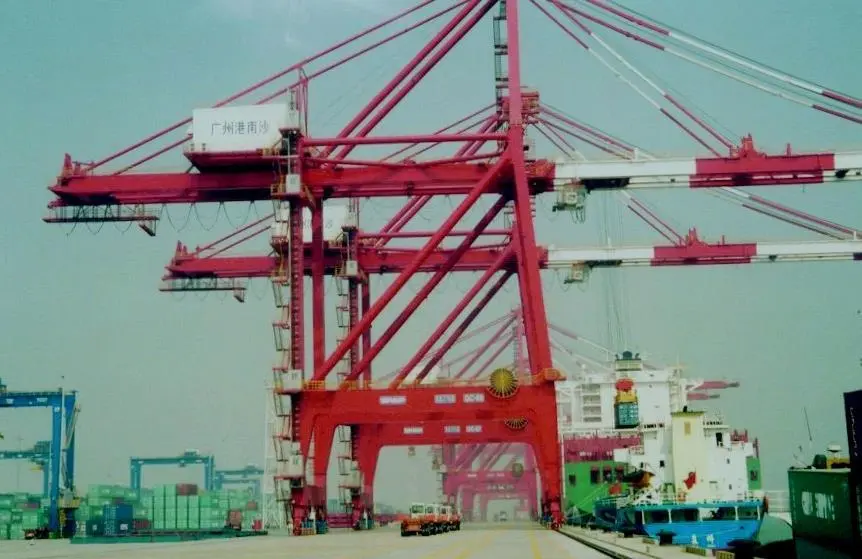
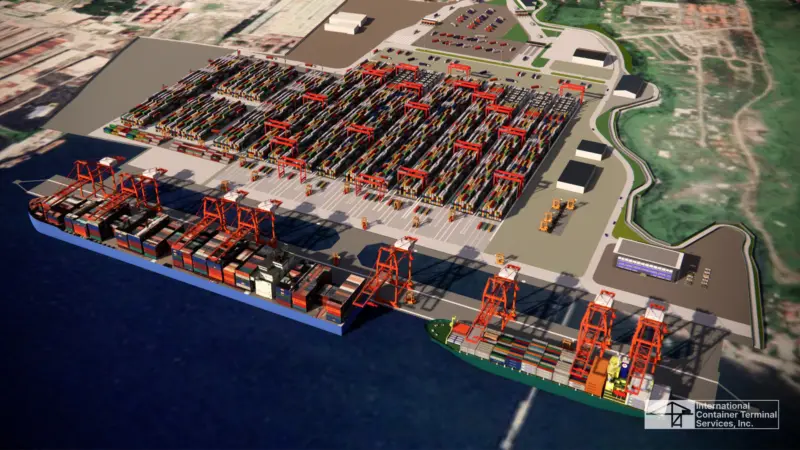
Since 3mTEUs in container volumes are generated annually by the Guangdong manufacturing region of southern China, it should come as no great surprise that another port has recently emerged. The Shenzhen ports have all increased their capacity in the last year and Dachan Bay is on track for 2007, but Nansha, which commenced operations in September 2004, is the only major container port on the western side of the Pearl River Delta (PRD). Nansha is part of the Guangzhou port group.
In a relatively short space of time it has made a significant impact.
In 2005 it handled just over 1mTEUs, 20% of which was international traffic. Although phase one with an investment of some US$610m, has a capacity of 3mTEUs, construction has already started on the six new berths under phase two, the first of which is to be ready by the end of this year.
It has surely helped that China Shipping Container Lines (CSCL) and Cosco Pacific are the port’s two largest investors. Phase two investment is US$495m. CSCL is calling at the port with one Asia/Europe and two transpacific strings and according to the company’s president, Li Ke Lin, Nansha will become a hub port for its services.
There has been a recent trend for manufacturing industry to migrate to the western part of the PRD and Nansha is in pole position to capitalise on this. Chen Jianjun, Nansha’s deputy general manager, says: “We are still new and we offer privileged policies and discounts for some clients which are better conditions than they could achieve at Shenzhen or Hong Kong. We can offer customers the double benefit of trucking and THC savings.” Presently, shippers in the western PRD can save in the region of US$150/40ft on trucking costs by using Nansha as opposed to Yantian and about US$50/40ft on THC. As well as this, the port has good road connections with 14 major cities within a 100km radius of its confines.
ISSUES TO ADDRESS But despite its healthy start and obvious prospects for this year and beyond, Nansha has a couple of issues to address. Several industry observers believe that it cannot become a major international port because of its channel depth of 13m. Chen asserts: “For the moment, water depth is not enough for the 8,500TEU vessels but the second phase of our dredging project to take the channel to 15.5m will be completed by the end of the year and it will not be a problem.”
Nansha is also relatively unknown and faces the same problems that Yantian had with Hong Kong in 1999/2000. It has to educate new customers as to its benefits. Chen explains: “Many contracts signed by the US buyers are under FOB Yantian or Shekou terms. We have to wait until May when the new contracts are signed for this to change. It is frustrating that for factories only 20km away from Nansha, the cargo is still being routed via Yantian.”
Perhaps it is early days yet for Nansha but it has the major advantage of being the first serious container port to be located on the western side of the PRD. Toyota and several other car manufacturers have committed themselves to building factories in the west and this should afford further healthy prospects. Port executives are already talking to Maersk Sealand and APL about putting more international services into Nansha and substantial volume growth is expected this year.
Given that HPH has already invested in Gaolan, further to the south of Nansha, it will be watching developments closely. It has not given the green light yet on its container berths, but it will not want Nansha to steal too much of a march.
Related Articles
 CONTAINER & CARGO HANDLING
 TERMINAL OPERATIONS
 CONTAINER & CARGO HANDLING