
Introducing a larger measure of common sense into container terminal concessioning should be a priority, according to Mike Mundy
Since the early days of concessions offered for container terminals things have changed significantly. New parameters continue to be established in terms of the requirements of concessions as part of the bidding process and the conditions under which concessions operate. In any examination of the concession process and terms of concession agreements it is perhaps most important to highlight what has not changed and consequently what should be changed. Table 1 provides a hit-list in this respect based on known complaints made by bidders in the past and from the first-hand experience of the author.
Many of the points cited under the "General" heading in Table 1 stem from the fact that various port management bodies tend to operate in something of a vacuum when launching a concession.
Particularly when new to the concessioning game, they do not appreciate that typically port investors such as APM Terminals, DP World, Hutchison, ICTSI, PSA International, SSA and others are looking at numerous potential projects at any one time and have limited resources to cope with their evaluation and assessment, and going on from this the submission of Expressions of Interest (EOI) and detailed bids.
It is therefore very important, in the first instance, to properly market a concession opportunity so that it appears on their radar.
Advertisements in the industry press are a must and road shows are also an option with big- and even medium-sized projects. Further, if a port doesn't know who it is actually marketing to - i. e. who the majority of its potential investors might be - then there is always the option of including identifying these parties within the brief of the limited number of specialised consultancies that offer assistance to ports in the shaping and award of concession contracts.
Making adequate time available to respond to an EOI or properly submit a bid is also something that often stems from this so-called vacuum mentality. It is not unusual for potential bidders to pass on a particular concession opportunity simply because the port management body or government agency offering it has not fully appreciated that it is not the "only kid on the block" when it comes to bringing an opportunity to the attention of investors and that adequate time must be allowed for investors to get around to looking at it. Making adequate time available is an absolute must.
The same point applies to due diligence work, particularly with the concessioning of an existing business. There has been more than one occasion when there have been say 10 interested investors but only, for example, 50 hours made available for all parties to access a data 27room - not enough time for everyone to get an adequate bite of the cherry. Similarly, inadequate time to conduct on terminal due diligence of equipment and infrastructure is another common complaint. This occurred recently, for example, in conjunction with the planned disposal by the Hungarian Government of container terminal and other businesses on the River Danube in Budapest. This privatisation process was eventually abandoned due principally to the lack of parties that chose to navigate a rather complicated and cumbersome prequalification and bid process.
The other points referenced under the "General" heading in Table 1 all continue to be encountered by bidders to the extent that they either reduce interest and/or one or more of them may lead to either a decision not to participate in the bid process. Equally, there have been plenty of withdrawals from bid processes when incoming investors have found them unworkable.
Not dealing with inter-related issues such as required labour reforms (usually the downsizing of the workforce in a sensible way) or the reform of port pricing regimes to complement the offering of a concession are two big disincentives in certain circumstances to new investor involvement.
A similar disincentive can be port authorities offering a concession for a new high cost container terminal development and allowing existing low cost container handling operations to continue alongside it and thus reducing its chances of success. Of course, this might not always be the case - where traffic growth is high but where the business potential is limited it would be appropriate to take action to wrap the existing container handling activity into the new terminal to give it the best chance of success.
LEGAL REGIMES IMPORTANT Jumping down through the listing, ensuring the exclusivity of a concession becomes particularly important when established legal regimes do not apply. There have been problems in this area in China stemming from different government agencies issuing different concessions which effectively overlap each other or even the same agency deciding to issue another concession which effectively ignores some of the terms agreed in previous concessions.
Achieving legal redress under such circumstances is very hard to achieve where English law and other mature legal regimes do not exist.
Looking at just one of the factors highlighted under the "Technical" element of Table 1, establishing unrealistic key performance indicators serves to highlight the often quite ungrounded approach that can be fielded in this area.
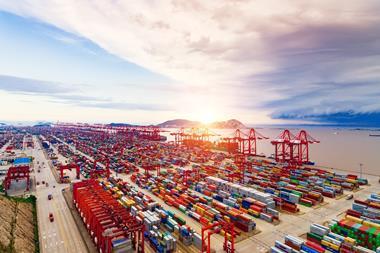
The vast majority of ports will not be able to achieve the container handling performance achieved in a major hub such as the Port of Singapore. Quite simply, it is beyond the power of the vast majority due to their specific operating circumstances - a regional port say.
Hence, how can KPIs be set in line with the operating performance of a Singapore? Yet this is often the case serving to cause major headaches down the track.
A FINAL WORD There are a lot of lessons that still remain to be learnt in the delivery of container terminal concessions. What need attention are the mechanics and apparatus by which many concessions are brought to market and some of the finer points of their technical specification.
Just to hammer the latter point home, the Beirut container terminal concession when offered and delivered stipulated that operations on the quayside remain in the hands of an independent workforce and yet the new terminal operator was still expected to perform in line with KPIs, even though he effectively did not have full control of the terminal operation.
What, however, we can say has definitely changed in terms of the offer of concessions is that there is now a greater requirement for cash up front. More concessions for existing businesses are effectively sold with less emphasis on purely a rent and royalty arrangement, although this does continue to have its place.
Also with newbuild terminals there is an increased emphasis on Build Operate Transfer projects or variations on this theme.
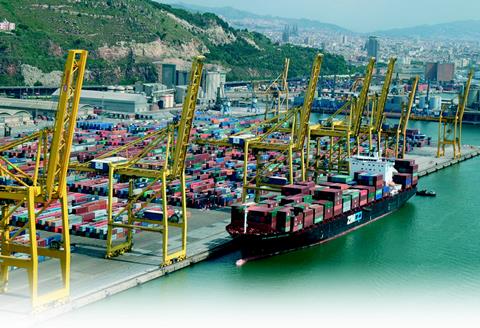
Interestingly, the recent new container terminal concessioning process in Barcelona offered some flexibility in this respect for incoming investors - an option where for a longer concession term the investor could invest in the infrastructure element or simply bid against a rental/royalty style of arrangement. This concession also broke new ground in terms of the KPI's it specified with some very exacting requirements.
Ultimately, however, perhaps what is required most on an industry wide basis is not greater sophistication but a larger measure of common sense.