






Chinese port reveals 5G ambitions
Ericsson and mobile service provider China Unicom are developing a 5G smart harbour at the Port of Qingdao in China with the aim of exploring commercial 5G networks and solutions and saving labour costs.
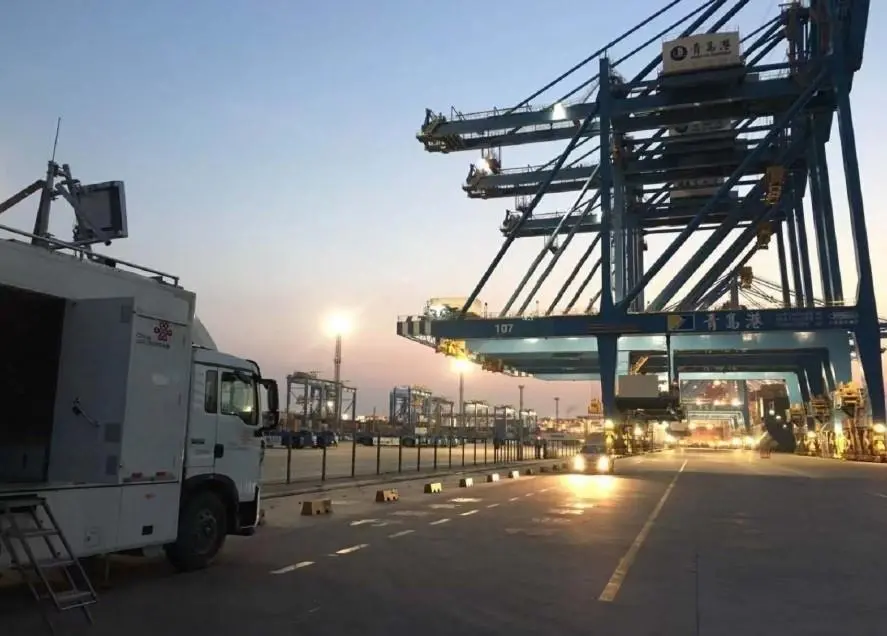
The partners undertook a six-month field trial which confirmed the feasibility and potential of 5G applications for the development of smart harbours and found up to 70% of labour costs can be saved when a harbour uses a 5G automation upgrade, compared to traditional harbours with a fully automated harbour. These savings are estimated based on Port of Qingdao, which has been operating Asia’s first fully-automated harbour since 2017.
Zhang Yong, general manager of the China Unicom Research Institute, said: “We would like to cooperate with major 5G equipment suppliers and leading industrial equipment suppliers to create differentiated value to enterprise customers.”
Globally applicable
Chris Houghton, senior vice president and head of market area North East Asia at Ericsson, stated: “In the Qingdao 5G smart harbor project, we successfully showcased various 5G network capabilities, such as mili-second level end-to-end latency at Gbps level speed.” He added the 5G smart harbour can be replicated with many other harbours and industries.
As part of the trial last year, the partners, in collaboration with Shanghai Zhenhua Heavy Industries Co., Ltd. (ZPMC), enabled an automated ship-to-shore (STS) crane to lift a container over a 5G connection operated from the control centre.
The 5G connection included data traffic from more than 30 high-definition cameras as well as control data for a programmable logic controller (PLC). These operations required millisecond-level latency control signals, as well as stable, remote and real-time control, requirements which only key 5G technologies can deliver.
Related Articles
 CONTAINER & CARGO HANDLING
 TERMINAL OPERATIONS
 EQUIPMENT