






Control and contain
The rapid spread of the Zika virus has prompted ports to take action, finds Alex Hughes
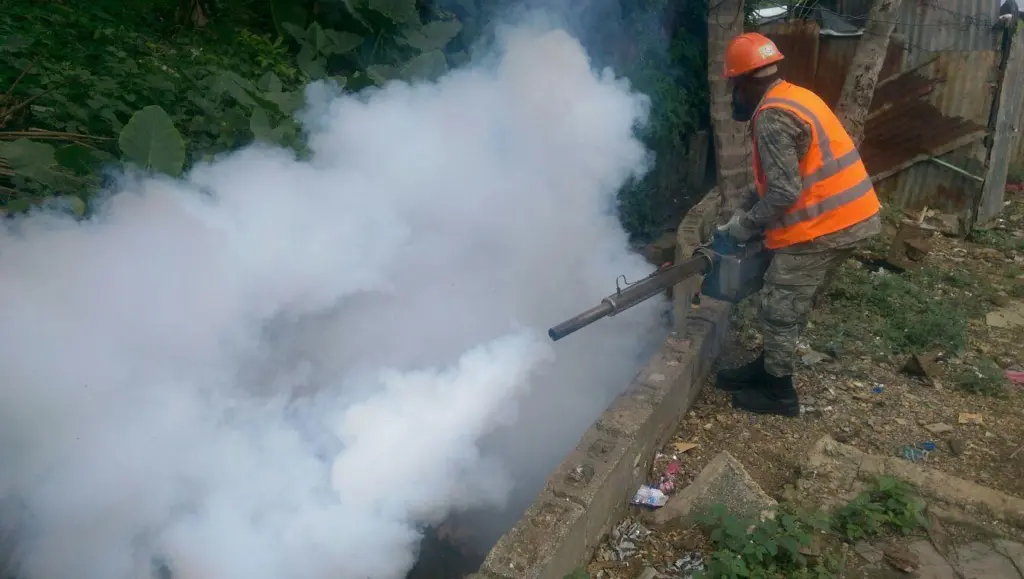
The Zika virus hit the headlines earlier this year when reports of its spread throughout Latin America were brought sharply into focus. It isn’t the first virus to prompt ports to take emergency measures, since previously both Ebola and Sars concentrated minds. However, trying to identify realistic measures to prevent the spread of infection at ports has proved difficult. Other than spraying for mosquitoes, there seems little else left in the armoury.
Santos Brasil, which operates three container terminals in Brazil, in the ports of Santos, Imbituba and Vila do Conde, says that none of its facilities have been negatively impacted by contagious diseases, least of all by the current Zika outbreak. “We maintain excellent health control through a walk-in health clinic that is open 24 hours a day, staffed with highly trained people,” says Caio Morel, director of operations.
In the case of vessels arriving at one of the company’s terminals, the National Health Surveillance Agency (ANVISA) takes care of preventative health checks on all those who come ashore following the initial request for a berth. “Furthermore, we are undertaking daily preventive measures to control possible outbreaks, especially to prevent the development of eggs from the Aedes Aegypti mosquito, which transmits three major diseases: dengue, the zika virus and chikungunya,” he says. The reward for this vigilance is that no state bodies have ever had to step in to close down any of the company’s operations.
When asked about emergency protocols if this type of medical emergency were to break out, Mr Morel says that the presence of a clinic able to operate 24 hours a day means that this facility can be used by health experts, and also trained fire crews. He adds that various other government bodies (ANVISA, IBAMA, CETESB, Civil Defence, the Fire Brigade and PAM) would also initiate certain procedures, if necessary.
“Up to now, these measures have been more than sufficient to prevent any of our terminals from being closed down,” he says. “We’ve not even got close.” There has also never been a case where Santos Brasil’s workers have become reluctant to come to work because of the risk of catching a contagious disease. “We reassure workers that it is safe to come to work by being proactive and creative in demonstrating control measures and also through communication,” says Mr Morel.
Santos Brasil has also avoided boycotts from shipping lines on health grounds because of its preparedness. Asked what advice he would give to other ports faced with the same situation, Mr Morel says: “In general, ports and terminals must obey directives put out by state bodies, especially in areas such as monitoring and control, and in the containment of contagious diseases, acting throughout in partnership with the authorities.”
Another of Latin America’s front line ports is Montevideo, in Uruguay. There, Terminal Cuenca del Plata and the Spanish medical mutual AEPSM have signed a memorandum for the control of the Aedes aegypti mosquito. The agreement aims to prevent the spread of dengue and other diseases caused by the mosquito, while at the same time raising awareness of the impact these diseases can have. The campaign is aimed at dock workers, the port community and the community in the old city.
AEPSM will develop protocols to deal with possible outbreaks of disease if any suspected cases are identified.
Talks will also be given to workers at Terminal Cuenca del Plata, to other concessionaires, to the port community and various organisations to raise awareness of the extent of the problem.
For its part, Terminal Cuenca del Plata is also working with the Faculty of Sciences to undertake a study into the presence of mosquitoes and larvae at the terminal, in order to maintain a strict control to prevent a possible outbreak.
The response of Montevideo is significant in that emergency measures are having to be implemented for a contagious disease not previously considered to have been serious enough to merit special attention. Governments throughout Central and South America, not to mention other parts of the world, are now all scrambling around to deliver an adequate response, based mostly around mosquito control and health education, but the question remains whether that will be enough to prevent the spread.
Related Articles
 CONTAINER & CARGO HANDLING
 CONTAINER & CARGO HANDLING
 EQUIPMENT