

ELECTRIFICATION: GOOD TO GO
Progressively the door to port electrification projects is opening up. System supplierSiemens relays up-to-the-minute thinking, experience and plans.
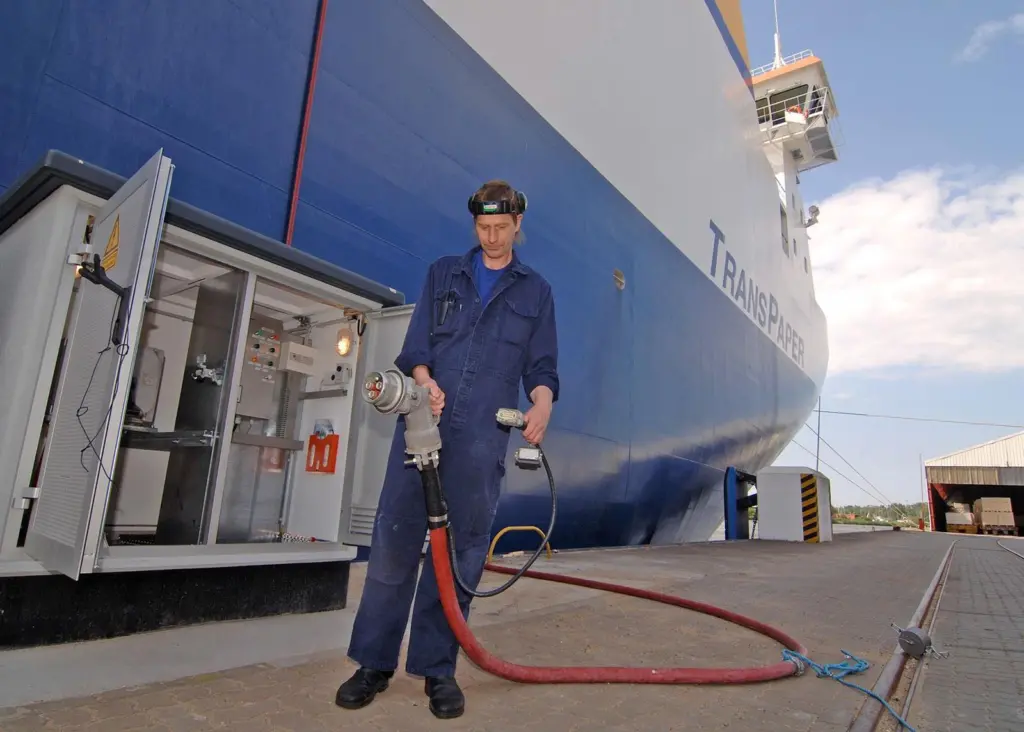
What a quaint expression ‘cold ironing’ seems. The term first came into use when all ships had coal-fired engines; while a ship was in port, there was no need to continue feeding the fire, so the iron engines would cool down and eventually become completely cold.
In today’s world, ‘cold ironing’ is the term used to describe the supply of electric power to a ship while it is alongside. The world is moving on – we hear more about shore power these days! This matches a significant shift in attitudes.
In the past few years, the topic of ports, sustainability, decarbonisation and electrification has become mainstream. Not so long ago, it was more about hopes, plans and aspirations. Today, it is all about real projects. The chicken-and-egg conundrum of shore power appears to be easing.
Ports worried about investing in shore power, only for vessels not to use it – and conversely shipowners investing to enable their ships to use shore power only for the facilities to be lacking in the ports they visit – not for too much longer with such scenarios, we hope.
Demand for shore power is accelerating. Vessel owners and operators are telling ports ‘you must have it,’ rather than ‘it would be nice to have.’ In the main, shore power discussions centre around the needs of cruise ships and ferries, which require very high amounts of power.
Siemens’ SIHARBOR shore connection provides onshore power via a cable management system in ports worldwide for these types of ships. SIHARBOR’s has solutions for all sizes of ships.
However, attention should also be paid to smaller vessels, which can often ‘plug in,’ and draw far less power. Siemens can report increasing demand for shore power for smaller vessels, such as offshore supply vessels for wind farms. These vessels are serving renewable power projects, so it doesn’t make sense to be pumping out diesel when they are tied up!
POWER SOURCE?
Alongside shore power, the electrification of port assets and equipment has been gathering pace. But where will the power come from? And can ports rely on it? Ports are under pressure to make green choices, but they also need to be confident they have opted for the best, futureproof and future-ready projects.
Should all of the above sound daunting? Well, yes and no! There are challenges when it comes to electrification and decarbonisation, but there are also great solutions – many of which can make a port more efficient and more cost-effective, as well as far more environmentally friendly.
A big part of what Siemens does is to provide customer confidence through our expertise, advice, solutions and ongoing support on electrification, digitalisation, connectivity and all things related. There is no ‘one size fits all’: what’s appropriate for a port will depend on trade patterns, vessel types, cargo, layout, activities away from the quayside, present power supplies, relationships with utility providers and local conditions.
Geography means that ports are very likely to be at the end of the power distribution line, with little opportunity for the utility provider to boost supply without hefty investment in new infrastructure (likely to be shouldered by the port!). The alternative is to step away from the centralised option and develop some in-house solutions, moving generation to the local level to provide resilience while also helping meet increasing decarbonisation targets and looming delivery dates.
Siemens describe microgrids as ‘power generation made smart.’ They offer a reliable alternative wherever a stable power supply is needed, by pulling together multiple component solutions and tackling challenges throughout the system. Grid edge and microgrid solutions can increase the operational efficiency of a port but also go much further, enabling it to become self-sufficient and even to provide excess power generated into neighbouring industry and communities, hence bringing in a new revenue stream.
Microgrids also provide much-needed grid stability, compensating for any fluctuation in renewable generation being fed in. Microgrids maintain the balance between generation and consumption and can operate on and/or off grid. They are being taken up by more and more industrial operators, to produce the power they need cost-effectively, sustainably and reliably.
Microgrids can use a variety of energy sources, including solar, wind, hydroelectric, biomass power and hydrogen, and a combination of generators, power units, storage and control systems work together to ensure the security of supply.
DRIVERS TO CHANGE
There are a number of drivers to this, including environmental pressures on emissions and air quality, and rapid advances in digitalisation. Specific to the UK, there is a requirement for ports to produce air quality strategies; the ending of the ‘red diesel’ subsidy which will increase the price of diesel; and the roll-out of Maritime 2050, a long-term strategy for the UK’s maritime sector. Whichever way you look at it, the point is approaching when it will no longer be acceptable to emit diesel fumes when there are much better alternatives.
The UK government’s Ten Point Plan for a Green Industrial Revolution, announced in November 2020, sets out activity and investment from the government to support the transition to net zero. The plan includes £20m of funding for a Clean Maritime Demonstration Competition, the idea of which is to lay the foundations for a network of ‘real-world’ projects to kick-start government investment in decarbonising the maritime sector.
Siemens is talking to numerous maritime sector customers about this competition and possible decarbonisation demonstrator feasibility studies. This is nothing new – the company has been working with industry and academia for years, and a port is no different.
We have, for example, been working with the UK’s Keele University, which has a goal to divest from fossil fuel and become carbon neutral as a campus of 350 buildings and 12,000 students and staff by 2030. The SEND (Smart Energy Network Demonstrator) project features a microgrid solution, for renewable energy and smart energy management. Keele’s project, and those likely to emerge from the Clean Maritime Demonstration Competition, demonstrate what can be done.
However, it is important to emphasise that the robust industrial equipment and technology required is available now. There is no need to reinvent the wheel – it’s all there. What is different, is the way in which data analytics can be used to optimise onshore power solutions, energy storage, power conversion and so on. A lot of the innovations are about predictability, prediction-based monitoring, cloud analytics, and using a digital twin to simulate proposed changes.
Another important factor is the advance of 5G. We have just launched the world’s first industrial 5G router for industry – this could transform a port’s operations by connecting hundreds of devices to the cloud to operate and monitor thousands of operations remotely.
NO NEED TO FEEL PRESSURE
Ports that are still not convinced can be reassured that there is no need to feel pressurised into doing everything in one go. They can de-risk their journey to electrification, and their pathway to net zero. Pilot projects can be a helpful start, perhaps testing on one crane to see how that works. It is good to look for ‘low-hanging decarbonisation fruit’ in the port.
Using a digital twin can provide a holistic view for the short/medium or longer term. By incorporating simulation, data analytics and machine learning capabilities, digital twins will demonstrate the impact of design changes, usage scenarios, environmental conditions and other variables – eliminating the need for physical prototypes, reducing development time and improving the quality of the final product or process.
Port operators can be reassured that this is tried and test technology, already in use by the automotive, food and beverage and aerospace sectors, all of whom have been gathering and analysing data from their equipment and assets for years. The technology is proven, commercial and environmental benefits revealed. The question is more – why would you not go for it?
Related Articles
 CONTAINER & CARGO HANDLING
 TERMINAL OPERATIONS
 DIGITAL