



Emerging from fire
It used to be thought that environmental concerns were simply issues for the mature, established economies. Now there’s an awareness that developing ports will also be growing their own set of environmental challenges that could suck the blood from their future – unless dealt with early, writes Stevie Knight, GreenPort Contributor.
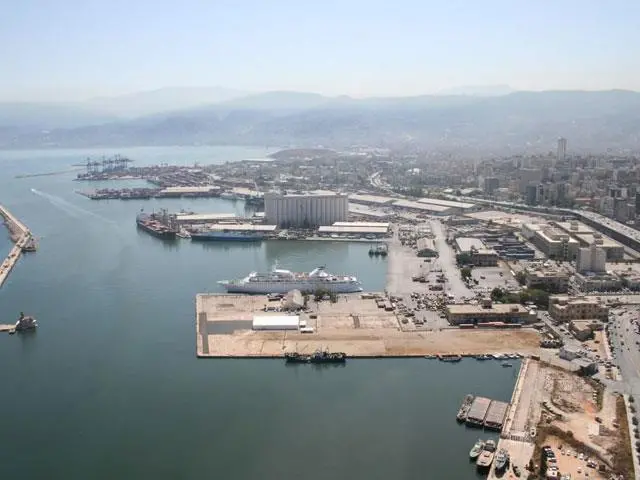
Corrado Schenone, professor at Genoa University’s environmental planning research centre and contributor to the European Neighborhood and Partnership Instrument (ENPI MED) initiative, points out that quite a few re-emerging ports’ “recognise that they can ‘leapfrog’ the worst mistakes” that have hampered their European cousins by taking a few hard-won lessons to heart: for example the need to accurately monitor air and water pollution levels and plan infrastructure with an overall environmental strategy in mind. This of course brings up the old issue of ports’ relationship with the wider community.
Prof Schenone explains that the issues faced by facilities nudging up against very established urban areas are common to many ports on both coasts of the Mediterranean, something that distinguishes them from many Far East and US ports.
However, there are some specific challenges when it comes to a ‘wider community’ that has suffered economic issues or outright political conflict. This obviously is the case for projects on the southern Mediterranean shore. The Arab Spring resulted in interrupted development in many places and complex issues, resulting in a reality check for the four year Integrated Maritime Policy in the Mediterranean (IMP MED) project, a broad, EU funded initiative overseen by DG MARE that aimed to establish best practice in the region as a whole.
It was soon realised that many individual countries simply didn’t have the governance structures in place to tie up any overarching maritime cooperation. “So, the first two years were dedicated to creating momentum within individual countries before trying to move onto something concrete where international technical expertise could be brought to bear,” says Nick Marchesi of Pescares Italia, team leader of the IMP MED project.
Marc Abeille of IMP MED partner Copetrans explains that people “didn’t always see the need for an environmental agenda straight away”, but it often found its way in on the back of other initiatives: “A lot of countries requested help with Marine Spatial Planning; of course environmental sustainability is a huge cornerstone of these projects.” Usefully, these initiatives aren’t all about the costs of compliance as potential growth and funding opportunities are also involved.
History makes a huge difference to both attitude and a country’s abilities to take advantage of any experience on offer. For example, while Tunisia’s development was interrupted, it has still benefited from a record of lucid policies. Therefore, while it has limited access to funds for direct investment in port waste-reception facilities, it has involved the IMP MED in researching creative alternatives, for example subcontracting out cargo residue and waste treatment. Assistance can also prompt change: Algeria has responded by strengthening its network of marine expertise and may now be willing to broaden this to include European partners. But it still has to be said that development isn’t straightforward: some regions are still in the grip of upheaval and lack government continuity, plus, there can be an understandable wariness of Eurocentric agendas.
Despite all this, Prof Schenone says ‘people’ are key. Beyond the immediate concerns, his experience of facilities in difficult circumstances have given him cause for hope; in some places, he says “even unstable political conditions seem not to slow the willingness to face environmental issues”. For example, the port of Tripoli in the north of Lebanon is only 40km away from the Syrian border and not far from the strife-ridden Syrian city of Homs, with tensions recently spilling over into outright conflict in Tripoli itself. So it’s somewhat surprising that even in the face of such troubles, he says: “Tripoli is pushing hard on environmental sustainability concerning subjects as noise, air pollution and water pollution.”
He attributes it partly to the attitude and capability of those involved. “The high quality of local human resources plays a role in facilitating this new approach to the port’s development,” he explains, adding that Tripoli is starting to see results despite the surrounding turmoil. However, occasionally both ports and government are motivated by pressing concerns. Prof Schenone explains that Aqaba in Jordan is driven by the fact that Jordan is almost entirely landlocked and only has a short, 27km marine coastline to the Red Sea, centred on the town and port which is the only coastal gateway to the country: consequently, there’s a lot going on in a very short stretch – only 5km remains undeveloped.
All this puts huge pressures on the environment, says Prof Schenone. Needless to say, the volume of traffic entering the Gulf of Aqaba is substantial: while there’s concern about the lack of local capacity to contain and control any large oil spill incidents, smaller spills of oil and other contaminants are frequent and are already associated with the degraded health of local reefs near to the port.
“The government in Jordan is now being especially prudent. They recognise they only have that piece of coast, home to a town, port and marine park, so it means there is a lot of work on water quality.” Like many, it wants to be particularly careful of tourist assets like coral reefs, so it has developed a no-discharge policy. Prof Schenone says the focus on water pollution has meant Aqaba is monitoring the water column accurately from a marine science station and this, along with a more energetic development policy is beginning to have an impact in controlling the evolution of the port and coastline’s development: a big step forward has been the approval of plans to relocate much of the port to a more southerly location. However, the port has now five separate terminals, oil, LNG, chemicals, containers, ferries all still laid out across quite a small area.
The risks are great. An incident would cause devastation for the fragile coastal ecosystem, and a couple of near misses brought home the need for action, so with the IMP-MED’s assistance a traffic separation scheme (TSS), has been developed to help mitigate the challenges for bulk, tankers or other cargo ships waiting for berths. So, despite the issues, which can include a lack of governmental structure to implement policy or sectoral divides with different ministries competing for attention and funds, Prof Schenone concludes that many ports in the region “have a great approach”, and adds a number “are very aware of the risks of dropping environmental management under the pressures of the other, economic or political agendas”.
However, he is clear that there is a need for support: “It’s been important that there’s been a transference of skills from developed economies with the will to look at the issues,” for example, the setting up of laboratories to develop Aqaba’s necessary water monitoring capabilities. “International cooperation can really assist the local population and help them become more open to environmental issues and to a more aware energy policy.”
He concludes: “There is the possibility for change across the region, it’s not happening everywhere yet, but there are the seeds of change. We should water this seed, help this small plant to grow; Europe has this responsibility.”
A change of position
Dr Andrew Mather of Ethekwini Municipality’s Coastal Policy department is well aware that politics are naturally woven into the fabric of environmental decision making. South Africa too, he says, has “come out of a revolution”, but the process of getting discussions about development underway can still be hampered by polarised stances. “When it comes down to brass tacks, we still tend to take up our old positions.” He goes onto say, “It can be made more difficult if, for example a harbour or port is owned by people who say ‘it is our land, so we are going to build whatever we want’ as this of course fires up any opposition.”
He further adds that responses do sometimes present a challenge: “Buildings can still get burned down if there’s something people don’t agree with…” Dr Mather says that while environmental work needs to be solid, those people pushing for change also need a certain robustness: “Despite your best technical work into risk assessment and planning, you may not get people to take the action you want,” he says, adding that politics and agendas often get in the way of a successful outcome. Further, pragmatism requires environmental planners to have a good relationship with the political leadership: however, the reality is that many elected officials are not going to be as interested in the distant future as what’s happening right now.
But pragmatism can’t be at the expense of potential issues. “What you have to do is try to address local and immediate plans, but also somehow keep the longer term agenda on the cards,” he says, admitting this is easier said than done especially as political leadership is often subject to change. Further, vision is necessary, he says, but underpinning it with practical analysis of what the infrastructure can realistically bear and then making the plans stick long term can be a real challenge.
So, there are inevitable tensions that need a basis of open discussion to resolve: dialogue, however, is not always easy in a charged atmosphere. Interestingly, Dr Mather sees change coming from the younger generation: “These people have grown up with cooperation,” he says, “They are treating everyone more equally; ultimately that will help our future.”
Related Articles
 NEWS
NEWS
 MIDDLE EAST GREENPORT
 MIDDLE EAST GREENPORT