






Filling a capacity gap
HFWs Alistair Mackie and Lindsey Greer examine the investment potential of India
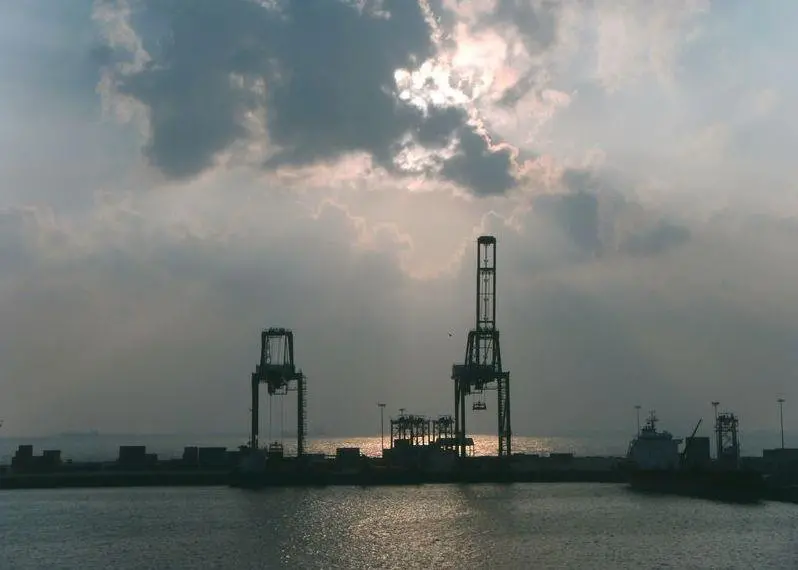
Like many of the dynamic and fast growing world economies, India is taking a close look at ways in which it can develop and expand its ports to cope with increasing demands.
Congestion and capacity constraints at some of the key Indian gateways have led to pressure from the shipping industry and customers for the Indian government to open up the sector and develop suitable infrastructure for what is now the world’s third largest economy. Much has already been done.
The Indian government is already trying to co-ordinate new port development in key strategic hubs and to encourage private investment to ensure that these key elements of infrastructure allow the country to keep apace with the demands of its economic development.
There are serious challenges in any project, particularly for a country of India’s size and complexity as the world’s largest democracy and with its federal and state government system. Anyone who has spent any time in India, however, will know that the willingness to implement the development is there and that, with patience and determination, the changes are taking place.
Ports generally worldwide are key investment targets for private investors and financial institutions, particularly in an economy like India, where it is clear that there is a need for more development to cope with both import and export demand. Holman Fenwick Willan sees a number of investors looking at port projects in India and suspect that this trend will only continue particularly as intra-Asian trade continues to grow and given India is one of the key South-Asian markets.
The country’s 7.8% annual economic growth places India as the world’s third largest economy, after the US and China, yet in 2011 it is ranked only 13th and 21st globally for imports and exports, respectively. Indian ports handled 9.7m teu in 2011, which represents just 8% of the global benchmark ratio for economic output. This imbalance is partly attributable to port capacity and congestion issues, which have stifled trade growth.
Federal ports make up the majority of the major ports in India, with the federal government owning 12 of the country’s 13 major ports. These federal ports are working at 85% capacity, where 70% is considered to be ideal. There is a high concentration of activity at Mumbai’s Jawaharlal Nehru Port (JNPT), the largest in India for solid cargo, where it is working at over 100% capacity.
Capacity constraints are further compounded by India’s 25% level of containerisation, which is far below the global average of 60%-70%. Furthermore, the average time for clearing import/export cargo at ports in India is about 19 days, compared to three to four days in Singapore.
As shippers seek alternative cargo gateways, a spill-over of cargo from federal ports to medium-sized, non-federal ports is occurring. These non-federal ports tend to be better placed in terms of infrastructure and capacity. For example, the spill-over has allowed the Bombay listed Gujarat Pipavav Port Limited (GPPL) to take on some of the surplus and to achieve its first full-year net profit of $11.6m in 2011.
Although increased capacity at non-federal ports will help to ease India’s port capacity constraints, capacity at the country’s federal ports also must increase if India’s congestion and capacity problems are to be resolved. Accordingly, various plans are in place to increase the capacity of federal ports from 670.13m tonnes in 2010-11 to 1,459.53m tonnes by 2019-20 and to increase the capacity of non-federal ports from 390m tonnes in 2010-11 to 1,670.513m tonnes in 2019-20.
Specific examples of growth include plans to expand container handling capacity at JNPT (India’s busiest container gateway) from 4.32m teu to 10.5m teu in three to four years.
JNPT has three terminals: one is state-run while the other two are run by global terminal operators. JNPT currently operates at 100% capacity, however the state-run terminal hopes to increase productivity by replacing its older cranes with newer ones. There are also plans to build a fourth container terminal at the port, although it will be a smaller terminal with a container-handling capacity of 600,000 containers a year.
Other examples of expansion include the development at Mumbai Port of an offshore container terminal, the construction of an oil berth at Jawahar Deep and a liquid cargo jetty at New Pir Pau Pier, as well as the development of offshore multipurpose cargo berths.
India also has plans to increase its capacity to import liquefied natural gas. India is the world’s sixth largest LNG importer, and already has two LNG import terminals with a total combined capacity of approximately 10m tonnes per year. As part of the government’s plan to increase imports of LNG, it has invested $1bn in a new floating LNG import facility located off India’s east coast. The facility will convert LNG into a gaseous state and will be capable of storing 5m tonnes of LNG per year. This project is expected to be completed by 2013.
It is estimated that infrastructure investment of $20bn is needed to increase India’s container capacity to a level sufficient to accommodate the country’s economic growth. Private sector involvement will be crucial to achieving such a high level of investment.
Fortunately, Indian regulation encourages private sector involvement by allowing 100% foreign direct investment in the port sector. India is, therefore, currently dominated by three global terminal operators: DP World, PSA International and APM Terminals. Both DP World and PSA operate neighbouring terminals and ports across the coast, while APM Terminals’ presence is strong in the north west of the country.
Investment from sources beyond the three major global terminal operators is expected to increase in the coming years. For example, in February 2012 the European Port of Antwerp (Europe’s second largest port by cargo tonnage) signed a memorandum of understanding with the Association of Multimodal Transport Operators in India. Presumably, this alliance will create an important Indo-European trade link between Indian ports and the Belgian port, which will enable Indian carriers and shippers to forward goods more easily to and from Europe.
Another example of investment from Europe includes the investment of Eredene Capital in the Ennore Container Terminal. Eredene Capital, a London-based Indian ports and logistics infrastructure investor, will work with a consortium led by Spanish port operator, Grup Maritim TCB, to build and run a new container terminal in the port of Ennore. It is expected that the project will be one of India’s largest single-operator container terminals and will enable Ennore port to serve as the industrial heart of the southern Indian state of Tamil Nadu.
Private sector investment clearly is occurring in the Indian ports sector. However, more investment is required to achieve the $20bn in infrastructure investment needed to match India’s port capacity to its economic growth.
In addition to the need to secure substantial investment in port infrastructure, the Indian ports sector will face several other challenges to increasing port capacity and efficiency.
While many of the current policies of the central and state governments of India vis-a-vis the port sector are generally investor friendly, like any system there are ways in which it could be improved. There is no doubt that investigating ways in which the approval process can be accelerated would help increase investor confidence (and possibly even appetite), as well as reduce the backlog of projects which are currently putting planning targets at risk.
In the longer term, increasing competition with new terminals will help reduce capacity constraints and lead to increased efficiencies at all of the individual terminals.
In Holman Fenwick Willan’s experience, the Indian legal system is a solid basis upon which to do business and holds no concerns for investors or project financiers (domestic or foreign). This should not be underestimated in a global market where competition for funding is increasing as liquidity in many key markets still remains scarce.
There are positive signs of progress in India’s ports sector and the potential for growth and development is enormous. India is well-positioned as the world’s second fastest growing major economy, and the country has emerged from the global economic crisis relatively unscathed. Private sector investment and expertise is keen to play its part. However, in order to support its growing economy and to capitalise on its global position, India must continue to address the capacity constraints facing its port industry.
Further investment in and development of the ports infrastructure, along with investor-friendly changes to the regulatory regime, will be key to improving the overall performance of India’s ports.
Alistair Mackie is a Partner and Lindsey Greer an Associate at Holman Fenwick Willan, an international law firm advising businesses engaged in international commerce.
Related Articles
 CONTAINER & CARGO HANDLING
 TERMINAL OPERATIONS
 EQUIPMENT