![PortStrategy[GreenPort]](https://www.portstrategy.com/wp-content/uploads/2026/09/PortStrategyGreenPort.svg)

Focused on enlarging and strengthening the hinterland
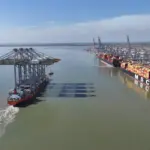
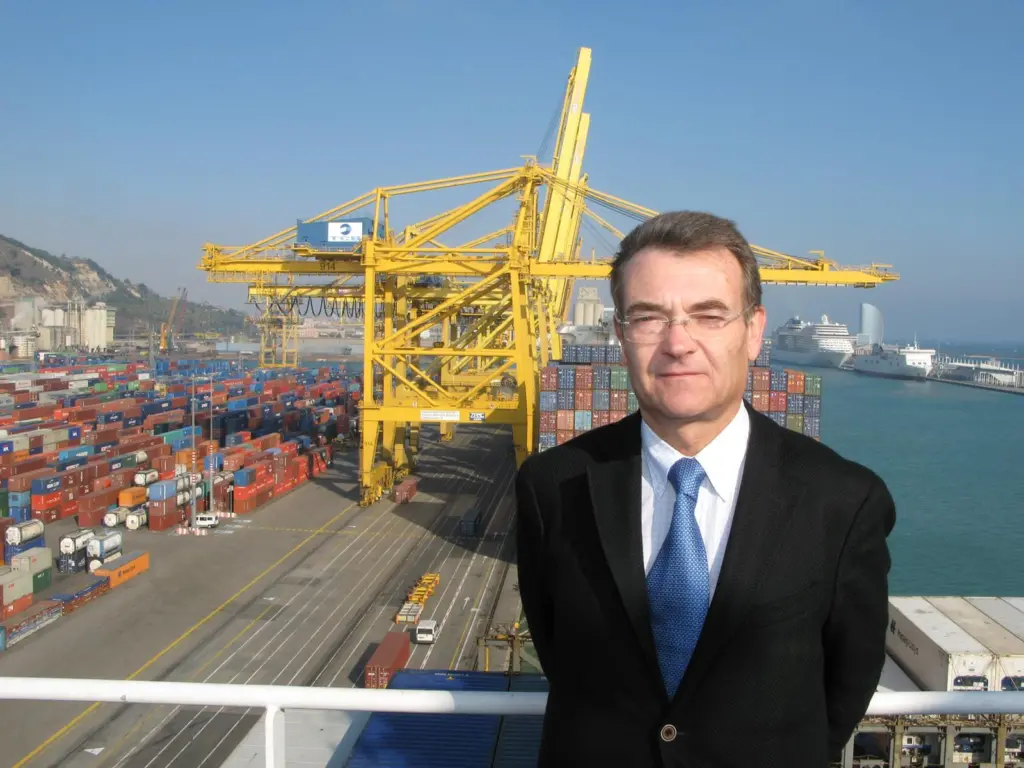
The port of Barcelona is a crucial transport and services infrastructure in the Euro-Mediterranean area. On 14-17 October, the port will be hosting the 9th GreenPort Congress and 2nd Cruise Conference. GreenPort Editor, Daniëlla Arbyn Havugimana spoke with the Deputy Director General of the port of Barcelona, Santiago Garcia-Milà.
What are the port’s vision and strategic objectives for the coming years?
Our mission is to contribute to clients’ competitiveness and create value for society at large, as well as to help companies in their internationalisation processes. We also lead the development of the port of Barcelona and generate and manage infrastructures in order to guarantee reliable services. We want to become the main logistics hub in the Mediterranean for international distributors and logistics operators and the prime gateway in Southern Europe for westbound cargo.
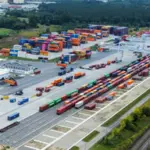
Diversification is our main asset, we have more than 30 specialised terminals to handle all types of cargo and we have a privileged location in the West Med, just 130 km from the French border. Railway connectivity is another of our strengths, since we are the only Spanish port fitted with international rail gauge, which connects all our cargo terminals with the European market.
For the upcoming years we are focused on enlarging and strengthening our hinterland, which stretches through the centre and North of the Iberian Peninsula and the South of France. Our goal is to attract cargo from and to a wider inland market.
To this end, we are strengthening our network of inland terminals and logistics areas (Zaragoza, Madrid, Toulouse and Perpignan), seeking to bring port services closer to the operators and final customers. We are also very customer oriented and we launch innovative services to increase the added value of our clients’ supply chains, such as our quality brand ‘port de Barcelona Efficiency Network’; the Ecocalculadora, an information service regarding the carbon footprint of logistic chains and advice on more effective alternatives from an environmental perspective; or our training actions for importer and exporters.
What are the efforts made in Barcelona to be a “green” port?
For several years the port of Barcelona has been making efforts to reduce the environmental impact of its port activities, especially regarding air quality, the quality of port waters and the coexistence of the surrounding non-port activities. Additionally, we also make efforts to contribute to the sustainability of freight transport supply chains that choose our port as a node of modal interchange, promoting the reduction of the global impact generated by the activity of operators and users of the port.
The port’s main environmental actions focus on improving port water quality and reducing the emissions of polluting gases and particulate matter from port activities. For over 10 years, a joint working group including the Port Authority, port terminals and port users has been promoting and sharing environmental initiatives throughout the port’s area. Among these initiatives, it is important to highlight the joint management of waste and the joint provision of electricity supply.
As regards the supply chain, the port of Barcelona promotes and facilitates the transport of goods by sustainable transport modes, which are less polluting and with less negative externalities than road transport, such as railway transport and short sea shipping (SSS). Over the last 5 years, the port’s share of rail transport has increased from 2.6% to 11%. Furthermore, our SSS lines contribute to transfer more than 100.000 trucks annually off the roads and on to maritime services.
On the other hand, the port of Barcelona aims to be ‘carbon neutral’ for the main freight traffic, reducing and offsetting emissions of greenhouse gases, associated to handling activities within the port’s premises.
Alternative fuel and hybrid programmes appear to be at the heart of many of the port’s environmental initiatives. Is that also the case in Barcelona?
The port of Barcelona supports an initiative aiming to accelerate the implementation of alternative fuels in the mobility of goods. In the case of ships and land vehicles, the promoted alternative fuel is Liquefied Natural Gas (LNG).
International transport emissions Regulations are increasingly stringent, such as the European strategy ‘Clean Energy for Transport or the new rules of Annex VI of the International Convention for the Prevention of Pollution from Ships (MARPOL) show. These new regulations will limit the emissions of polluting gases SOx, NOx and particulate matter.
The progressive introduction of alternative fuels for the transport of goods will reduce the contribution of emissions from maritime transport and inland port on the air quality of the city and, additionally, will improve the competitiveness of the business of handling and transport of goods because LNG is cheaper than diesel and fuel. And this improved competitiveness on the transport of goods at the port will also benefit the customers of goods that use the port.
What are the big challenges ahead for the port of Barcelona?
Considering that logistics represent an increasing part of the global cost of products, we are aware that, as a port, we have a key role in promoting competitiveness for our customers. The port’s impact on the efficiency and competitiveness of logistics chains is basically linked to reliability, speed, transparency, productivity and intermodality.
Our aim is, thus, to offer the most competitive and agile service, so that our clients can efficiently place their products in the foreign markets. The main challenge we face to achieve this goal is the improvement of our connectivity to our hinterland and, specifically, to France, Central Europe, North Africa and Iberian Peninsula.
The fact that the Mediterranean Corridor is part of the core Trans-European Transport Network that will be established by 2030 is essential for achieving the port of Barcelona’s strategic objectives of modal split and sustainable development. It is a crucial element for consolidating Barcelona and its surroundings into a powerful euro-Mediterranean logistics platform from which major distributors, international and logistics operators and multinational companies will be able to distribute their products to European and Mediterranean markets.
What are the challenges for the Cruise sector in Barcelona?
With 2.6 million cruise passengers a year, Barcelona is the leading cruiser port in Europe and the Mediterranean and the fourth turnaround port worldwide, after the three main Florida ports. It has six passenger terminals dedicated exclusively to cruise ships, all of which are equipped with state-of-the-art facilities for the largest vessels with a capacity of 6,000 containers. Carnival Group (the world’s leading cruise company) plans to build and operate a new cruise terminal (Terminal E) and is currently enlarging Terminal D (Palacruceros), which it also operate.
This year, we are facing two key challenges. On the one hand, we will receive the Oasis of the Seas, the largest cruise vessel in the world -360 meters long and able to accommodate 6,300 passengers and over 2,300 crew members. During the three calls, the turnaround operations will take place in two terminals at the same time to guarantee fast and convenient passenger processing.
The 37,000 passengers who are expected to pass through the port of Barcelona during the Oasis of the Seas turnaround operations will constitute a cash injection to the city of 4 million Euros.
Allure of the Seas, the sister of the Oasis of the Seas, will also have Barcelona as her homeport in 2015. It will set sail 25 times from Barcelona. 158.000 passengers are expected to pass through the port of Barcelona in the vessel’s turnaround operations, contributing 17.5 million Euros to the city’s economy.
On the other hand, in 2014 Barcelona will host the Seatrade Med, the major biennal cruise event focused on the world’s second largest cruise destination: the Mediterranean.
Besides these two major events, and in more general terms, we are focused on fostering ship-owners’ loyalty and consolidating our leadership in the region. Quality of service, security and close collaboration with the main local and regional authorities are the driving forces of our strategy.
What are the main initiatives that improve the relation/communication between the port and the city?
We are currently working on a very exciting project that will increase citizens’ knowledge and awareness on the port of Barcelona. It is a new port center that will be developed in the old headquarters of the port of Barcelona, a building from 1908 right off Las Ramblas that will be refurbished in the upcoming months.
Our city-port (known as Port Vell) is also being enlarged with a new marina (Marina Vela) and new public areas that will be developed in the Bocana Nord area, where the W Barcelona hotel and the Desigual headquarters are located. The fishermen facilities will also be fully refurbished and open to the public in the mid-term.
The port of Barcelona will be the host of the GreenPort Congress and GreenPort Cruise Conference on 14, 15 and 16 October. What can we expect from these events? Can you already reveal something?
The port of Barcelona is very proud and honoured to host this event. We do hope that it will be a very fruitful and engaging event for all the professionals attending the Congress and the Conference. We are doing our best to ensure that both the organisation and the contents of this congress will be a success.
I would like to remind that the port of Barcelona was one of the promoters of the European partners EcoPorts Foundation, now part of the ESPO, from which the first environmental objectives and criteria for European ports were set.
What are your favourite spots in Barcelona?
It is difficult to mention a particular spot considering that Barcelona has so much to offer. I would say that what I enjoy the most is the great balance of our city’s global offer, which includes wonderful museums and exhibition centres, pleasant beaches, a vibrant street life, top quality cuisine, unique architecture and areas full of history, such as the Gothic quarter. More importantly, you can find all these pleasures within a walking distance.
Besides your job, what interests or pastimes do you have?
One of my passions is cooking, especially Mediterranean style. I also love jogging and try to run for an hour at least three times a week. I travel very often around the world, but my sneakers always find a place in my suitcase.
Related Articles
 ALTERNATIVE FUELS GREENPORT
 NEWS
NEWS