


Partners and collaborators on an international project to explore the implementation of hybrid and hydrogen fuel cell technologies in ships and ports have met to share progress so far.
Launched in February, the Implementation of Ship Hybridisation project (ISHY), was awarded almost €16m by the Interreg 2 Seas programme and private investment and will test and validate multiple technical tools and business models to help the maritime industry lower carbon emissions. With 43 observer partners, the project, which will run until 2022, covers the UK, Belgium, Netherlands and France.
Wim Stubbe, business development manager at Port of Oostende, ISHY’s lead partner, said: “It’s vital for the success of the project to regularly bring all of the partners together.”
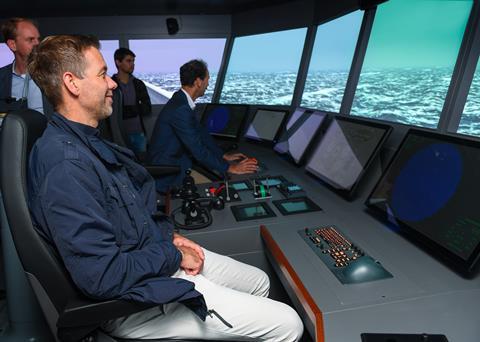
The event was held at Solent University, where guests were shown around the University’s towing tank, advanced composites labs and new maritime simulation centre – all of which will play a key role in the project’s realisation.
“This second meeting is the first time that the industry partners and the knowledge partners, like Solent University, can start to discuss and exchange the different technologies and related costs needed to install and develop hydrogen and hybrid shipping solutions,” said Mr Stubbe.
The project will pilot construction of a CTV (crew transfer vessel) with hydrogen propulsion; retrofitting of a barge with a hydrogen-based propulsion system; construction of a new passenger vessel with hydrogen propulsion system; installation of hybrid configuration in a small inspection vessel; development of a hydrogen fuel cell module for use in various types of ships; and concept of hydrogen bunker facilities for a port.