

GFS conference focuses on LNG
The 2014 Motorship Gas Fuelled Ships conference taking place this week is focusing on existing and future technology of LNG fuelled ship propulsion.
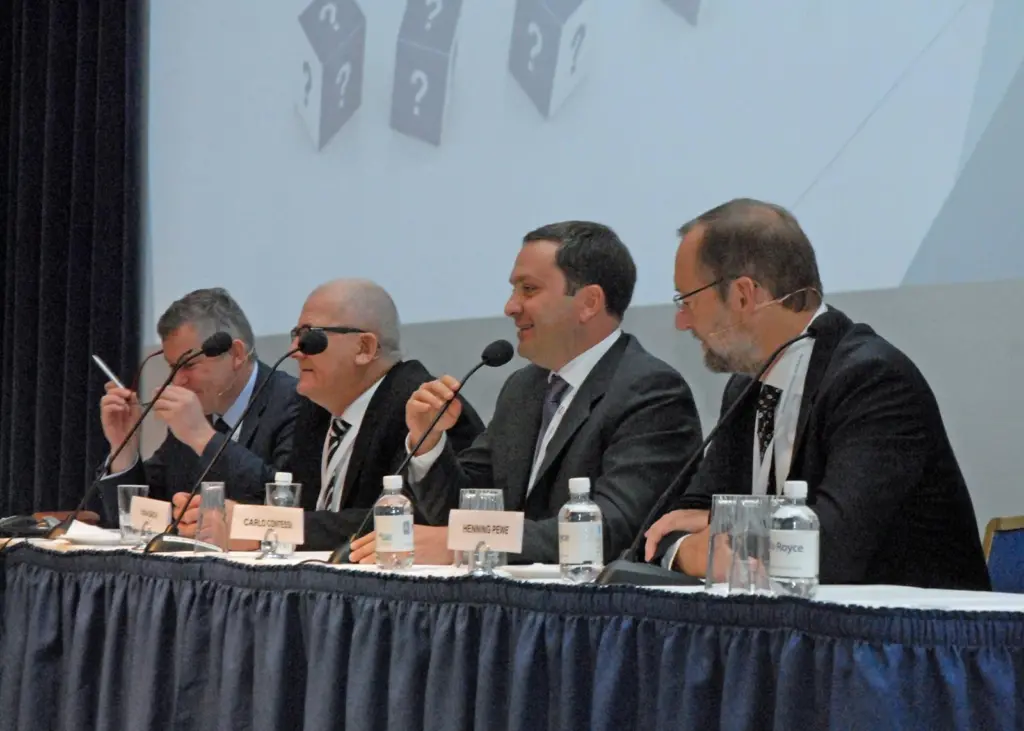
Some of the highlights from the first day of the conference include the presentation by Morten Larsen, technical director of Fjord Line, concerning current and future gas fuelled ships. He described the company’s two LNG fuelled ferries, operating alongside one conventional ferry and one fast ferry.
In 2009, Fjord Line’s business case for new ferries pointed towards conventional propulsion, but the company decided to change to pure gas. The ships have proved to be as manoeuvrable as diesel, with good course keeping and response times, low fuel and lube oil consumption, no smoke or soot and clean operation.
For future supply, Fjord Line is looking at fixed pipes at Risavika and bunker tanks at Hirtshals. These projects have been made possible by EU and Norwegian financial support.
Dr Jorge MG Antunes, marine CEO of TecnoVeritas examined some of the challenges of LNG as a fuel on existing ships, and how these can be overcome. He said that many short sea ships and ferries on local traffic routes penetrate inland, and operate near to areas of dense population, so are prime candidates for LNG conversion.
Finally, Linda Sigrid Hammer, principal engineer with DNV GL, looked at modern rules, formulated to keep up with the technology of gas fuelled ships. Since the first gas fuelled ferry went into service in 2000, rules for these ships have gradually evolved. These will reach maturity when the mandatory IGF code enters force in 2017, replacing the interim guidelines. DNV GL has developed a new Gas Ready classification and its latest LNG rules will enter into force in 2016.
The fifth GFS Conference, organised by Mercator Media Ltd, takes place from 25 to 27 November in Stavanger, Norway.
Related Articles
 EQUIPMENT
 ALTERNATIVE FUELS GREENPORT