

Another way
David Foxwell investigates a cost effective alternative to shore-based power systems designed to reduce emissions
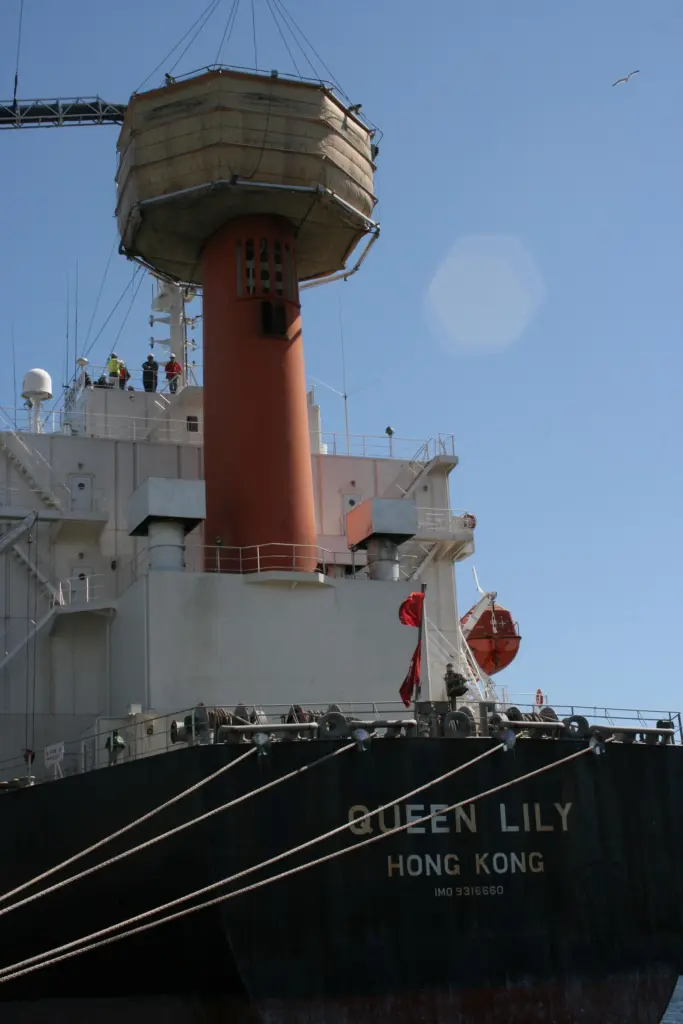
A US-based company which is finalising a contract to demonstrate an emissions control system on ships visiting Port of Lon Beach says it believes the technology is as efficient as cold ironing and more cost-effective.
The company, ACTI Engineering, says it plans to build-fit out a barge with its emissions control technology installed on board, and use the barge and its Advanced Emissions Control System (AMECS) technology to reduce emissions from ships using the port. Harbour Commissioners at the Port of Long Beach gave preliminary approval for the technology to be tested in June of last year, and preparations are now under way for the trials to begin.
As company spokesperson Matt Stewart explains, the California Air Resources Board (CARB) has issued stringent regulations requiring certain types of vessels to begin using cold ironing (that is, shore-based power) while in port, or commit themselves to using an alternative.
“Shore Power is likely to cost ports hundreds of millions of Dollars,” says Mr Stewart, “but we believe that there is a less expensive alternative in the form of AMECS, which is available now, much less expensive and can eliminate twice the emissions.”
Mr Stewart explains that ACTI Engineering believes that AMECS can be made available to ports at less than a third of the cost of shore power, and that it does not require expensive upgrades or modifications to berths or the vessel that use it. “In the Port of Long Beach, the AMECS barge will operate around the clock, servicing one vessel after another, thus optimising the capital investment involved.”
ACTI Engineering has calculated the overall cost effectiveness of the barge-based AMECS at $7,002/ton of pollutant removed compared with around $37,200/ton for shore power. “AMECS is five times as cost effective as shore power,” says Mr Stewart, noting that this figure is calculated on the basis of vessels using 0.1% sulphur fuel. “For the vessel types covered by the CARB regulations – that is, large container, reefer, and cruise ships – the cost of shore power still is $16,056/ton, compared with AMECS applied to the same three vessel types at $6,031/ton,” Mr Stewart tells Port Strategy. “This makes shore power nearly three times the cost of AMECS for these types of vessel.”
AMECS is applicable to all vessel types, and unlike shore-based power, is not limited in its application to vessels that call at a port on a regular basis. Another advantage is that AMECS can also treat the emissions from a vessel’s boiler, whereras when a vessel is connected to shore power, the vessel’s generators may be shut down, but the boilers continue to operate, releasing pollution to the environment.
Related Articles
 EUROPE
 TERMINAL OPERATIONS
 TERMINAL OPERATIONS