




Addressing wash water monitoring compliance
A catalyst for significant debate, scrubber wash water is frequently under the microscope, in everysense of the word, writes Emma Johnson, Chelsea Technologies’ maritime manager.
Steps are being made to ensure regulatory guidelines are clear and consistent, however there is still uncertainty which stems from the lack of data from long-term testing available on the impacts of wash water on the marine environment.
With compliance and environmental sustainability at stake, it is vital that the maritime industry works together to ensure a unified approach when it comes to the management and monitoring of scrubber wash water.
2018 played host to a surge in scrubber demand and uptake, with the Exhaust Gas Cleaning Systems Association (EGCSA) estimating that by 1 January 2020, there could be operational units in as many as 4,000 vessels.
With the compliance deadline firmly on the horizon, and scrubber popularity showing no signs of slowing, the economic argument for scrubbers appears particularly persuasive.
As 2019 gives way to a broadening market for scrubbers, with uptake opening up for bulk, tankers and containers, along with cruise and ferry early adopters, some trading streams cite scrubbers as the difference between business continuity or a switch to road trade.
Taking a more holistic look, global reception has been mixed. Reacting to the currently unknown impacts of scrubber wash water on the marine environment, significant shipping nations have publicly closed their doors to open loop scrubbers including Singapore, China and Fujairah in the UAE.
Despite the recently submitted Environmental Impact Assessments to MEPC 74, courtesy of the Japanese Transport Ministry and welcomed by the Clean Shipping Alliance as an invitation for future research, there are still concerns surrounding wash water that are as yet to be assuaged.
This uncertainty has prompted the EU to call for a scientifically informed global policy harmonisation, in the hope of empowering the IMO to align signatory states in to one unified policy approach.
However, as is all too familiar in shipping, this is unlikely to happen overnight. With this in mind, preventative action to mitigate non-compliant discharges now, and in the future, will prove vital for ship owners and operators to avoid costly penalties and potential damage to the marine environment.
It is for this reason that wash water monitoring based on a reliable, proven methodology is becoming ever more essential.
The IMO has provided guidelines for methodology and monitoring across almost all aspects of wash water effluents, with one notable exception, PAH. While accurate monitoring of PAH levels is crucial for environmental compliance, there is yet to be an agreed methodological standard.
This presents a challenge for scrubber manufacturers, who are required to prove that their systems act as advertised through accurate and consistent monitoring in order to reassure shipowners of achievable and future-proof compliance.
And for the shipowner who is required to select and invest significant capital, the lack of clarity does little to guide in their decision. When PAH measurement methodologies are ratified, wash water monitoring technologies need to be of sufficient levels of accuracy in order to support compliance.
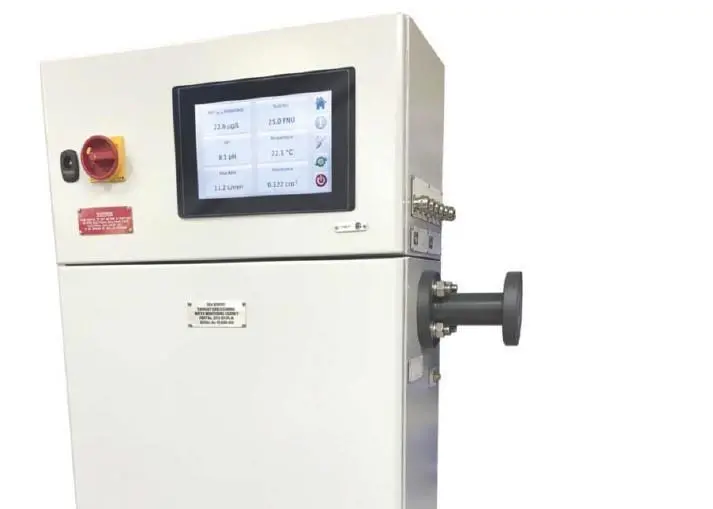
The technology and capability required in order to accurately monitor scrubber wash water is available today, including Chelsea Technologies’ Sea Sentry. A fully autonomous wash water monitoring system, Sea Sentry monitors both the water inlet and outlet of wet scrubber systems, providing the full range of analysis as required by the IMO: PAH, pH, turbidity (to ISO 7027: 1999), and temperature.
It has been awarded type approval by DNV-GL alongside accreditation from both DNV GL and ClassNK. Working closely with leading global scrubber manufacturers, Chelsea Technologies has significant direct experience with compliance testing and is fully versed in the complex and stringent regulatory standards.
As everyone is acutely aware, there are only a few months to go until the sulphur cap deadline, and shipowners will be on the front line when it comes to proving compliance.
Futureproofing now with advanced monitoring technology acts as a protection to investment and a safeguard for predicted future regulatory mandates.
Related Articles
 PRODUCTS & SERVICES GREENPORT
 EUROPE GREENPORT
 REGULATION & POLICY GREENPORT