


APM Terminals highlights future challenges
APM Terminals’ executives have recently isolated some of the main challenges faced by international terminal operators.
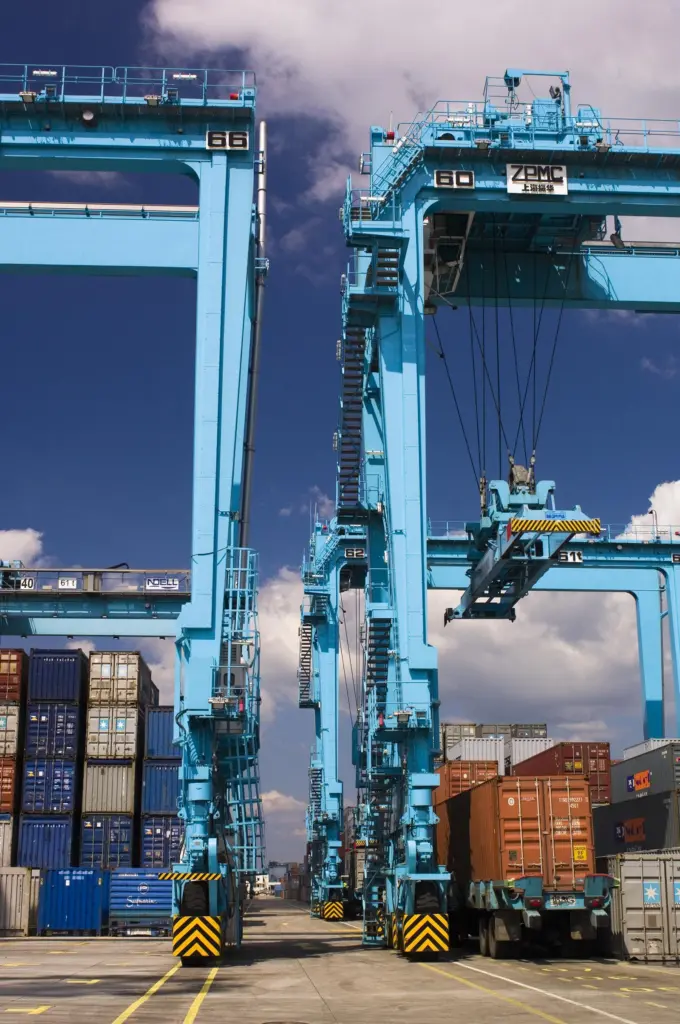
Vice president and chief financial officer Christian Moller Laursen has described the advent of a “New era in ports” where container yards processing significantly larger volumes from individual vessels as well as general global volume growth will have to move cargoes in time for the next scheduled vessel, and then the process will begin all over again, in some cases on a daily basis.
“The port industry does not have the luxury of being able to react to changes in the market environment; we must be able to anticipate and be able to deliver the terminal capacity and productivity that our customers will require” he says.
Another issue is productivity, highlighted by APMT’s Terminals’ head of project implementation, Soren Sjostrand Jakobsen, at the Future Ports conference in Stockholm.
“Our customers are building bigger and bigger ships and it is imperative that we are able to increase our delivered productivity at minimum the same pace as the ships grow – but preferably much more,” he says.
“APM Terminals has a range of initiatives to improve processes as well as applying new and innovative solutions and technology to lift productivity. We – and other terminals operators I’m sure – have terminals in their portfolio where a 40%-50% productivity improvement is not an unrealistic goal.
“Productivity will be the battleground for terminal operators and those who are able to meet our customers’ requirements will be the winners.”
A similar message was given by APM Terminals’ crane and engineering services’ managing director, Halfdan Ross, to the TOC Container Supply Chain Asia Conference in Hong Kong.
Discussing quay cranes needed for larger vessels, as well as quay design, he said: “Studies have been completed on the feasibility of constructing containerships with a 22,000 teu capacity, so planning for crane and other infrastructure support to accommodate such vessels and their container volumes is a very necessary exercise for any major hub port,” noted Mr Ross.
“There are issues of structural stiffness, weight, visibility and wind load which all must be taken into account with cranes of such dimensions, along with the question of upgrading existing equipment or installing new cranes entirely.
“The point is that ultra-large vessels are already in service, and even larger vessels will follow, and so the time to prepare the necessary terminal and quay infrastructure is now.”
Related Articles
 CONCESSIONS & INVESTMENTS
 CONCESSIONS & INVESTMENTS