

Babitonga Bays opposing beauties
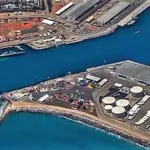
While the Itajaí River Port Complex is the state’s largest box hub, it is the port of São Francisco do Sul that leads the rankings in overall cargo, having handled 9.87m tons in 2011, compared with 9.61m tons in 2010.
Forecasts for 2012, suggest that 12m tons will be handled. It is a heavily industrial port, best known for bulk traffic, as well as for iron and steel products, reflecting the nature of the surrounding region.
Although the sixth most important port in Brazil, its container business – ranked seventh overall – is currently modest. Throughput last year amounted to 186,862 teu, albeit an increase of more than 50% over the previous year. For the half year to the end of June 2012, throughput of 62,762 teu was reported, with reefer boxes accounting for 14% of the total.
There are two container terminals: one operated directly by the port, the other, the privately owned Terminal Portuário Santa Catarina (TESC). This latter reported traffic up 6.9% last year.
However, a port authority spokesperson explained to Port Strategy that a renewed emphasis is being placed on winning new container traffic. This follows the completion on 16 November 2011 of a $50m dredging programme, which has resulted in draught in the access channel deepening from 12 metres to 14 metres, which is also the new uniform water depth alongside the berths.
“This programme was influenced by the need to accommodate ever larger vessels and also as a means of keeping freight rates competitive,” said the spokesperson.
Previously, a 6,589 teu box vessel had been the largest to access the container terminal at São Francisco do Sul. However, with the more generous 14 metre draught in the access channel, the much larger 8,500 teu Cosco Vietnam called at the Port of Itapoá on the other side of the Bay of Babitonga in February this year.
With dredging work now complete, the emphasis is shifting to onshore facilities. Berth 401 is being extended from 150m to 280m, as part of an extensive $100m upgrade programme. As of early next year, dry and liquid bulk handling will be concentrated here, freeing up adjacent berths 101, 102 and 103 for conversion into a dedicated container terminal.
At the same time, the BR280 access road is being upgraded to a dual carriageway, while the existing rail connection is being diverted along a new alignment avoiding the urban area.
“These two actions are expected to cater for traffic development at the port for the next 20 years,” says the spokesperson, who points out that 30% of cargo handled by the port is already transported by rail.
In respect of competition, the spokesperson points out that there was more than enough container traffic for both São Francisco do Sul and new neighbour Itapoá.
“It’s not realistic to compare the two, since Itapoá was designed specifically to handle containers, while São Francisco do Sul has a diversified traffic base. Indeed, in 2010, we accounted for 48% of all port cargo handled in Santa Catarina State.”
In fact, both ports have an interest in developing a partnership, especially in respect of the improvement of the entrance to the Bay of Babitonga, which the port authority wants to widen from 100 metres to 160 metres and deepen from 12 metres to 14 metres.
Related Articles
 SOUTH AMERICA
 SOUTH AMERICA
 SOUTH AMERICA