



Building up environmental attributes
Ports suffer from a lack of joined-up environmental information systems, says Actual ITs Gregor Veselko
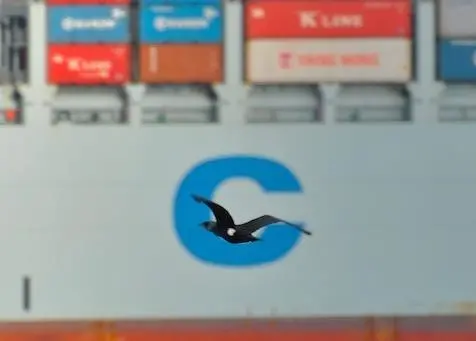
All over the world, regardless of the pace of development in a country and its maritime sector, port communities are extremely environmentally sensitive zones. They can be surrounded by cities, close to coasts and sensitive ecosystems, handle ‘dirty’ cargoes, and have operations that can affect people, animals and sea life.
Over the past years, numerous studies have been carried out in order to determine the impact of daily port activities on the environment. However, the only integrated analysis that has been undertaken on the environmental risks that exist in the port areas and their immediate surroundings has been on oil pollution.
Minimal research has been done on how to reduce the influence of port activities on the environment and there is, therefore, plenty of room for comprehensive risk analyses of the potential of environmental pollution during manipulation and storage of the cargo in ports, as well as deeper into the supply chain.
There is also a need for intelligent environmental information systems, not only for the port but also for the wider geographical and organisational community. These systems can act as central integration engines, which from the centre of the network provide all message transformation, routing, and any other inter-application functionality to the whole community.
Building a fast and resilient communication mode between applications enables data concurrency for the entire network. These systems also provide monitoring and auditing tools that allow users to access information about the flow of environmental messages through their systems, as well as tools to speed up the complicated task of configuring, mapping and routing between large numbers of systems and applications.
Hard task
However, implementing national and international environmental information systems is not an easy task. A vast number of specific and isolated action plans and their related information systems, the complexity in identifying often hidden – mostly unexpected – sources of potential risk, and – in the case of a wider geographical zone – a difference in culture, language, behavior, customs, and degrees of acceptable risk, all have to be taken into account.
How can we deal with this complexity? There are several steps that should be taken before such a system can be actually considered. The first is the preparation of a risk schema on the area of the environmental protection. Second, we need to determine the risks and to what extent they are related to a certain port action; this will allow for the creation of a proposal for measures to eliminate or reduce the risks. Third comes the verification of the viability of establishing transnational co-operation between ports under the environmental protection.
Once these parameters have been covered there needs to be a check of the reasonableness for the development of an information system for risk management and on the rules for dissemination of information on potential contamination. This step enables us to lay the groundwork for relevant national and transnational actions, allowing for co-operation between ports as well as transnational co-operation on environmental protection – including formal and informal networks and other types of collaboration. This will be the catalyst for further research and formalisation of preventive and curative procedures, for the preparation of specific actions for mitigation of the environmental risks in the ports, and finally for the investigation and prototype development of an information system for risk management and dissemination of environmental information.
There are many positive goals that can be taken from this process. The credibility of a single port and its community will increase, which will have a direct effect on the positiveness of its public image; it will set the standard for the highest possible environmental responsibility; business will gain substantial reductions in costs and will consequently improve efficiency; and finally, emergency response and disaster recovery will be transformed into state of the art processes.
Gregor Veselko is the chief operating officer for port-line products at Actual IT. He has Masters in Business Administration and in Transport and Maritime Management and has completed a PhD in Transport Logistics. Gregor is a member of the Slovenian Managers Association and a member of the Slovenian Director’s Association.
Related Articles
 EUROPE
 TERMINAL OPERATIONS
 TERMINAL OPERATIONS