



Best practice for cruise and ferry ports
The ESPO conference 2016 saw the launch of the organisation’s Code of Practice for cruise and ferry ports, which aims to instill good practices at each port in Europe.
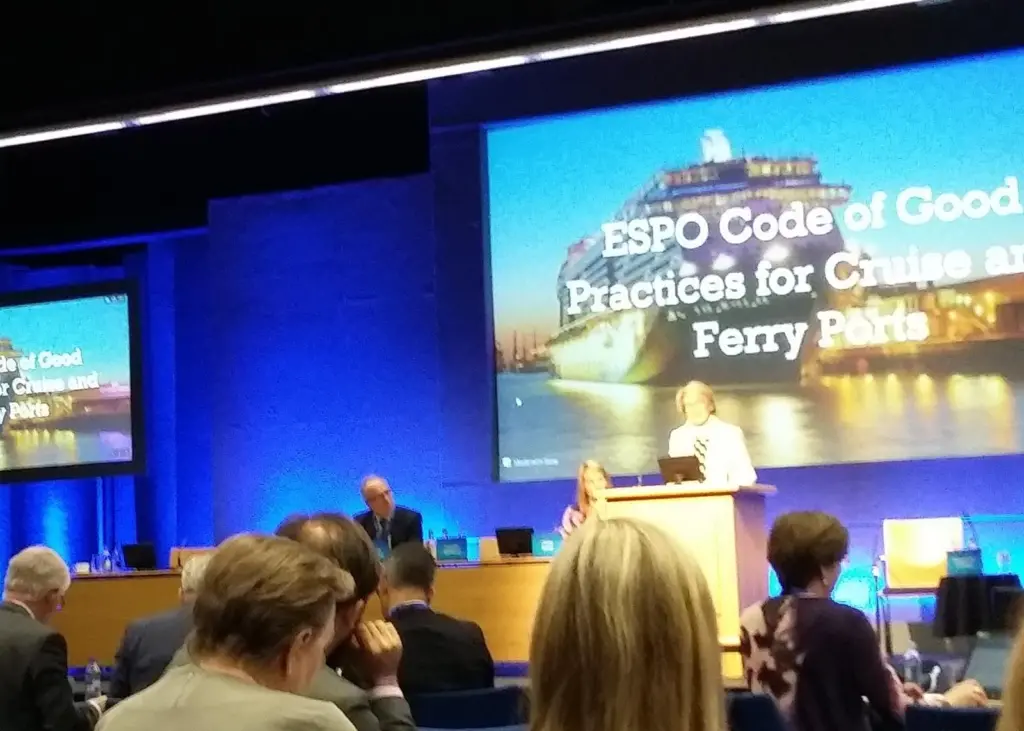
Isabelle Ryckbost, secrretay general, ESPO, said: “Most European ports are urban ports, this makes them very interesting. Unlike container terminal activities, cruise has removed closer to the city, bringing both positives and negatives. We have the job to close the gap between the port, the cruise lines and the city.”
Working on congestion is a challenge to tackle for both sustainability and infrastructure, she said.
“A port should be dressed to impress, this includes greening the infrastructure and having good hinterland connections. This should involve all stakeholders in the early stages of the planning process.”
Co-operation she said is a win-win situation, services can be improved and sometimes congestion can even be solved. Working on balanced cohabitation and ensuring healthy competition between neighboring ports, along with improving the.relationship between the cruise and ferry lines, should be priorities for any cruise port.
This is the first time that ESPO has brought together all of the cruise organisations to work in a cohesive fashion towards best practice.
Stavros Hatzakos, chairman of the ESPO Cruise and Ferry Port Networks, said: “Even if the code of Good Practices is a comprehensive document, it must be seen as a starting point. The annex with concrete examples that you can consult on the ESPO website will make it a living code allowing all interested ports to learn about new practices and examples and to complete and exchange new experiences with other ports.”
Kay Greenway from Cruise Britain added: “This code of practice promotes acknowledging sharing and learning from Europe’s diversity which helps make Europe the pre-eminent cruise destination that it already is.”
Related Articles
 PRODUCTS & SERVICES GREENPORT
 EUROPE GREENPORT
 REGULATION & POLICY GREENPORT