![GreenPort[PortStrategy]](https://www.portstrategy.com/greenport/wp-content/uploads/sites/4/2026/09/GreenPortPortStrategy.svg)

Floating power model gains momentum
ELIRE Maritime has outlined plans to accelerate commercial deployment of its Hydrogen Floating Power Hub following completion of a UK-backed feasibility programme validating the grid-independent maritime energy system.
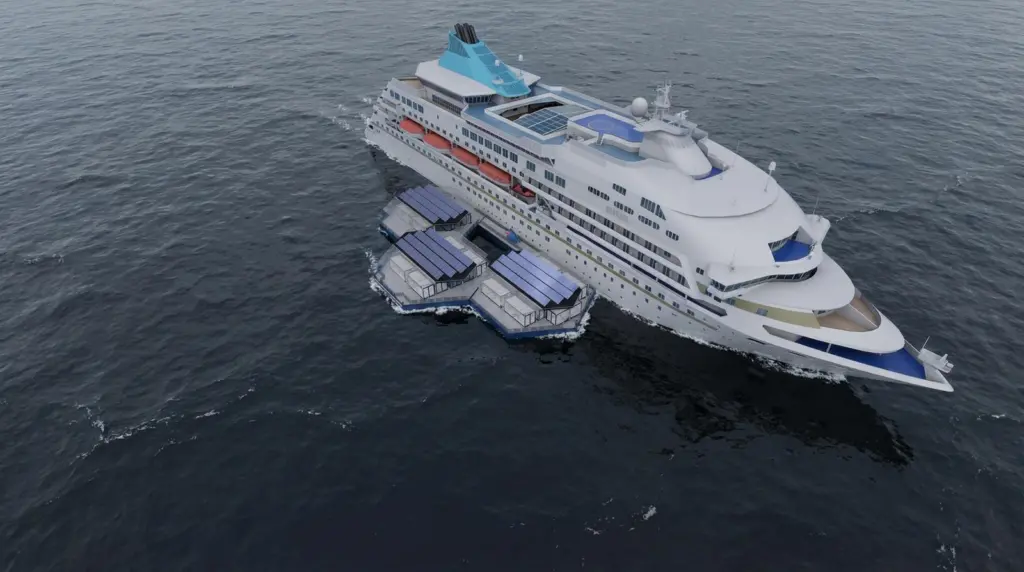
While the original Clean Maritime Demonstrator Competition Round 6 (CMDC6) project confirmed the technical viability of the floating hydrogen-powered shore energy platform, the company is now positioning the concept as a faster and more flexible alternative to traditional port electrification infrastructure.
The modular system is designed to deliver clean electricity directly to vessels at berth without relying on major grid upgrades, which remain a significant barrier for many ports pursuing decarbonisation targets.
“Ports do not simply need lower-cost energy, they need energy infrastructure they can actually deliver,” said Luke Jenkinson, founder and chief executive of ELIRE Maritime.
“This is not about replacing the grid. It is about delivering clean power where the grid cannot.”
The floating platform combines hydrogen storage, modular fuel cells, battery energy storage and onboard renewable generation within relocatable offshore infrastructure capable of being deployed without extensive civil works or land reclamation.
ELIRE said the concept could help ports avoid multi-year delays often associated with conventional shore power projects, which frequently require substation upgrades, permitting approvals and costly grid reinforcement.
“Think of it as charging a giant floating battery throughout the week and then releasing that energy rapidly when the vessel arrives,” Jenkinson said. “That changes the economics and deployment model for maritime electrification.”
The consortium estimates the global market for grid-independent maritime energy systems could reach around 62TWh annually, particularly in ports where electrical infrastructure remains constrained or commercially impractical to expand.
Beyond shore power applications, ELIRE believes the floating energy infrastructure could support offshore logistics, renewable integration, hydrogen transport networks and defence operations.
Although hydrogen-powered systems currently remain more expensive than conventional shore power or onboard diesel generation, the company argues the value lies in deployment flexibility and infrastructure accessibility rather than immediate energy cost parity.
ELIRE Maritime said discussions are progressing with ports and infrastructure partners in the UK, Europe and Australia as interest grows in scalable clean maritime energy systems capable of adapting to evolving port requirements.
Related Articles
 ALTERNATIVE FUELS GREENPORT
 ALTERNATIVE FUELS GREENPORT
 ALTERNATIVE FUELS GREENPORT