![GreenPort[PortStrategy]](https://www.portstrategy.com/greenport/wp-content/uploads/sites/4/2026/09/GreenPortPortStrategy.svg)


Gothenburg biogas facility build begins
Construction has officially begun on a new liquefied biogas facility at the Port of Gothenburg, a project expected to strengthen Sweden’s renewable fuel infrastructure and expand access to sustainable energy for shipping, heavy transport and industry.
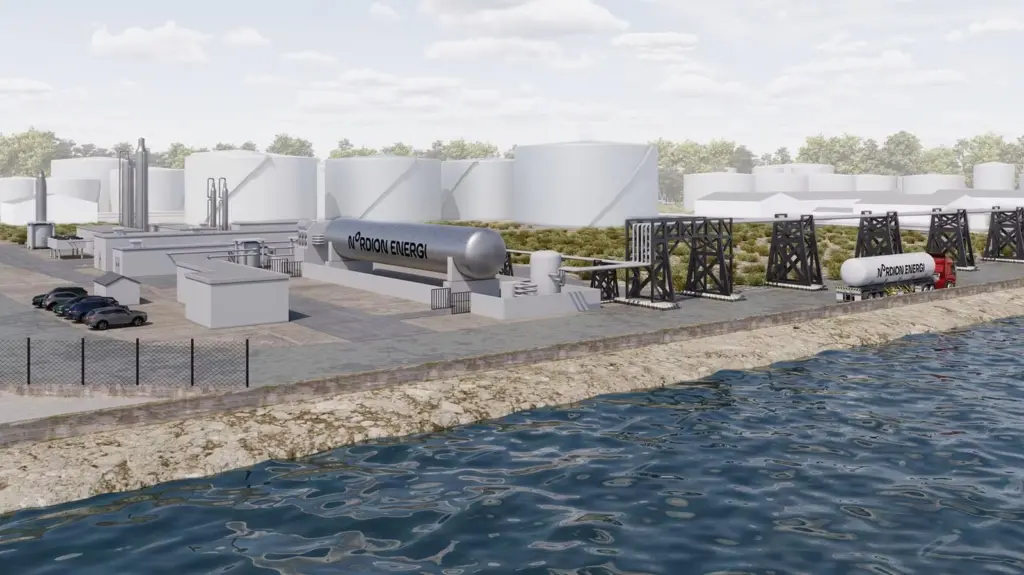
Owned and developed by Nordion Energi, the facility will liquefy biogas supplied through the national gas grid, allowing producers to reach sectors and regions beyond the grid’s current coverage. Once operational, the plant will have a production capacity of approximately 50 tonnes of liquefied biogas per day.
The project is viewed as a key step in accelerating Sweden’s transition toward renewable energy and reducing dependence on fossil fuels in hard-to-abate sectors.
“Our goal is to help drive the transition of the gas grid to 100 percent renewable gas, and the liquefied biogas facility at the Port of Gothenburg will play a key role in that shift,” said Carolina Wistén, head of customer and market gas grid at Nordion Energi.
“It will also support the transition of shipping, heavy transport and industries located further away from the gas grid.”
READ MORE: Gothenburg Port bunkers first biomethane
Demand for liquefied biogas is growing rapidly within the maritime industry as shipping companies seek lower-emission alternatives to conventional marine fuels. The Port of Gothenburg said the new facility will strengthen its renewable fuel offering and support wider adoption across the sector.
“For shipping’s transition to gain real momentum, the entire value chain needs to be in place and working together,” said Therese Jällbrink, head of renewable energy at the Port of Gothenburg. “This facility strengthens the port’s position in renewable bunker fuels and will make it possible to offer liquefied biogas to shipping on a larger scale.”
Energy company St1 Biokraft has already secured part of the facility’s future capacity.
The liquefaction facility is expected to be completed in early 2027 and operational before the end of the year.
Related Articles
 ALTERNATIVE FUELS GREENPORT
 ALTERNATIVE FUELS GREENPORT
 ALTERNATIVE FUELS GREENPORT