![GreenPort[PortStrategy]](https://www.portstrategy.com/greenport/wp-content/uploads/sites/4/2026/09/GreenPortPortStrategy.svg)




Advance cargo forecaster
New technology at a US port enables supply chain stakeholders to gauge movement of containers up to six months in advance.
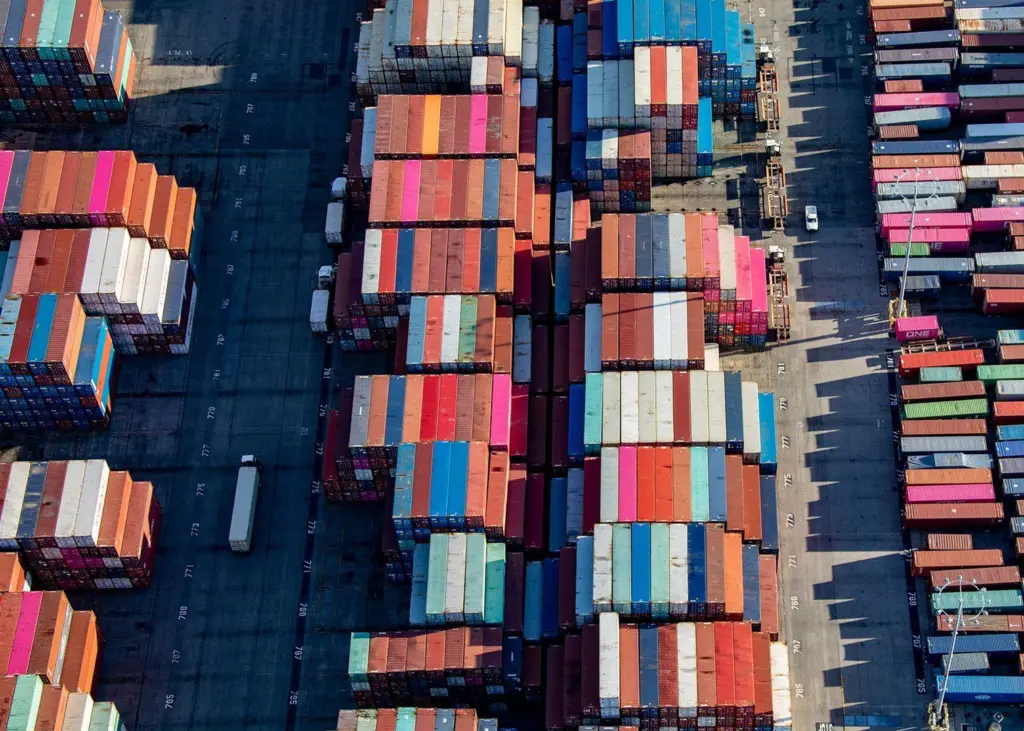
The Port of Los Angeles’ Horizon module is part of its Port Optimizer Control Tower data tool. Developed in partnership with Wabtec, Horizon uses an algorithm based on historical and trending volume data collected by the Port Optimizer.
Continually taking into account changing port conditions, the algorithm constantly updates cargo volumes, allowing the Horizon to improve forecasting over time and issue six-month-ahead volume updates every month. This helps port stakeholders to carry out advance planning for maximum efficiency.
Planning and allocating resources
“We’re proud to break ground with this new forecasting tool, which is the first of its kind,” said Port of Los Angeles executive director, Gene Seroka. “The Horizon predictive technology is yet another service that we can offer Port stakeholders to better plan and allocate resources, especially amid this historic cargo surge.”
“Data is a critical resource in moving goods across the supply chain and into the hands of consumers,” said Nalin Jain, Wabtec’s president of digital electronics. “This is one more step in our journey to connect railroads, chassis providers, truckers, warehouse operators, and others across the supply chain with the insights they need to seamlessly move cargo in and out of ports.”
The cloud-based Port Optimizer is a secure digital portal of maritime shipping data created by the Port of Los Angeles in 2017 to facilitate more efficient cargo flow through its terminals.
The Control Tower was launched in February 2021 to help Port stakeholders better predict and plan cargo flows. Currently, the Control Tower serves as a one-stop virtual dashboard with multiple data points, including real-time views of truck turn times and other truck capacity management information; the Signal, which gives a daily, three-week look at incoming cargo; and the Return Signal, which lets the trucking community know when and where to return empty containers to Port cargo terminals. The Control Tower also features recent and future trending volume data, as well as historical volumes and trends dating back to 2017, segmented by mode and specificity.
Related Articles
 NORTH AMERICA
 CONCESSIONS & INVESTMENTS